
Truecaller, the global leader in caller identification, is grappling with a critical turning point as its user growth plateaus and competition from telecom operators and smartphone giants intensifies. With over 500 million users, the platform is struggling to maintain momentum, particularly in India, its largest market, which historically accounted for 70% of its global base.
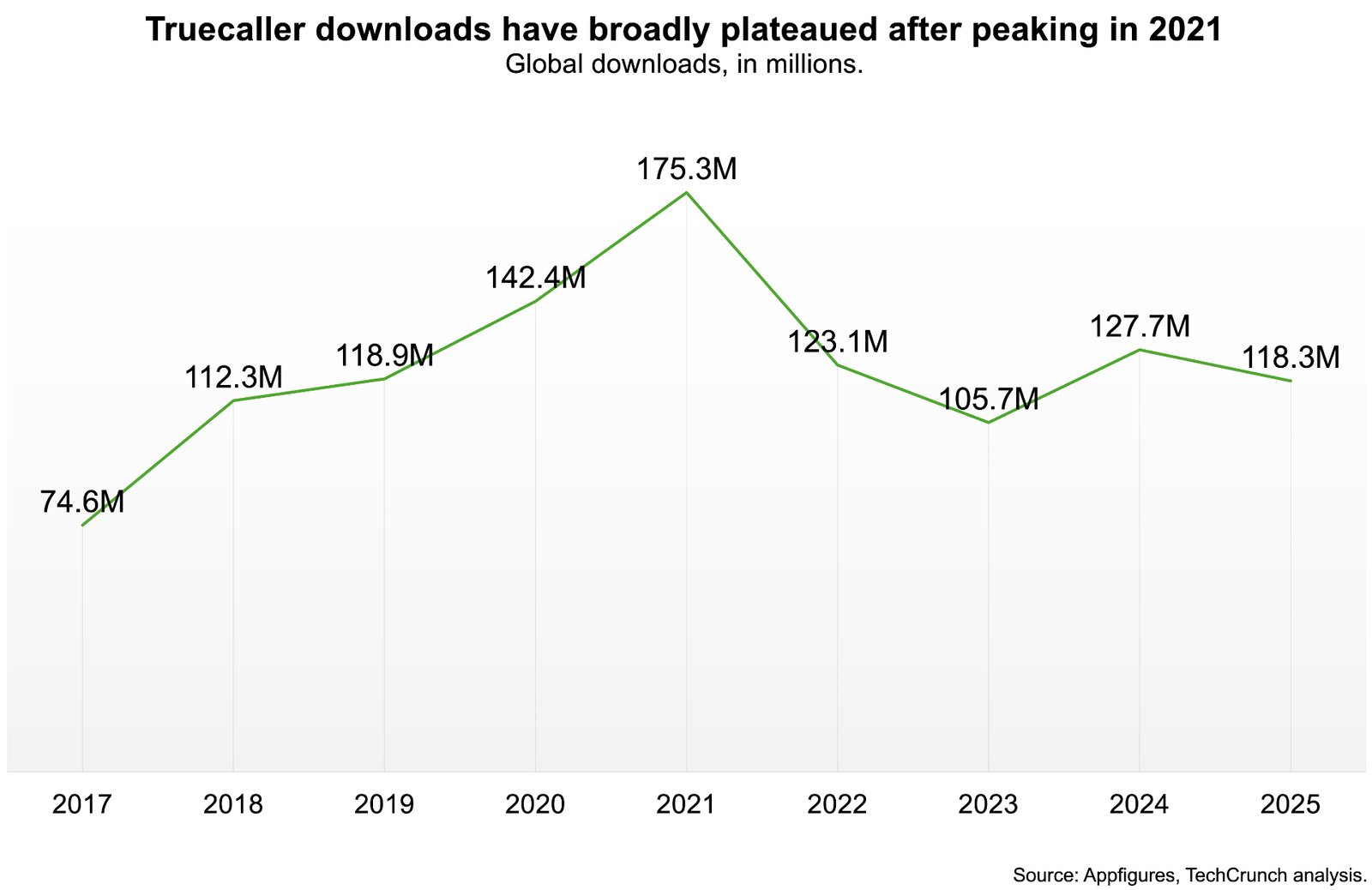
Recent data from Sensor Tower reveals that Truecaller’s downloads in India plummeted 16% year-over-year in 2025, while global figures saw a 5% decline. This marks a stark reversal from previous years, with Appfigures data showing that annual downloads have stalled at approximately 120 million after peaking at 175 million in 2021.
The Competitive Shift: Telecoms and OS Integration
The rise of Calling Name Presentation (CNAP)—a network-level verification service pushed by Indian telecom regulators—threatens to make third-party caller ID apps redundant. Concurrently, Apple and Google are aggressively integrating native spam-blocking and caller identification features directly into their operating systems.
Truecaller CEO Rishit Jhunjhunwala downplays the threat of CNAP, arguing that Truecaller offers a “richer and dynamic intelligence layer” that includes fraud prevention and business identity tools. However, investors remain skeptical; the company’s shares have shed roughly 78% of their value since its 2021 IPO.

Advertising Vulnerability and Revenue Pressures
While industry watchers debate the impact of CNAP, the immediate financial danger lies in the company’s advertising segment, which provides 65% to 70% of its total revenue. In August 2025, Truecaller lost nearly one-third of its ad traffic due to a major partner’s “algorithm issue”—widely identified by analysts as Google.
Bharath Nagaraj, director of equity research at Cantor Fitzgerald, notes that the advertising market is hyper-competitive. “You can show your ads on Truecaller, but you can also show them on Facebook,” he explained, highlighting the difficulty in maintaining ad dominance against larger social platforms.
Diversification: In-App Revenue and Enterprise Growth
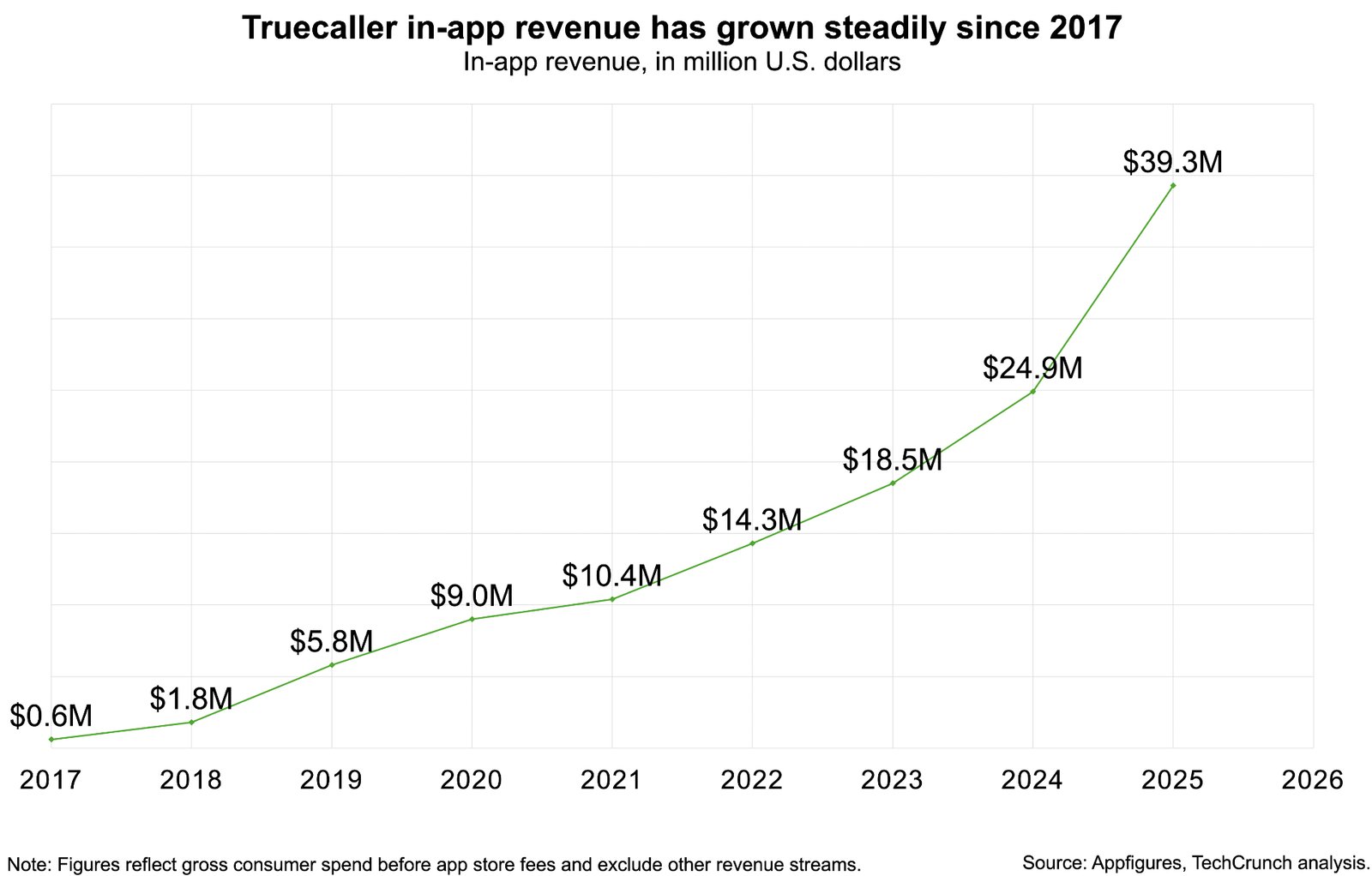
Despite the cooling of new user acquisitions, the company has seen success in monetizing its existing base. Gross in-app revenue has surged, climbing from $600,000 in 2017 to $39.3 million in 2025. Additionally, the Truecaller for Business segment saw a 39% revenue increase in 2025, signaling a pivot toward enterprise-grade identity verification services.
The company is also expanding its footprint on iOS, which now represents 11-12% of its total downloads. However, Apple’s continued expansion of native call-screening features remains a long-term hurdle for the app’s relevance on iPhones.
Privacy and Future Outlook
Truecaller’s path forward is further complicated by persistent scrutiny regarding its data collection practices. An investigation by The Caravan previously raised questions about user consent, forcing the company to defend its compliance with evolving global privacy regulations.
As AI makes spam and scam calls more sophisticated, Truecaller hopes to leverage its massive database to stay ahead. Its survival will depend on its ability to transition from a standalone utility app into an essential layer of digital communication infrastructure before the operating systems they run on render them obsolete.