

Apple officially announced on Tuesday that it is expanding its advertising ecosystem to include Apple Maps. Starting this summer in the U.S. and Canada, businesses of all sizes with a physical location and a registered Apple Maps listing will be able to run targeted campaigns directly within the navigation app.
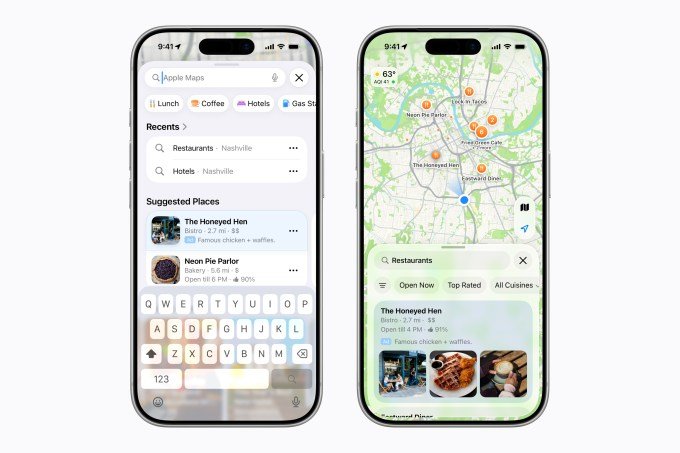
How Apple Maps Ads Will Function
The new ad placements will appear seamlessly alongside relevant search results. To ensure a balance between monetization and user experience, Apple has confirmed it will display only one ad per search result. These sponsored spots will be visually distinct, featuring a small blue halo around the map pin and a clear “ad” label within the Suggested Places list, mirroring the current layout of the App Store.
The advertising model utilizes an auction-based pricing system. Advertisers will only be charged when they achieve a specific desired outcome, such as a user view or a direct tap on the advertisement. Privacy remains a core focus: Apple states that interactions with these ads are not linked to a user’s Apple account, and personal data is neither collected nor shared with third parties.
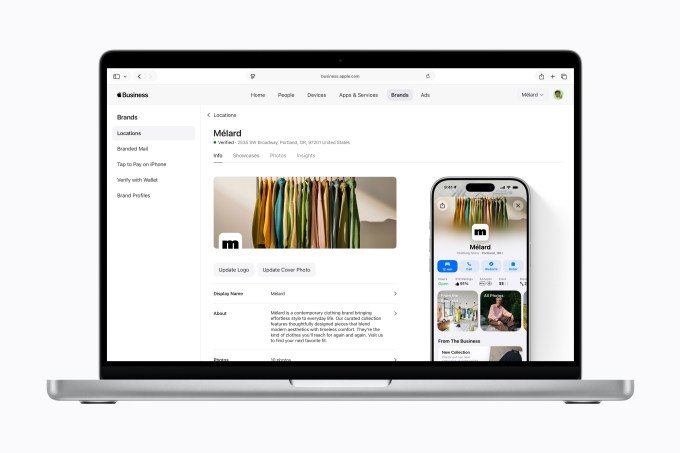
Launching the All-in-One “Apple Business” Platform
These advertising capabilities are part of a larger strategic overhaul: the launch of Apple Business. This unified platform consolidates previously fragmented services—including Apple Business Connect, Apple Business Essentials, and Apple Business Manager—into a single, integrated hub. The suite will roll out to 200 countries and regions on April 14, 2026.
Beyond advertising, the platform introduces:
- Productivity Tools: Integrated email and calendar services using the business’s own domain.
- Cloud Storage: 5 GB of free iCloud storage per employee, with upgrades available starting at $0.99/user/month (up to 2 TB).
- Support: Optional AppleCare+ for Business, with plans starting at $6.99/month per user or device.
- Employee Directory: Enhanced tools for internal management.
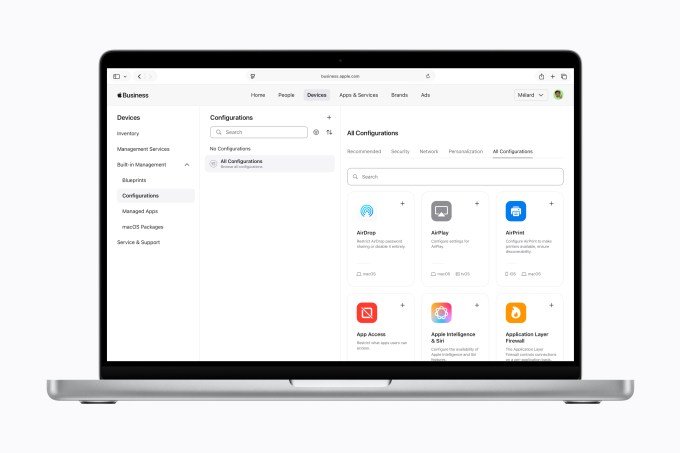
Simplified Device Management for All Sizes
Apple is also making its Mobile Device Management (MDM) product free to use. To lower the barrier to entry, the company introduced “Blueprints”—preconfigured setups that allow smaller businesses to deploy apps and security settings to employee devices without requiring deep technical expertise.
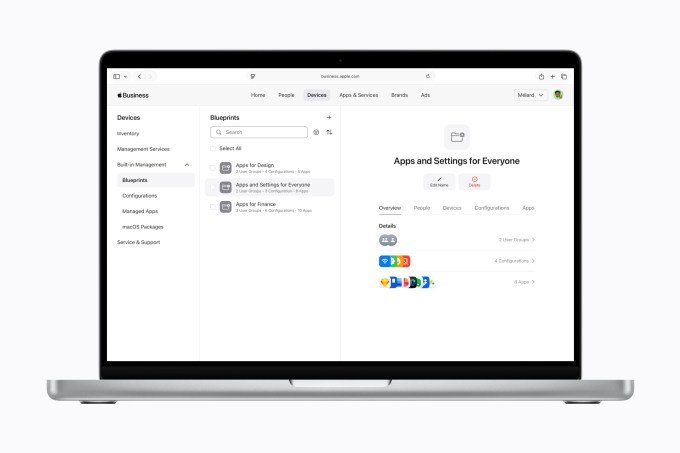
Larger enterprises retain the flexibility to manage complex app deployments through an API, ensuring that the platform scales from small local shops to global organizations. By integrating these services, Apple is positioning itself to capture a significant share of the business services market while opening a substantial new revenue stream through Maps advertising.