
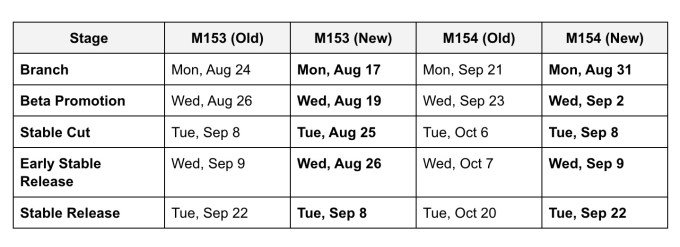
Google is dramatically accelerating the development of its Chrome browser. Starting September 8, 2026, the tech giant will transition from a four-week release cycle to a two-week schedule, aiming to deliver stability, performance, and usability milestones at twice the current frequency.
Staying Ahead of the Agentic Web
While Google officially attributes the shift to the evolving demands of the web platform and the need for developers to access tools faster, the move occurs amid rising pressure from AI-native browsers. Companies like OpenAI and Perplexity are actively working to redefine the browsing experience through “agentic” capabilities—browsers that autonomously execute tasks on behalf of the user.
Competitors are already making significant inroads:
- ChatGPT Atlas: OpenAI’s browser, which integrates AI directly to experiment with task automation.
- Perplexity Comet: Features a sidecar AI assistant, email management, and meeting scheduling tools for premium users.
Google’s Defensive Strategy
In response to these emerging threats, Google has been aggressively embedding Gemini into Chrome, introducing its own set of autonomous task-management features. Although Google maintains that the accelerated release schedule is independent of AI competition, the industry shift toward faster, more intelligent browsing makes the increased pace a strategic necessity.
The updated release schedule will apply to all major platforms, including desktop, Android, and iOS, beginning with version 153. Importantly, early-release channels like Dev and Canary will remain unchanged.
Updates for Enterprise and Stability
Google is maintaining continuity for corporate environments. The “Extended Stable” release, tailored for enterprise administrators and Chromium embedders who require longer update lead times, will persist on its existing eight-week cycle. This support will also continue to be available for Chromebook users who prioritize stability over rapid feature deployment.