
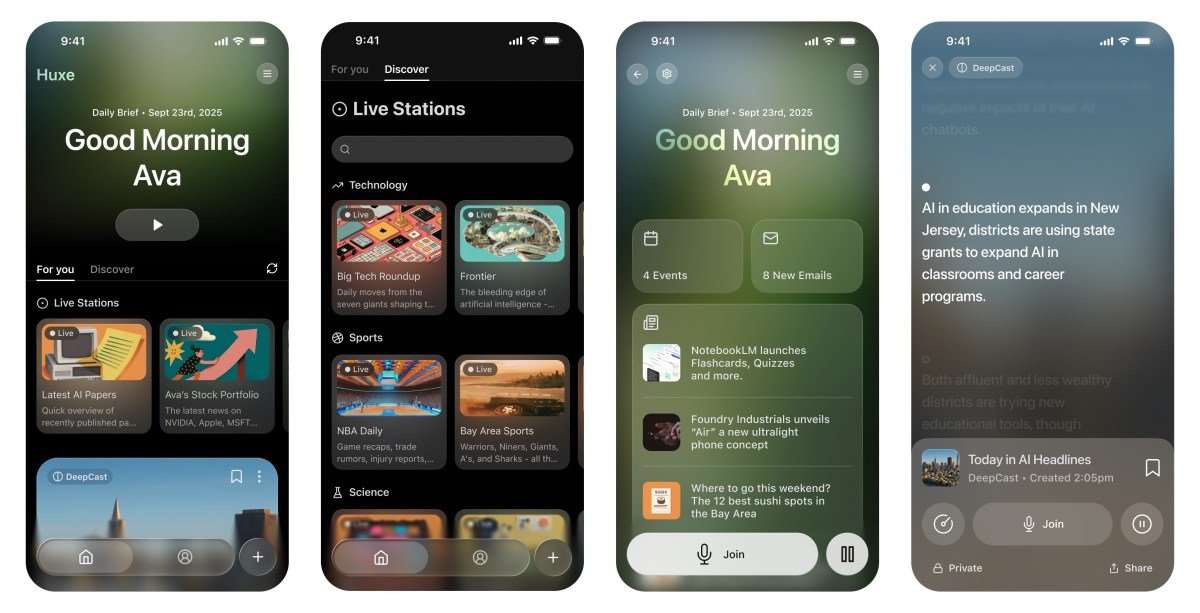
Three former Google developers, who played pivotal roles in the creation of NotebookLM, have officially launched Huxe. The startup secured $4.6 million in funding from investors including Conviction, Genius Ventures, Figma CEO Dylan Field, and Google Research chief scientist Jeff Dean to build an “audio-first” personal assistant.
From Google to Independent Innovation
Raiza Martin, Jason Spielman, and Stephen Hughes departed Google in December 2024 to pursue independent ventures. After experimenting with B2B chatbots and broader AI-generated media, the team identified a clear consumer demand for audio-based information consumption. The app, which transitioned from an invite-only beta in June, is now globally available on both iOS and Android.
How Huxe Redefines Information Consumption
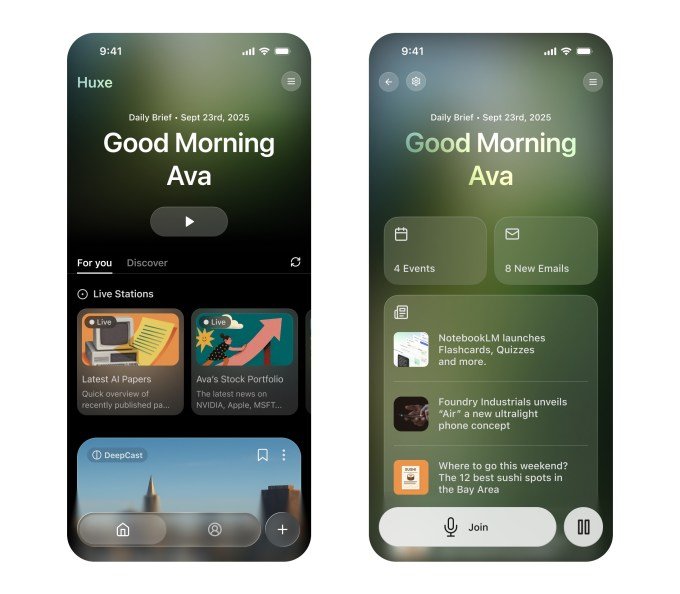
Huxe functions as a personalized audio assistant that synthesizes your emails and calendar schedules into daily briefings. Much like the technology behind NotebookLM, it allows users to generate “podcasts” featuring AI hosts that discuss specific topics. Users can engage directly with these hosts, asking questions or requesting simplified explanations of complex subjects in real-time.
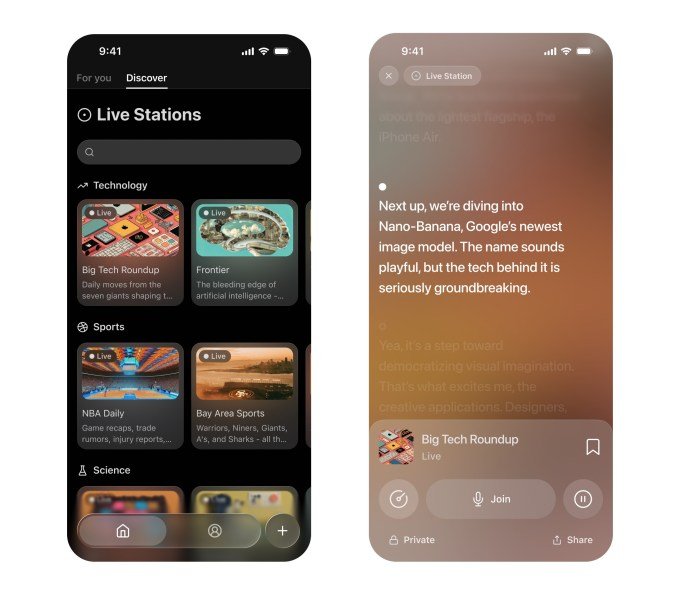
Live Stations and Deep-Dive Features
The core differentiator for Huxe is the “Live Station” feature. Users can curate specific channels based on interests—ranging from sports and tech news to celebrity updates. These stations evolve over time, pulling data from various sources to provide continuous updates on developing stories. Additionally, the app includes a personalized interest feed that surfaces audio content based on user preferences.
Targeting the “Screen-Fatigued” User
The founders believe the product is an essential tool for power users who suffer from digital fatigue. By shifting information consumption from visual browsing to audio, Huxe allows users to stay informed regarding their professional and personal lives without the need to manage multiple browser tabs. While currently focused on the information and news market, the platform’s underlying technology presents significant potential for expansion into entertainment, positioning it alongside audio-tech innovators like ElevenLabs, Oboe, and major industry players like Meta and Google.