
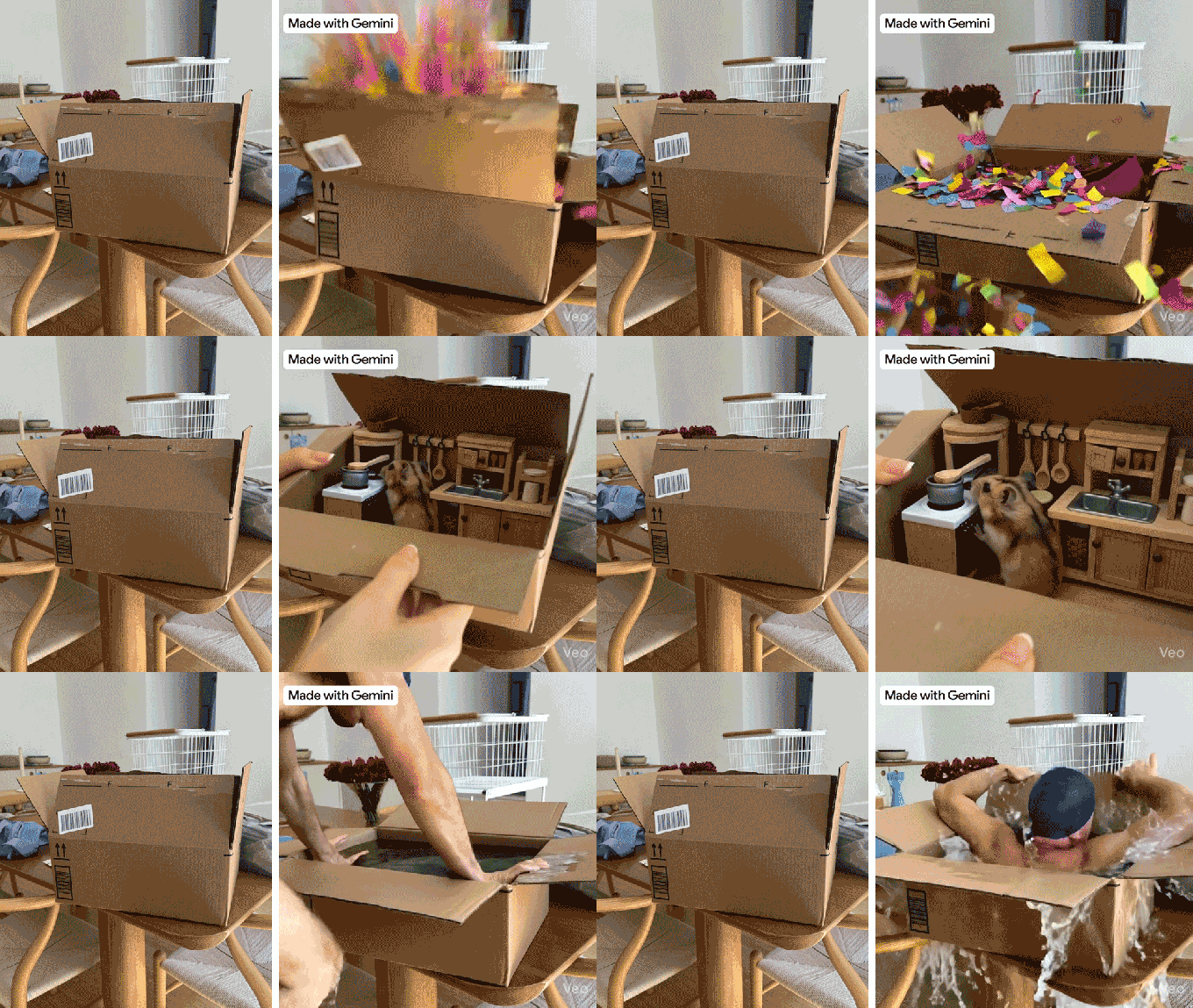
Google officially announced on Thursday that it is integrating image-to-video generation capabilities into its Veo 3 AI model, accessible directly through the Gemini app. This update marks a significant expansion of the technology, which debuted earlier this year within Google’s specialized “Flow” video creation tool.
How to Create AI Videos with Gemini
The process for generating content is streamlined for accessibility. Users can navigate to the tool menu within the prompt box, select the “Videos” option, and upload a static image. Beyond visual transformation, the tool allows for audio integration; users can describe the desired soundscape in their prompt to accompany the generated clip. Once processing is complete, the resulting video can be downloaded or shared directly.
Global Availability and Usage Limits
Following the initial launch of Veo 3-powered video generation in May, Google has expanded access to over 150 countries as of last week. Currently, the feature is reserved for subscribers of Google AI Ultra and Google AI Pro plans. These users are subject to a daily quota of three video creations, with no rollover for unused credits.
Rapid Adoption and Security Protocols
The adoption rate for Google’s generative video tools has been substantial. Since the release of the technology seven weeks ago, users have generated more than 40 million videos across both the Gemini app and the Flow platform.
To address concerns regarding synthetic media, Google has implemented a dual-layer labeling system. Every video produced by the Veo 3 model includes a visible “Veo” watermark. Additionally, the files are embedded with an invisible SynthID digital watermark, allowing for the identification of AI-generated digital artifacts. The company previously released a dedicated tool designed to detect content protected by this SynthID technology.