

Tinder has officially launched a global test of a new “height preference” feature, allowing paid subscribers to set specific height criteria within their discovery settings. The move, confirmed by a company spokesperson following reports from Reddit users, marks a significant shift in how the platform manages user matching.
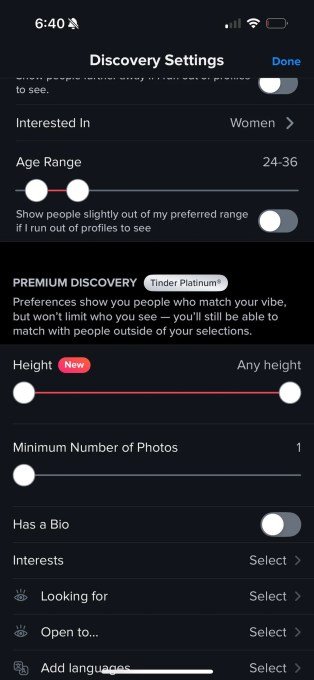
How the New Height Feature Works
The feature is currently exclusive to Tinder Gold and Premium subscribers within the test group. Crucially, the company clarifies that this is not a “hard filter.” Instead of blocking profiles that do not meet a user’s height requirement, the tool serves as a preference indicator to refine and inform recommendation algorithms.
Phil Price Fry, VP of Communications at Tinder, stated that the test is part of a broader initiative to foster more intentional connections. “We’re always listening to what matters most to our Tinder users,” Fry noted. “Not every test becomes a permanent feature, but every test helps us learn how we can deliver smarter, more relevant experiences.”
The Debate Over Physicality in Dating
While standard filters typically focus on age or relationship goals, the introduction of a height-based setting touches on long-standing criticisms regarding the superficial nature of modern dating apps. The platform’s interface, which relies heavily on photo-based swiping, has historically prioritized physical appearance.
The bias toward taller men has become a normalized trend in digital dating culture. It is frequent to encounter profiles—particularly those of women—stating strict height requirements, such as a minimum of 6 feet, a trend that Tinder has historically acknowledged, even mocking it in past April Fools’ campaigns.
Strategic Shift Amid Declining Subscriptions
The timing of this test follows a challenging period for Tinder’s parent company, Match Group. Recent earnings reports revealed a 5% decline in paying users, with total subscribers across the company’s portfolio dropping to 14.2 million in the first quarter, compared to 14.9 million the previous year.
Analysts suggest that adding granular preference settings may be an effort to increase the value proposition for premium tiers and drive engagement among female users, as the platform continues to grapple with a gender-imbalanced user base in the U.S. and abroad. The company is currently navigating a major leadership transition, with Match CEO Spencer Rascoff slated to assume control of Tinder operations later this summer.