
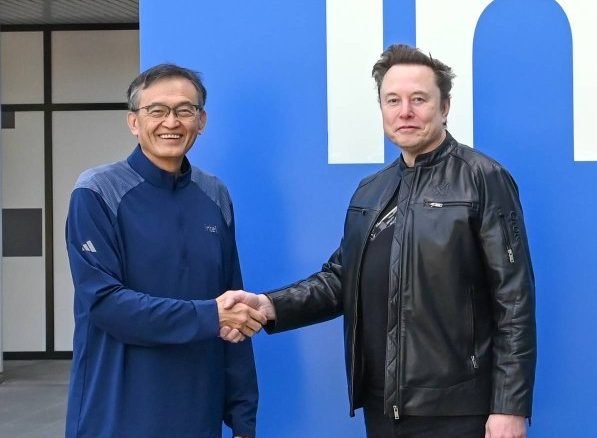
Intel has officially entered a strategic partnership with Elon Musk’s SpaceX and Tesla to develop a cutting-edge semiconductor factory in Texas. The collaboration aims to bolster the “Terafab” initiative, a project designed to reach a production capacity of 1 TW of compute per year to fuel future advancements in robotics and artificial intelligence.
The Terafab Vision and Intel’s Role
Intel confirmed its involvement via a post on X, stating that its expertise in designing, fabricating, and packaging ultra-high-performance chips at scale will be central to the project’s success. While the specific scope of Intel’s contribution remains under wraps, the partnership marks a significant milestone for Musk’s broader ambitions.
Elon Musk first unveiled plans in March to integrate the engineering resources of SpaceX and Tesla to develop proprietary chips. These processors are intended to support critical infrastructure, including satellite networks, space-based data centers, and the compute power necessary for Tesla’s autonomous vehicles and humanoid robotics.
Overcoming the High Barrier to Entry
Constructing a semiconductor fabrication plant is widely considered one of the most complex and capital-intensive industrial endeavors globally. A functional “fab” requires years of development and investments exceeding $20 billion to house the ultra-precise machinery required for silicon manufacturing.
Prior to Intel’s involvement, industry analysts questioned how SpaceX and Tesla—companies lacking direct experience in semiconductor manufacturing—could execute such a project efficiently. Intel’s participation provides the technical backbone required to turn Musk’s vision into a reality.
Market Impact and Strategic Shift
For Intel, the move serves as a vital play to secure anchor customers for its foundry business. As the company seeks to reclaim its status as a premier U.S. silicon producer, the partnership represents a pivot from the industry-standard “fabless” model—where companies like Nvidia and AMD outsource production—to a more integrated manufacturing approach.
The market responded positively to the announcement, with Intel’s stock price climbing more than 3% during afternoon trading to reach $52.28. Despite the market enthusiasm, both Intel and SpaceX have remained tight-lipped regarding further financial or operational details of the agreement.