
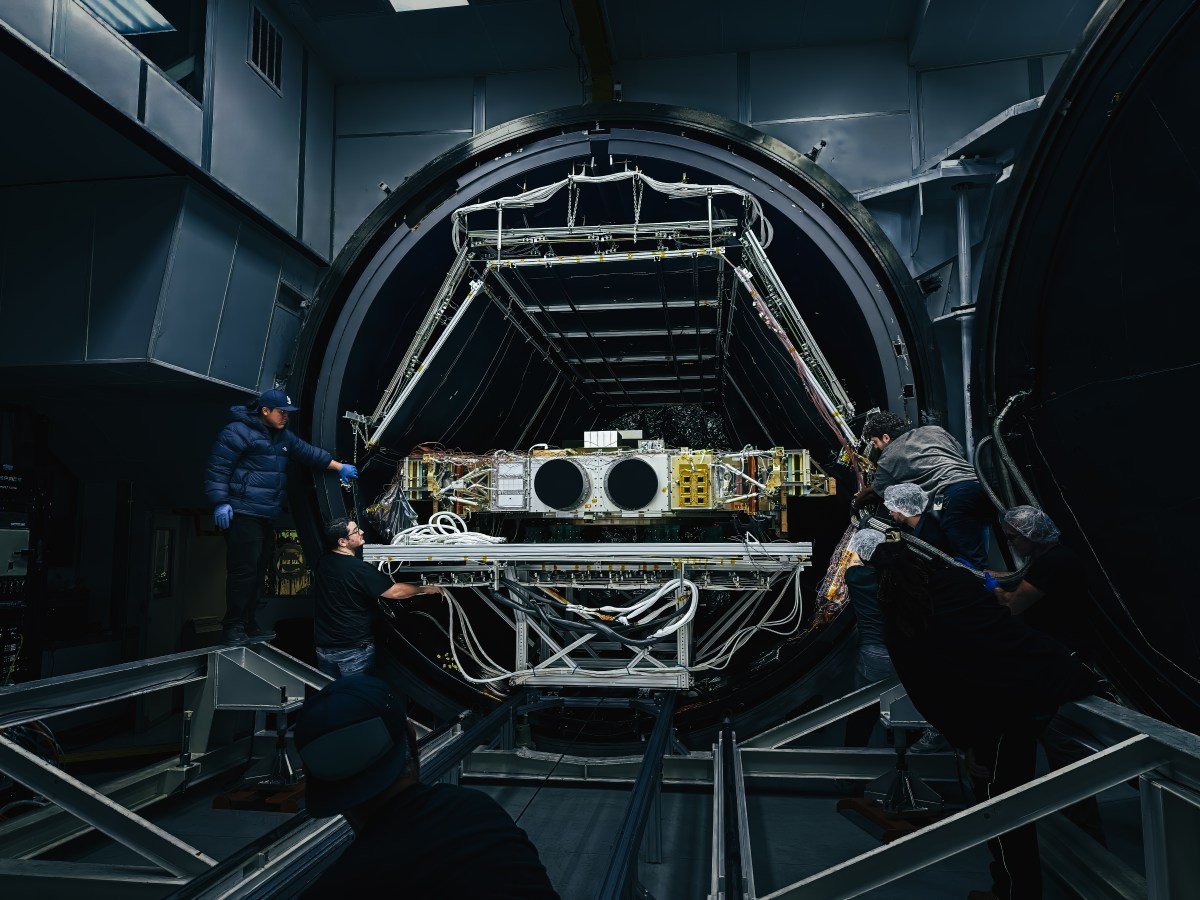
K2 Space is preparing to launch “Gravitas,” one of the most powerful satellites ever constructed, as soon as late this month aboard a SpaceX Falcon 9 rocket. This mission serves as a critical proof-of-concept for the orbital data centers of the future, marking the startup’s transition into active space operations.
Engineering a New Class of Spacecraft
Founded in 2022 by former SpaceX engineers Karan and Neel Kunjur, K2 Space has engineered a massive vehicle. Gravitas weighs two metric tons and features a sprawling 40-meter wingspan once its solar arrays are deployed in orbit.
The primary objective is raw electrical output. Gravitas is designed to generate 20 kW of power, enabling the operation of advanced sensors, transceivers, and onboard computing systems. While conventional satellites typically operate on just a few kilowatts, K2’s design rivals the power output of heavy-duty spacecraft like the ViaSat-3 and upcoming Starlink V3 iterations.
Mission Objectives and Technical Hurdles
The Gravitas mission will carry 12 undisclosed payload modules, including hardware for the U.S. Department of Defense. A central feature of the test is a 20 kW electric thruster, which the company claims will be the most powerful ever flown in space.
CEO Karan Kunjur outlined the success criteria for the mission:
- Successful deployment and power generation.
- Activation of the customer payloads and the high-power electric thruster.
- Orbital maneuvering to raise the spacecraft’s altitude by thousands of kilometers.
With 85% of its components developed in-house, K2 Space is treating this mission as an iterative learning experience. The company has already secured $450 million in funding and achieved a $3 billion valuation as of December 2025. K2 intends to launch 11 additional satellites over the next two years to refine its commercial offerings.
The Future of Orbital Compute
As the demand for orbital data processing grows, high-powered satellites are becoming an economic necessity. Increased power allows for higher throughput in communications networks and signals that are more resilient against jamming.
The long-term strategy for K2 involves leveraging heavy-lift launch vehicles like SpaceX’s Starship. Although the cost-per-kilogram of launch remains a variable, Kunjur argues that the Gravitas platform—priced at approximately $15 million—is significantly more cost-effective than traditional high-power satellites while offering superior performance compared to smaller, similarly priced alternatives.
Preparing for a Post-Starship Market
K2 is already looking beyond its current generation of hardware. The team is currently developing designs for a 100 kW satellite, positioning the company to be a first-mover once heavy-lift rockets like Starship and New Glenn become standard industry options. By building the infrastructure today, K2 aims to dominate the emerging market for massive, high-performance orbital networks.