
The era of the smartphone is reaching its twilight. Jon Callaghan, co-founder of True Ventures, predicts that the devices currently dominating our pockets will be obsolete within a decade—and potentially phased out in as little as five years. For a firm with $4 billion in assets and a history of identifying transformative shifts, this isn’t mere speculation; it is the core investment thesis driving their latest capital deployments.
The Inefficiency of the Modern Interface
Callaghan argues that smartphones are fundamentally flawed as an interface between humans and artificial intelligence. The current workflow—physically retrieving a device, unlocking it, and typing out text or emails—is inefficient and disruptive to daily life. It creates a friction-heavy barrier that limits our ability to interact naturally with the intelligence surrounding us.
True Ventures is actively seeking to replace this model. Their strategy mirrors their past successes: betting on hardware that seemed questionable at the time but ultimately defined new human behaviors. Just as the firm backed Fitbit before wearables were mainstream, supported Peloton when critics doubted the connected-bike model, and championed Ring despite public rejection, they are now targeting the next leap in human-computer interaction.
Sandbar: The New “Thought Companion”
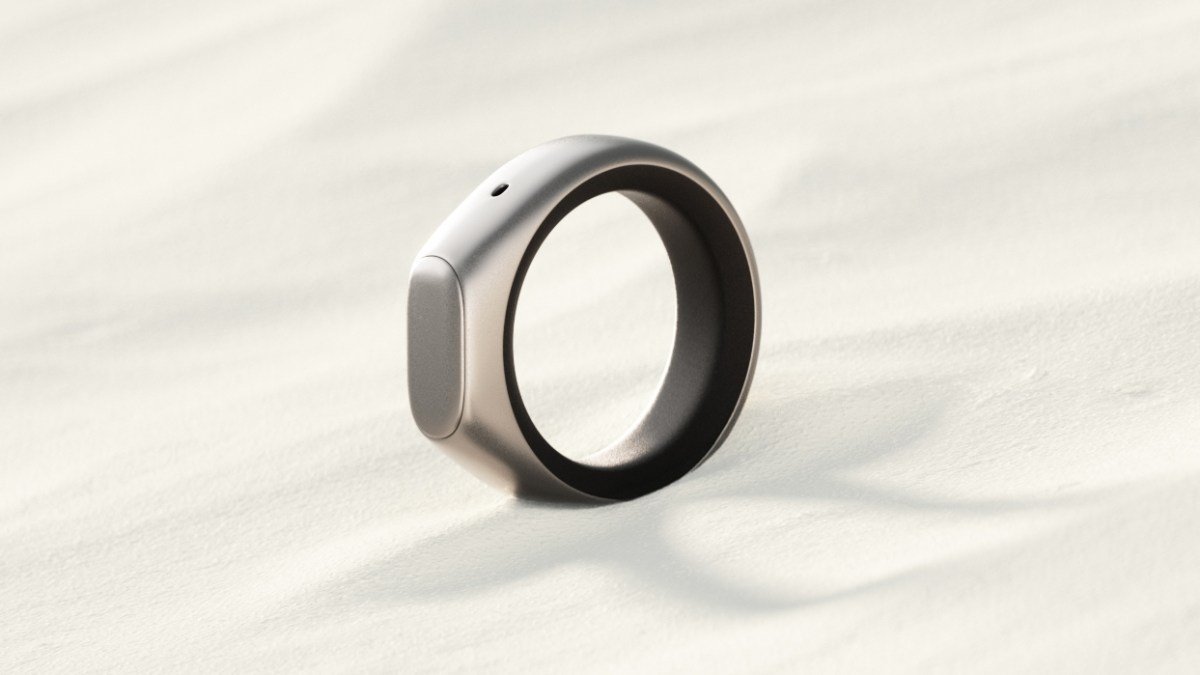
The firm’s latest bet is Sandbar, a voice-activated ring designed to function as a “thought companion.” Unlike other wearable attempts that try to do too much, Sandbar has a singular purpose: capturing and organizing thoughts through voice notes.
The device is not meant to replace the smartphone overnight, but to enable a behavior that current technology ignores. By leveraging AI to capture information the moment it strikes, the ring represents a shift toward ambient, frictionless interaction. The founders, Mina Fahmi and Kirak Hong—both alumni of Meta’s CTRL-Labs—are focusing on the behavioral change the hardware enables rather than the gadgetry itself.
Navigating the AI Investment Cycle
While the broader tech industry pours billions into AI infrastructure and massive data center capital expenditures, Callaghan maintains a disciplined, contrarian stance. He warns that the current capital-intensive cycle, marked by circular financing among hyperscalers, carries significant risks.
True Ventures continues to focus on early-stage seed checks, typically ranging from $3 million to $6 million. For Callaghan, the most significant value creation in the AI revolution will not occur at the infrastructure layer, but at the application layer, where new interfaces will dictate how we live and work.
The Data Behind the Shift
The market indicators support the firm’s skepticism regarding the smartphone’s longevity. The global smartphone market has hit a saturation point, with growth stalling at roughly 2% annually. In contrast, the wearables sector—encompassing smartwatches, rings, and voice-enabled devices—is experiencing double-digit growth.
As True Ventures continues to cultivate its network of repeat founders, the message remains clear: the future of technology is not found in a screen, but in the behaviors we cannot yet live without. For those tracking the evolution of personal computing, the decline of the smartphone is no longer a “what if”—it is a matter of when.