
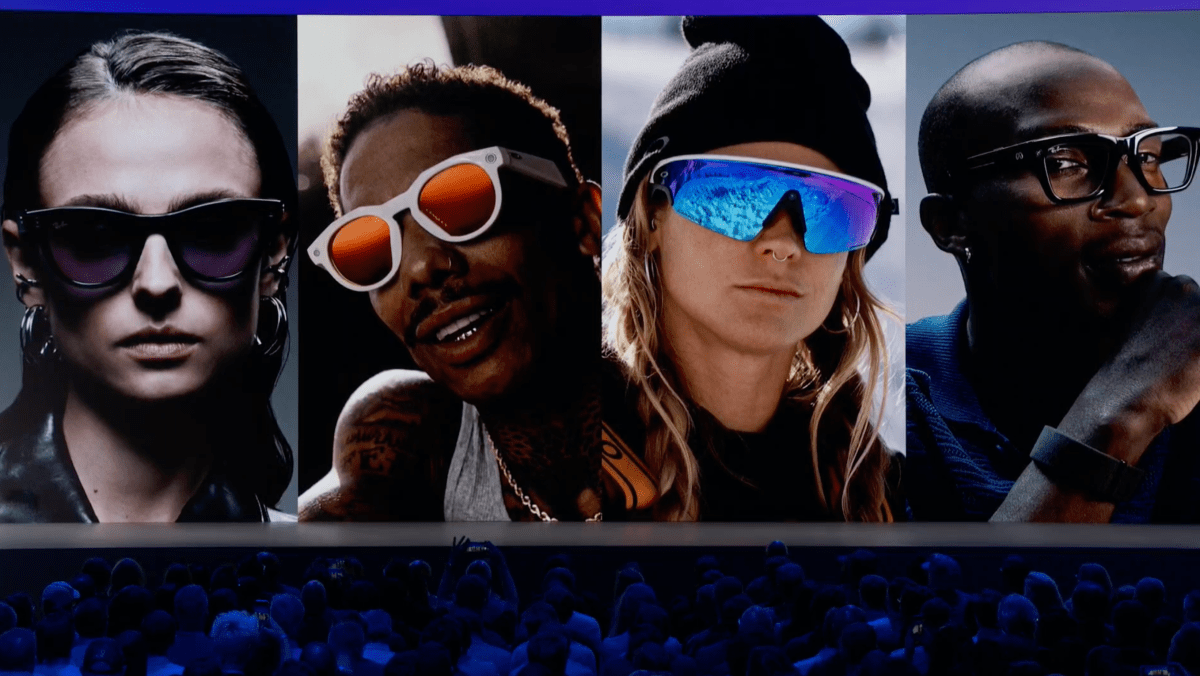
At the Meta Connect 2025 keynote, CEO Mark Zuckerberg unveiled a bold strategy to displace the smartphone: the new Meta Ray-Ban Display smart glasses. Designed to restore human presence by reducing our reliance on handheld screens, this hardware represents the culmination of over $70 billion in investment into the company’s Reality Labs division since 2020.
Restoring Presence Through Wearable Tech
Zuckerberg positions the device not merely as a gadget, but as a social corrective. “The promise of glasses is to preserve this sense of presence that you have with other people,” he stated. By offloading digital interactions to a wearable display, Meta aims to solve the modern compulsion to constantly check phones during social engagements.
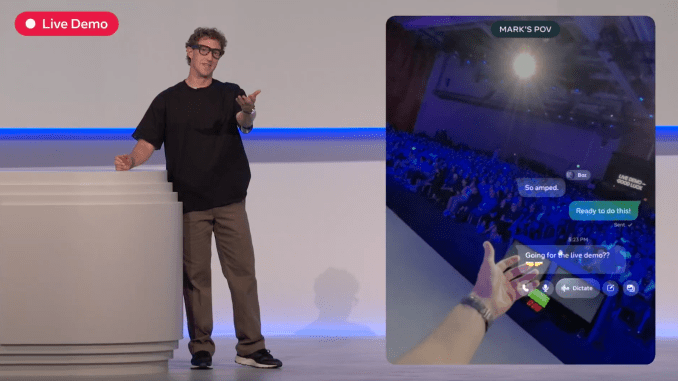
Beyond the philosophical pitch, the strategic motive is clear: Meta seeks to bypass the financial friction of Apple and Google’s app store ecosystems by controlling the hardware platform itself.
Advanced Features and Neural Control
The Meta Ray-Ban Display integrates cameras, microphones, and an onboard AI assistant to project apps like WhatsApp, Instagram, and Facebook directly into the user’s field of view without obstructing their sightline. However, the most significant innovation is the Meta Neural Band.
This wristband utilizes surface electromyography (sEMG) to interpret electrical signals between the brain and hand. During the keynote, Zuckerberg demonstrated the ability to “write” messages by moving his fingers as if holding a pen. According to Reality Labs’ research, users can achieve speeds of up to 30 words per minute—a figure that rivals the estimated 36 words per minute typical of smartphone touchscreen typing.
The Battle to Replace the Smartphone
Meta is not alone in this race; both Apple and Google are actively developing hardware to capture the future of personal computing. While previous iterations of Meta’s smart glasses have moved millions of units, the transition from a niche accessory to a smartphone killer remains a massive hurdle.
The success of this transition hinges on user behavior. Meta must prove that gestures and voice-free interaction feel more natural than pulling a smartphone from a pocket. As Zuckerberg noted, “The technology needs to get out of the way.” Whether this vision of a post-smartphone world resonates with consumers will be the ultimate test for the company’s most ambitious hardware project to date.