
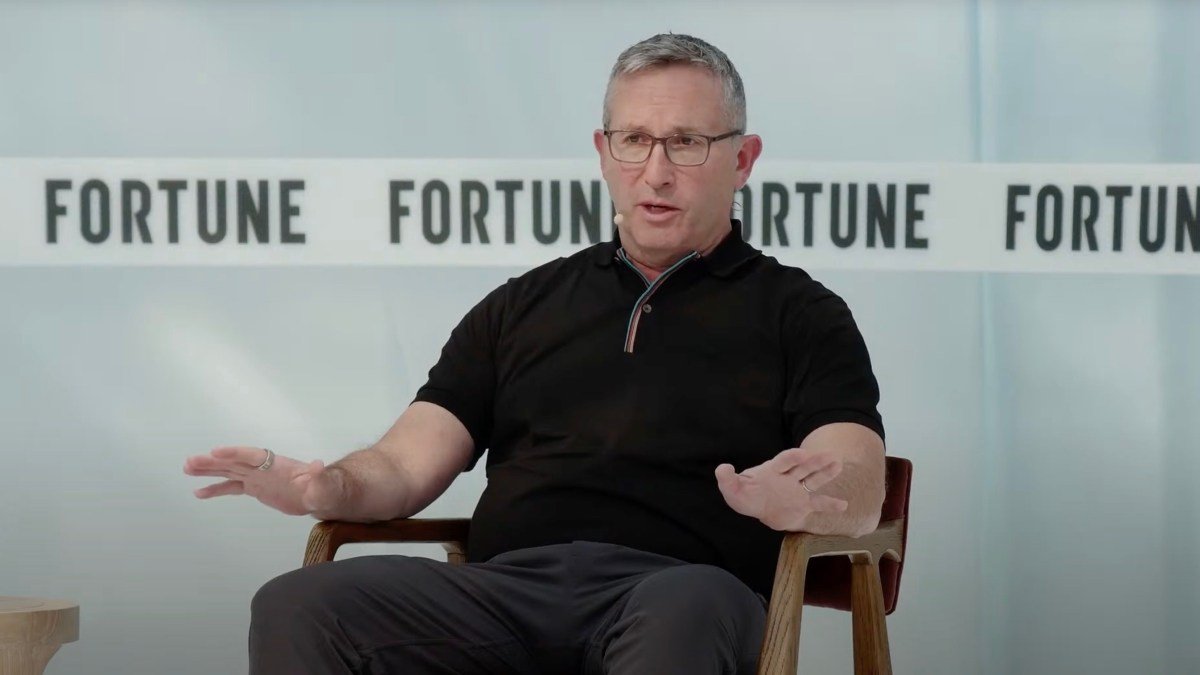
Oura CEO Tom Hale officially addressed the recent firestorm of controversy surrounding the company’s partnership with the U.S. Department of Defense (DoD) and data analytics firm Palantir. Speaking at the Fortune Brainstorm Tech conference this Monday, Hale categorically denied that the smart ring manufacturer shares sensitive user health data with government agencies.
Setting the Record Straight on Data Privacy
The backlash, fueled largely by viral influencer-driven reports, suggested that Oura was funneling private health metrics—including heart rate, sleep patterns, and reproductive health data—directly to the government. Hale dismissed these claims as “misinformation,” emphasizing that the company maintains a strict policy against selling or sharing user data without explicit consent.
“For the record, we will never share your data with anyone unless you direct us to do it,” Hale stated. He reiterated that the enterprise solution utilized by the DoD operates within a completely separate, secure environment, ensuring no cross-contamination or government access to personal consumer health records.
Clarifying the Palantir Connection
Hale also sought to de-escalate concerns regarding the company’s relationship with Palantir. He clarified that the term “partnership” was a significant exaggeration of a standard commercial contract. The connection stems from an acquisition Oura made last year, inheriting a SaaS agreement related to Impact Level 5 (IL5) certification—a DoD standard for handling sensitive, unclassified data.
“We have a small commercial relationship. The systems are not connected,” Hale explained. “No one in the government can see your data. No one at Palantir can see your data. It is totally overblown.”
The Future: A ‘Cloud of Wearables’
Beyond the current PR challenges, Oura is positioning itself as a “preventionist” health tool. By leveraging machine learning, the company aims to alert users to potential health issues before they manifest into clinical illness. Despite the rise of cheaper wrist-worn competitors, particularly in Asian markets, Hale noted that Oura is currently experiencing growth exceeding 100%.
Looking ahead, Hale hinted at a broader ecosystem rather than a singular device dominance. “It’d be really cool if there was one ring to rule them all, but we know practically that’s not true,” he remarked. “I believe very much that we’ll see a cloud of wearables. The choice of those wearables will be relevant to the clinical use you’re trying to put it to.”
While Oura continues to explore government-related initiatives—such as its program with Medicare Advantage—the company maintains that its core commitment remains the privacy and security of its users, supported by TLS 1.2 encryption for all data in transit.