
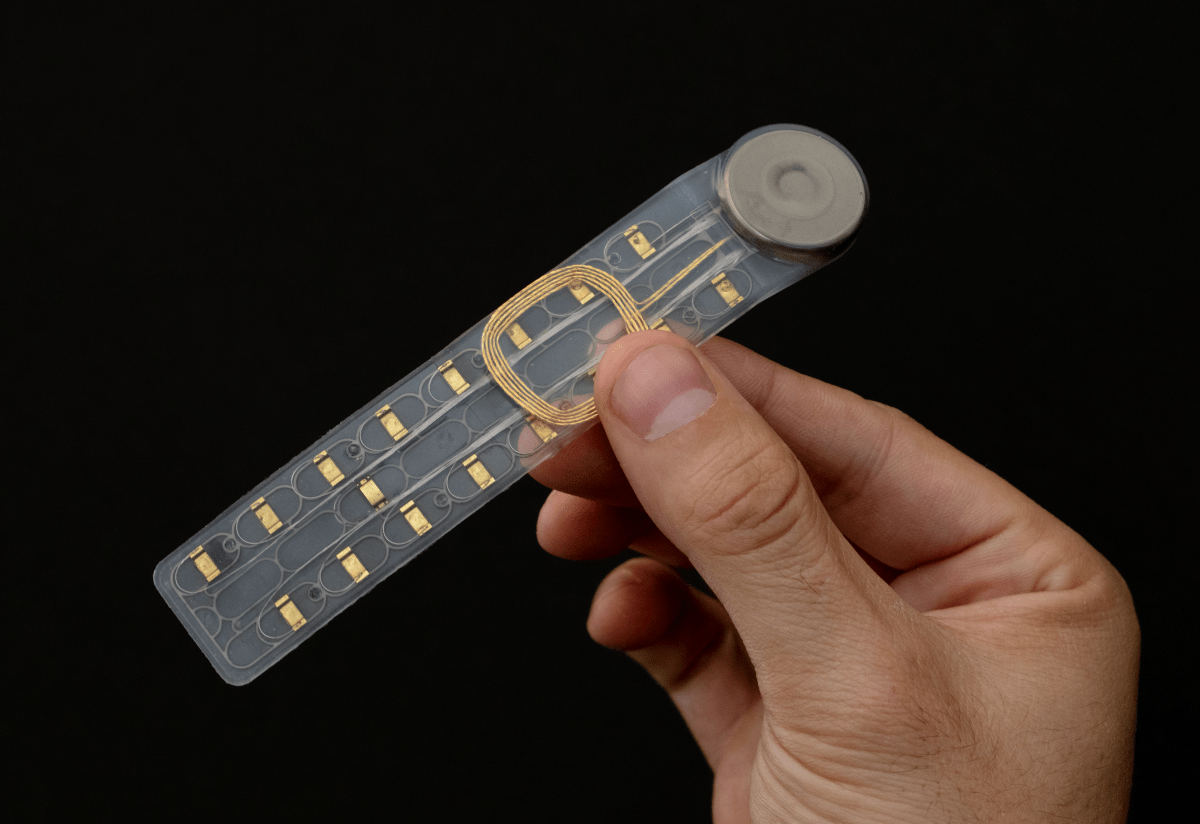
Austin-based startup Phantom Neuro has secured $19 million in new funding to advance its groundbreaking neurotechnology. The company is developing an implantable, wristband-like device designed to interpret nerve signals, allowing amputees to control prosthetic limbs with unprecedented precision and intuitive ease.
Bridging Biology and Bionics
The core of Phantom Neuro’s technology lies in the “phantom limb” phenomenon. Amputees often retain the ability to “feel” a limb that is no longer there because the original nerve endings remain active. The company’s proprietary “Phantom X” software captures these residual nerve impulses and translates them into physical movement for prosthetics.
Recent data from the company’s “ASCENT” study highlights the system’s efficacy, demonstrating 94% accuracy across 11 distinct wrist and hand movements. According to the firm, users can achieve up to 85% of natural functionality with just 10 minutes of calibration.

Regulatory Milestones and Strategic Backing
Phantom Neuro has gained significant traction with the FDA, securing both “Breakthrough Device” status and inclusion in the TAP (Total Product Life Cycle Advisory Program). These designations are designed to accelerate the path to commercialization for high-impact medical technologies.
The latest funding round was led by Ottobock, a global leader in prosthetics manufacturing, signaling a strong strategic alignment. Other participants include a mix of existing backers like Breakout Ventures and Draper Associates, alongside new investors such as Actual VC and Intel. This brings the company’s total funding to $28 million to date.
From Neurosurgery to Scalable Tech
Founded by Dr. Connor Glass, a former medical researcher at Johns Hopkins, the company emerged from a desire to move beyond the clunky, invasive nature of early brain-computer interfaces. Glass identified that existing lab-based solutions—often involving massive cables and external hardware—lacked the scalability required for real-world patient adoption.
“I was struck by the fact that this isn’t scalable at all,” Glass noted regarding his early research. “This is purely proof of concept.” By shifting focus from the brain to peripheral nerve endings, Phantom Neuro aims to create a less invasive, more practical interface.
Future Applications Beyond Amputation
While the initial rollout targets prosthetic arms and legs, the potential utility of the technology is vast. The company is exploring long-term applications in remote robotics control and AI-driven movement training. Dr. Arne Kreitz, CFO of Ottobock, emphasized that the decision to invest was driven by the company’s unique, less invasive approach to the neural interface, which stands out in a crowded field of emerging neurotech.