

Google officially released the first beta of Android 17 this Wednesday, introducing significant performance enhancements and expanded functionality for media and camera applications. Beyond the technical upgrades, the company is fundamentally shifting its development lifecycle by abandoning traditional developer betas in favor of a continuous Canary channel, mirroring the update model used for the Chrome browser.
A New Continuous Release Model
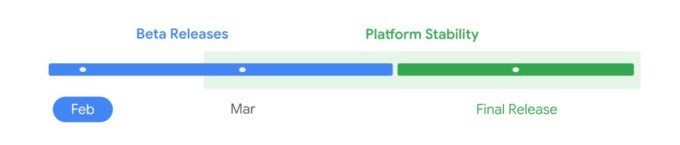
The transition to a Canary channel allows Google to push new APIs and features to developers the moment they pass internal testing. This approach aims to streamline workflows, providing developers with more integrated testing environments and the convenience of over-the-air updates. Google has set a target for platform stability by March, with the final public release of Android 17 scheduled for the second quarter of 2026.
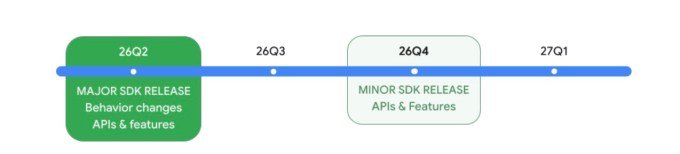
This strategy aligns with the two-release structure established with Android 16, which splits the year into a major SDK release in the first half and a minor release in the second. The objective remains clear: enable device manufacturers to deploy updates faster while aggressively reducing fragmentation across the Android ecosystem.
Enhanced Support for Large Screens
Android 17 introduces stricter constraints regarding app resizing. Developers will no longer have the option to opt out of resizing restrictions, preventing them from forcing specific orientations or static dimensions on large-screen devices. This mandate is part of Google’s broader initiative to ensure that applications maintain high-quality user experiences across tablets and foldable devices, regardless of window size or orientation.
Camera and Media Upgrades
The update brings substantial improvements to the multimedia stack. New APIs have been implemented to facilitate smoother camera transitions. Furthermore, Android 17 adds support for the VVC (H.266) video codec and introduces more rigorous controls for background audio, alongside improved loudness management to ensure consistent volume levels across different apps.
System Performance and Connectivity
Under the hood, Android 17 focuses on system efficiency. The update includes a refined garbage collection mechanism for improved memory management and a notable decrease in missed frames. Connectivity also receives a boost, with Google upgrading Wi-Fi capabilities to include more accurate proximity detection and enhanced secure peer discovery protocols.