
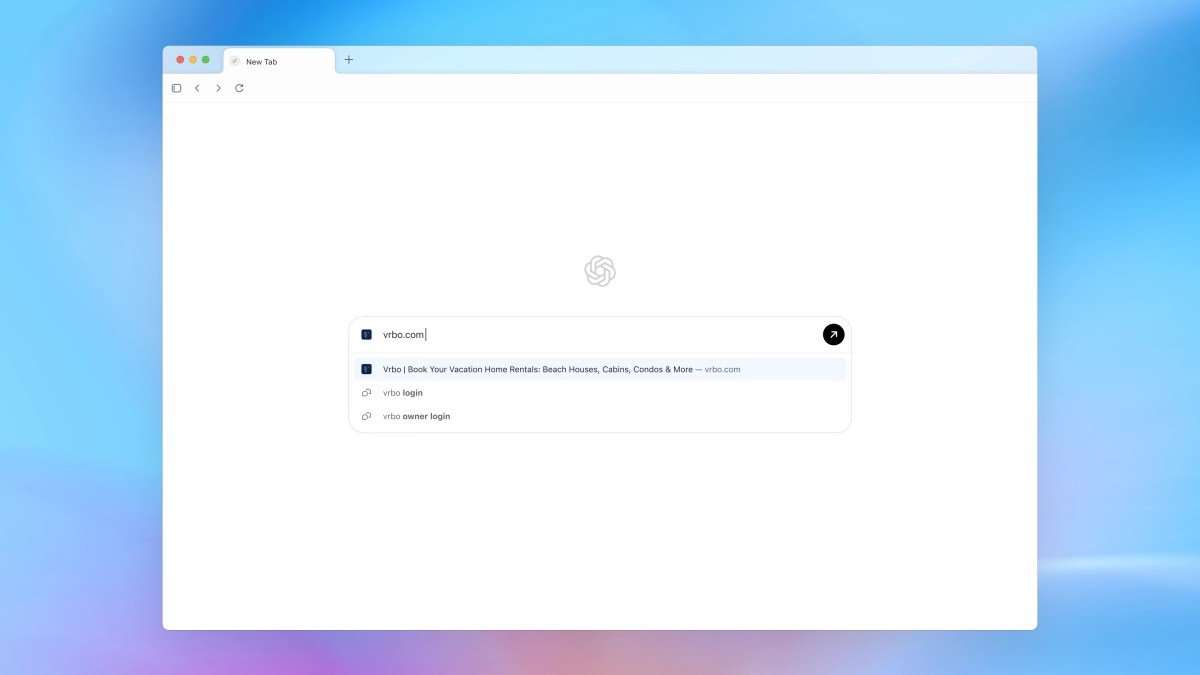
OpenAI officially unveiled its new AI-centric browser, ChatGPT Atlas, during a livestream this Tuesday. Designed to challenge the dominance of traditional browsers, Atlas seeks to position ChatGPT as the primary interface for web navigation, search, and productivity, rather than merely a chatbot companion.

The Strategic Shift: Browsing as a Data Hub
While the market is already crowded with AI browsers—including Strawberry, Perplexity’s Comet, and Opera’s Neon—OpenAI’s entry is distinct due to its massive scale. With 800 million weekly users, OpenAI is not necessarily trying to “fix” the web; it is attempting to ensure that ChatGPT remains the central hub of the user experience.
Currently exclusive to Mac, the company confirms plans to expand to Windows, iOS, and Android. Unlike competitors that rely on invite systems, OpenAI is making Atlas available to all users immediately, signaling an aggressive push for market share.
Rethinking the Web Experience
During the launch, CEO Sam Altman emphasized that AI represents a once-in-a-decade opportunity to reinvent the browser. The core philosophy of Atlas is to move away from traditional link-based search results. Instead, the browser’s address bar acts as a direct line to an AI agent capable of synthesizing answers from across the web.
Deep Integration and Memory
A standout feature of Atlas is its “Memory” capability. By analyzing browsing history alongside past ChatGPT interactions, the browser provides highly contextual responses. Users can ask, “What was the work document I had my presentation plan on?” and the browser will retrieve specific links and data points directly from the user’s history.
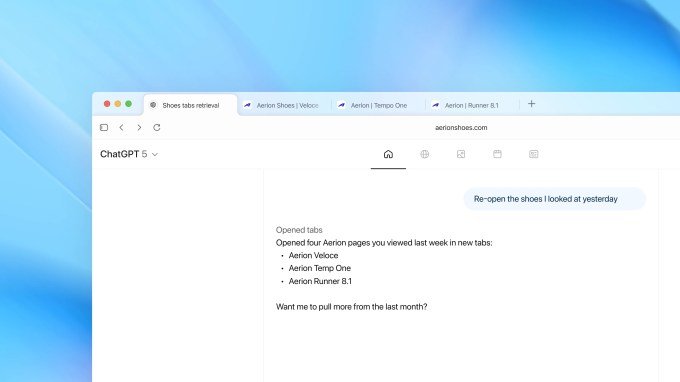
This integration is designed to gather granular data on user behavior, allowing OpenAI to refine its products while offering a more personalized browsing environment. Additionally, Atlas includes a hovering writing assistant, and the company is integrating its App SDK to enable direct interaction with third-party applications from within the browser.
The Challenge of Adoption
Despite the innovation, OpenAI faces a significant hurdle: habit. While Chrome, Safari, and Edge remain entrenched as the default gateways for billions, OpenAI is betting that users will choose to abandon these platforms in favor of an environment where the chatbot and browser are inseparable.
Fidji Simo, OpenAI’s CEO of applications, noted in her recent blog post that the goal is for ChatGPT to evolve into an “operating system for your life.” By controlling the distribution layer, OpenAI hopes to mitigate the risks posed by platform owners—such as Meta’s recent move to block third-party chatbots on WhatsApp—which could otherwise restrict access to their user base.
Ultimately, Atlas serves as a “canvas” for OpenAI’s vision. Whether users are ready to merge their browsing habits with a constant AI presence remains the definitive test for the company’s long-term strategy.