
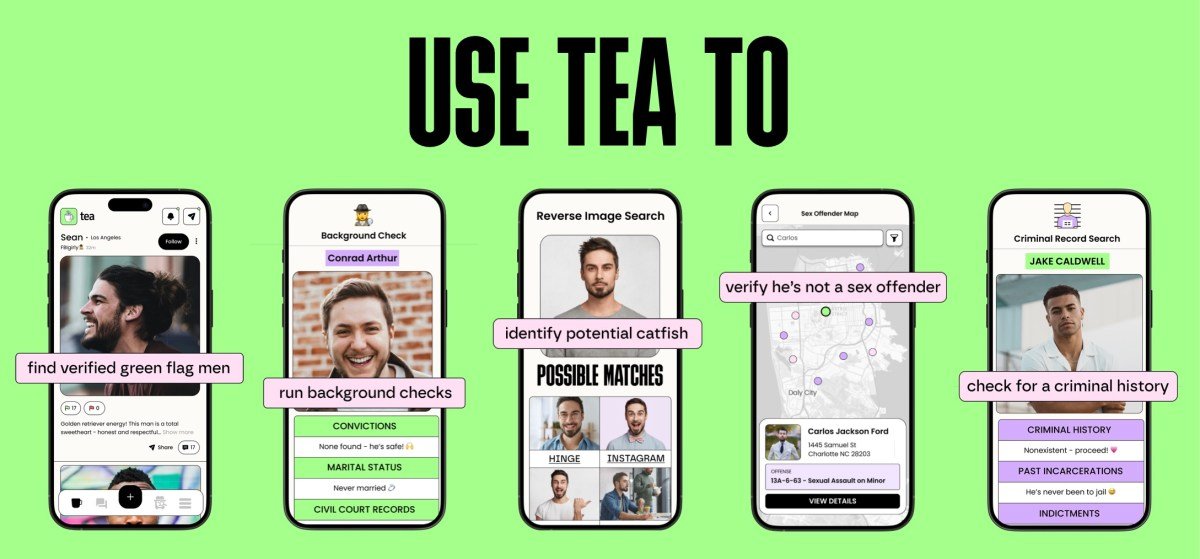
Apple has officially removed the controversial dating safety applications “Tea” and “TeaOnHer” from its App Store following a surge of user complaints and security failures. The removal, which took effect this past Tuesday across all global markets, was initially identified by app store intelligence firm Appfigures. While the apps are no longer available on iOS, they currently remain accessible on the Google Play Store.
Why Apple Pulled the Plug
In an official statement, Apple confirmed that the removal was triggered by the developers’ failure to adhere to strict guidelines regarding content moderation and user privacy. The tech giant noted a significant volume of negative reviews and user reports, including alarming instances where the personal information of minors was exposed on the platforms.
Apple representatives stated that they attempted to communicate these critical issues to the developers, but the problems remained unaddressed. Consequently, the apps were found in violation of several App Review Guidelines:
- Rule 1.2: Mandates that apps with user-generated content must provide reporting and blocking tools to remove objectionable material.
- Rule 5.1.2: Prohibits the unauthorized use or sharing of an individual’s personal data.
- Rule 5.6: Addresses violations of the Developer Code of Conduct regarding excessive customer complaints.
The Rise and Fall of the ‘Tea’ Ecosystem
The “Tea” app gained significant notoriety earlier this year, positioning itself as a safety tool for women—a digital iteration of the “Are We Dating the Same Guy?” Facebook groups. Users utilized the platform to post “Yelp-style” reviews of men, sharing personal information and labeling them as “green flags” or “red flags.” This practice sparked intense debate regarding privacy invasion and potential defamation, as men targeted by the app questioned the legality of such public disclosures.
The apps were also plagued by severe security vulnerabilities. Over the summer, “Tea” suffered a major data breach, exposing 72,000 images—including 3,000 selfies and government-issued IDs used for account verification, alongside 59,000 private posts and messages. Its rival, “TeaOnHer,” which allowed users to share information about women, faced similar scrutiny in August after security flaws exposed sensitive user documentation.
Market Impact and Copycats
Despite the controversy, the financial and user reach of these applications was substantial. According to Appfigures, “Tea” amassed 6.1 million lifetime downloads and generated $5 million in gross revenue. “TeaOnHer” reached 2.2 million downloads, though it did not feature in-app purchases.
The removal of these apps from the App Store has created a power vacuum that competitors are already exploiting. The app TeaOnHer and Him – Overheard has seen a dramatic surge in popularity, jumping from the 90th position to the 27th on the Overall Top App Charts, with 354,000 total downloads to date.