

Tinder is undergoing a significant strategic transformation to reverse a 7% decline in paying users. Facing a challenging fiscal landscape, parent company Match Group reported a 5% dip in users across its entire portfolio—including Hinge and Match.com—during Q2 2025. To stabilize revenue and reignite engagement, the platform is betting on a comprehensive redesign, AI-driven matching, and features tailored specifically for college students.
Strategic Redesign and UI Refresh
During the Q2 earnings call, Match Group CEO Spencer Rascoff confirmed that Tinder will implement a “cleaner, faster, and more modern” user interface starting in the third quarter. A primary focus of this update is the “see who likes you” tab, which is being redesigned to prioritize high-intent connections and increase monetization potential.
New Modes and Engagement Tools
To deepen user interaction, Tinder is introducing “modes.” This feature allows users to toggle between different dating goals in real time, moving beyond static profile tags. Furthermore, the app is adopting a Hinge-inspired approach by allowing users to “like” specific elements of a profile, providing a natural icebreaker for starting conversations.
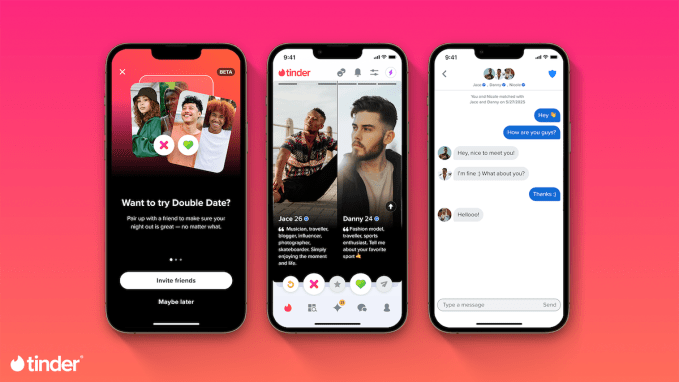
The company also highlighted the success of its “Double Date” feature, which allows users to match as a pair with another group of friends. Data indicates strong adoption among the core target audience, with 92% of users leveraging the tool being under 30.
Targeting Gen Z with AI and College-Specific Features
A central pillar of the $50 million product investment announced by Match Group is the expansion of AI-powered matching. Initially tested in New Zealand, this tool creates curated matches based on user profiles, personality questionnaires, and optional photo analysis. According to Rascoff, this experience is designed to move the platform away from superficial, appearance-based swiping toward more thoughtful, intent-driven connections.
The company is also eyeing the campus demographic with plans to introduce college-specific search capabilities, enabling students to filter matches by institution to foster more relevant local connections.
Financial Context and Leadership Shift
These initiatives follow a mixed financial performance, with reported flat year-over-year revenue of $864 million and earnings of $122.5 million. Despite these figures, the company’s stock rose following a positive Q3 revenue forecast of $910-920 million.
This quarter marks the first full period under the leadership of CEO Spencer Rascoff, who assumed the role in February following the transition of former Tinder CEO Faye Iosotaluno. The company continues to streamline operations, having executed a 13% workforce reduction in May to optimize resources for this new product-focused roadmap.