
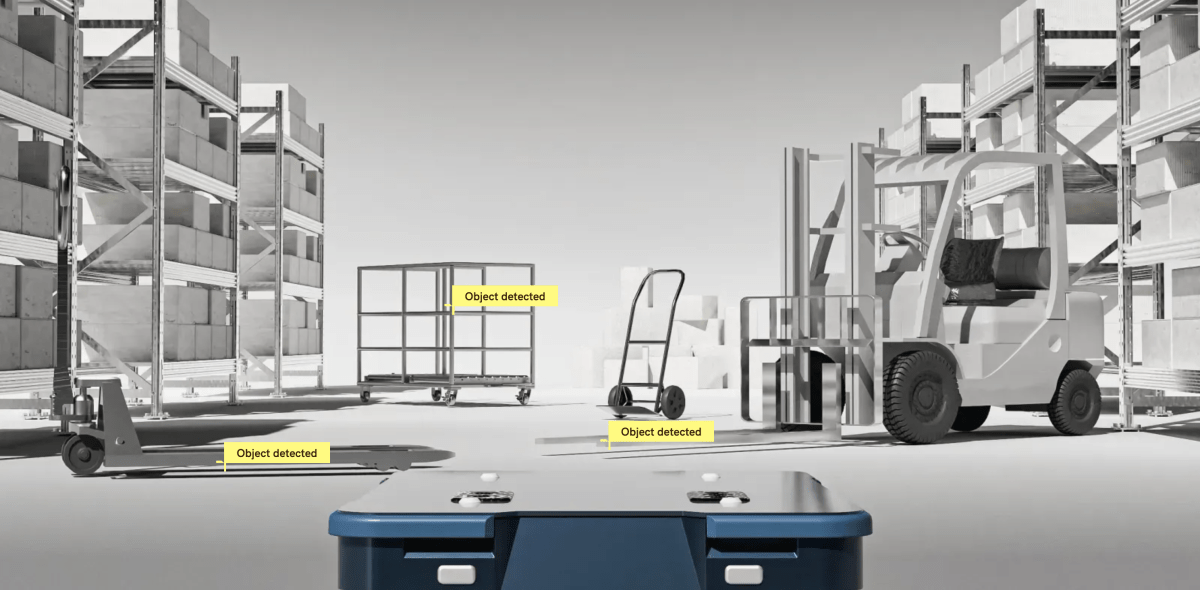
Oslo-based startup Sonair has secured $6 million in funding to scale its innovative ADAR (acoustic detection and ranging) sensor technology. Designed to enhance robotic safety as machines increasingly operate alongside humans, the ultrasonic solution offers a more cost-effective and comprehensive alternative to traditional lidar systems.
How Ultrasonic Sensing Outperforms Lidar
Unlike lidar, which relies on narrow beams of light to map environments, Sonair’s technology utilizes high-frequency ultrasound waves. By emitting sound and capturing the resulting echoes, the sensor generates a detailed three-dimensional map of the robot’s surroundings.
“Lidar is like swiping a laser pointer,” explains Knut Sandven, co-founder and CEO of Sonair. “If you shout in a room, you fill it with sound. Our sensors do the same, providing a volumetric view that complements existing camera systems.”
Bridging the Perception Gap in Robotics
While cameras are essential for visual recognition, they often struggle with depth perception and reliability under varying environmental conditions. Sonair’s ADAR sensors are engineered to eliminate these blind spots. Because the sensor output follows standard industry formats, it integrates seamlessly with existing robotic hardware and software stacks.
Industrial Safety and Market Expansion
Since the product’s launch earlier this year, demand has surged across the robotics and industrial safety sectors. Manufacturers are currently deploying the technology to monitor restricted zones; the sensors automatically detect human presence near heavy machinery, triggering immediate safety shutdowns to prevent workplace accidents.
Addressing the Human-Robot Interaction Hurdle
The $6 million funding round, backed by investors including Scale Capital, Investinor, and ProVenture, arrives as the industry faces mounting pressure regarding robot safety. As humanoid robots and autonomous machines move into human-centric spaces, the challenges mirror the early safety debates seen in the autonomous vehicle sector.
Industry experts, including Fady Saad of Cybernetix Ventures, have highlighted safety as a critical barrier to the widespread adoption of robotics in homes. By providing a more robust perception layer, Sonair aims to mitigate these risks. Sandven remains ambitious about the company’s trajectory: “My goal is to have this technology in all robots, just like cameras are today.”