
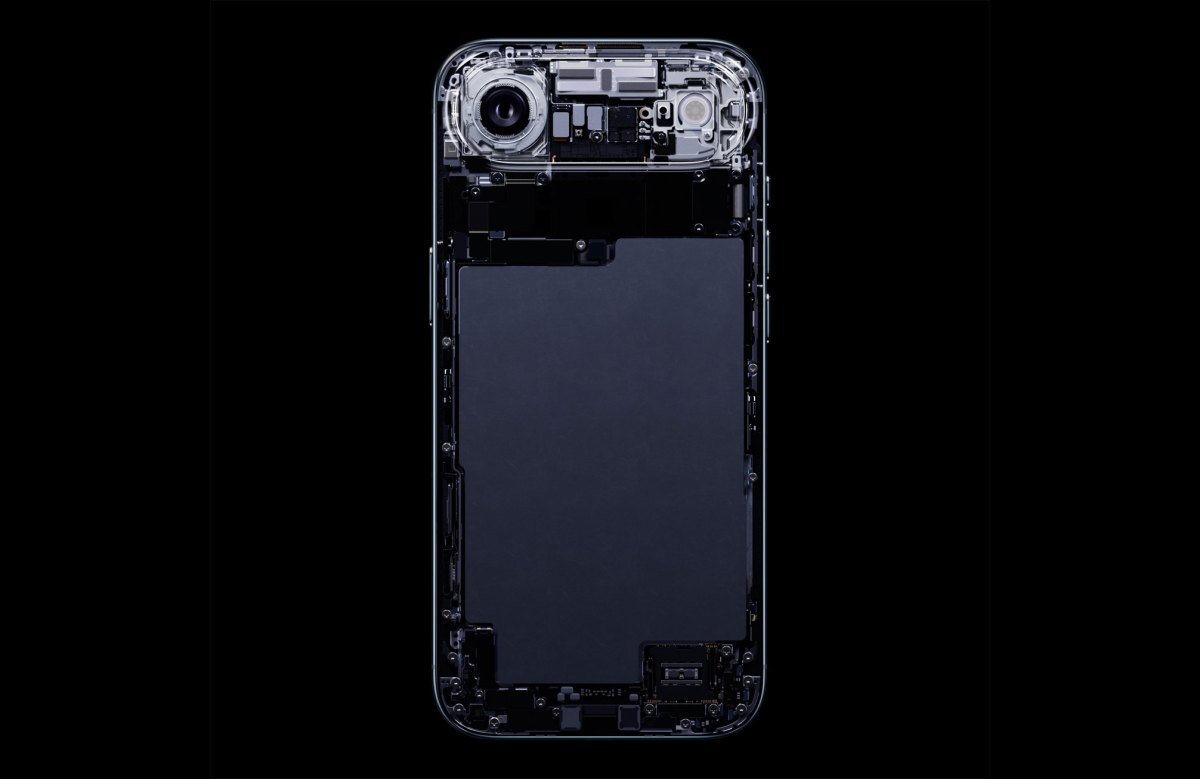
While the iPhone Air’s ultra-thin profile and miniaturized logic board have captured headlines, the device’s true technological revolution lies hidden within its chassis. Gene Berdichevsky, CEO of battery materials firm Sila and a former lead engineer on Tesla’s original Roadster, identifies the phone’s new battery design as a game-changing breakthrough for mobile hardware.
Engineering the Impossible: The Metal Can Battery
The secret behind the iPhone Air’s unique form factor is Apple’s patented metal can battery technology. Unlike standard pouch cells—which rely on soft plastic casings prone to swelling—the metal can enclosure provides structural integrity and physical durability.
For years, Apple utilized L-shaped batteries, which created significant “pinch points” during the natural expansion cycle of lithium-ion cells. The metal can construction eliminates these vulnerabilities. According to Berdichevsky, this makes the battery architecture essentially “bulletproof,” allowing for complex, arbitrary two-dimensional shapes that maximize every cubic millimeter of internal space.
Maximizing Efficiency in Tight Spaces
The rigid casing allows Apple to push battery cells right up to the device’s edges, snaking them around circuit boards with unprecedented precision. This design freedom is essential for the iPhone Air’s slim aesthetics, but its impact extends far beyond smartphones.
Berdichevsky predicts that the industry will inevitably shift toward metal can batteries despite the higher manufacturing costs. The primary driver is energy density: the ability to utilize unconventional shapes allows for greater power storage in compact devices, particularly in the emerging fields of AR and VR hardware.
The Future: Paving the Way for Silicon Anodes
The adoption of metal can technology may also solve a critical hurdle for future battery chemistry: the integration of silicon anodes. While pure silicon anodes can store approximately 50% more energy than traditional graphite, they are notoriously difficult to manage due to significant swelling.
“It definitely will help introduce silicon in these kinds of devices,” Berdichevsky noted. By providing a more robust structural framework, the metal can design allows manufacturers to mitigate the expansion issues associated with silicon-heavy batteries. While Apple has opted for established chemistry in the current generation to ensure reliability, the transition to metal-enclosed cells clears the path for a massive leap in energy density in the near future.