
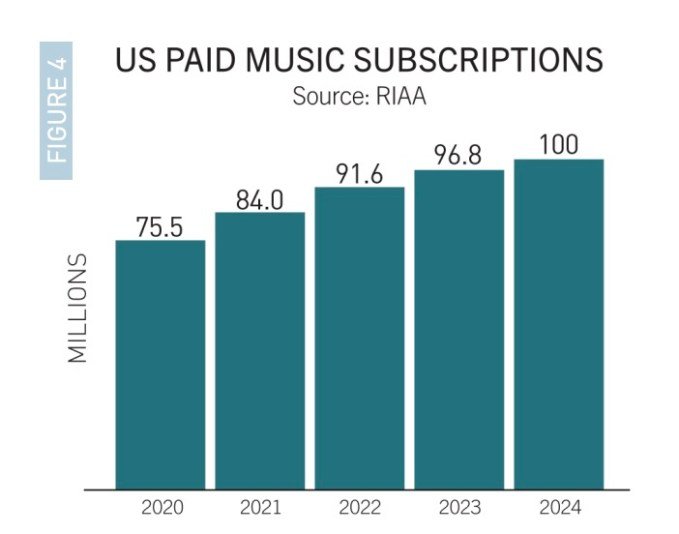
The United States streaming market reached a historic milestone in 2024, surpassing 100 million paid music subscribers for the first time. According to the latest year-end revenue report from the Record Industry Association of America (RIAA), this figure marks a steady climb from 96.8 million subscribers in 2023, representing a year-over-year growth of approximately 3%.
Defining the Market Growth
The RIAA data provides a precise look at the industry’s health, specifically excluding “limited tier” services—those restricted by device access or catalog limitations. Furthermore, the report standardizes its methodology by counting multi-user family plans as a single subscription, providing a grounded perspective on true subscriber adoption.
Market Dominance and Competitive Landscape
Industry leaders continue to dictate the pace of the market. Data from Digital Music News indicates that Spotify commands a 36% market share, closely trailed by Apple Music at 30.7%. A recent Bloomberg analysis notes that Spotify has reached 55 million paid subscribers in the U.S., though this figure may differ from RIAA metrics due to how the platform accounts for individual versus multi-user plan breakdowns.
Streaming Revenue Dominance
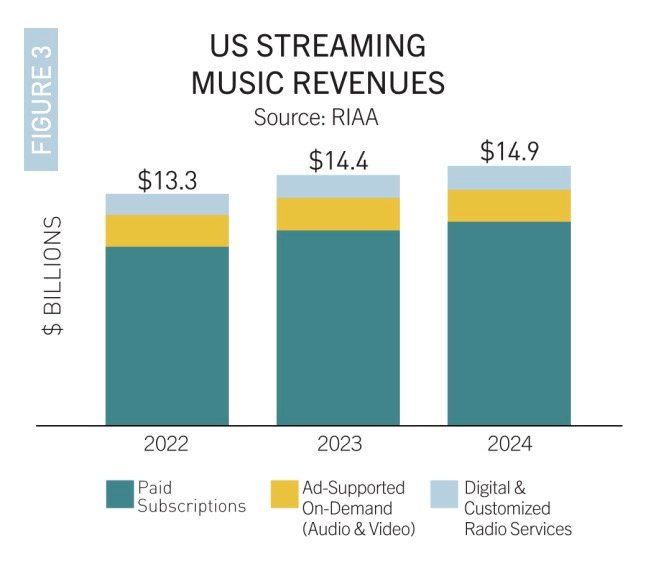
Streaming has solidified its role as the primary financial engine for the music industry, accounting for 84% of total music revenue in 2024. This $14.9 billion generated through streaming includes revenue from paid subscriptions, ad-supported tiers, digital radio, social media integration, and fitness applications. By comparison, physical media sales remain a secondary pillar, contributing 11% of the total revenue pie.
The Impact of Price Adjustments
Financial gains in the sector are bolstered by shifting pricing strategies. Paid subscription revenues climbed 5% year-over-year to $11.7 billion, which now accounts for 79% of total streaming revenue. This uptick follows a period where major platforms—including Spotify, Apple Music, and YouTube—implemented price hikes across their subscription tiers, suggesting that consumers have remained resilient despite the rising costs of digital entertainment.