
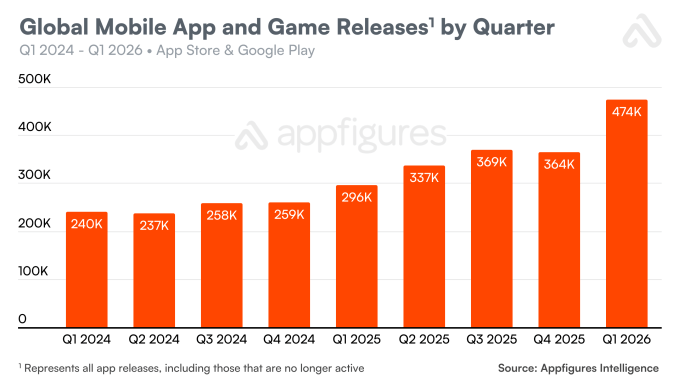
Contrary to predictions that artificial intelligence would render mobile applications obsolete, the App Store and Google Play are experiencing a historic surge in new software launches. Data from market intelligence firm Appfigures reveals that worldwide app releases in the first quarter of 2026 jumped 60% year-over-year. The growth is even more pronounced on Apple’s platform, which saw an 80% increase during the same period.
Is the App Store Entering a New Golden Age?
The momentum has accelerated into April 2026, with total releases across both major stores climbing 104% compared to the same timeframe last year. Apple’s Senior Vice President of Worldwide Marketing, Greg Joswiak, recently addressed the industry chatter regarding the platform’s decline, suggesting that rumors of the App Store’s death in the age of AI have been “greatly exaggerated.”
This resurgence challenges the prevailing narrative pushed by industry leaders like Nothing CEO Carl Pei, who has bet on a post-app, AI-first hardware future. With companies like OpenAI collaborating on AI-focused hardware, many expected mobile apps to be eclipsed by ambient computing or smart glasses. Instead, AI appears to be acting as a catalyst for development, lowering the barrier to entry for non-technical creators.
The Rise of AI-Assisted Development
The current market shift suggests that tools such as Claude Code and Replit are empowering a new generation of developers. By streamlining the coding process, AI is enabling individuals to build and deploy mobile apps with unprecedented speed, effectively triggering a “gold rush” of new software.
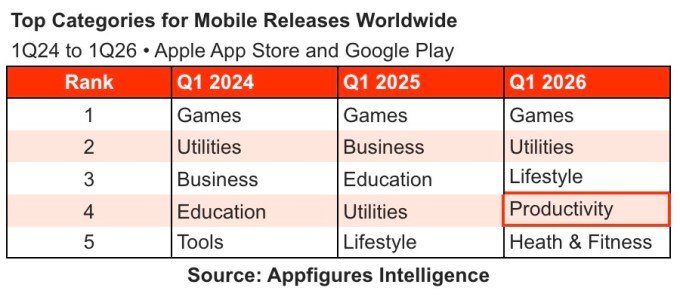
According to the latest metrics, the composition of the App Store is evolving:
- Mobile Games: Remain the volume leader.
- Utilities: Have climbed to the No. 2 position.
- Lifestyle: Jumped from No. 5 to No. 3.
- Productivity: Now ranks within the top five.
- Health and Fitness: Rounds out the top five categories.
The Security Challenge in the AI Era
This rapid influx of new applications brings significant moderation challenges. Apple has faced recent scrutiny after the rewards app Freecash was removed for policy violations—despite having spent months in the top charts. Additionally, a sophisticated clone of the Ledger Live crypto wallet recently managed to bypass security, resulting in the theft of $9.5 million from users.
While Apple continues to block millions of fraudulent submissions annually—rejecting over 320,000 spam or copycat apps in 2024 alone—the sheer volume of AI-generated content may necessitate a more aggressive approach. Industry analysts are increasingly calling for a dedicated “bunco squad” to monitor high-grossing or trending apps for sophisticated scams. As AI-assisted “vibe coding” continues to flood the marketplace, the battle between innovation and platform security is expected to intensify.