

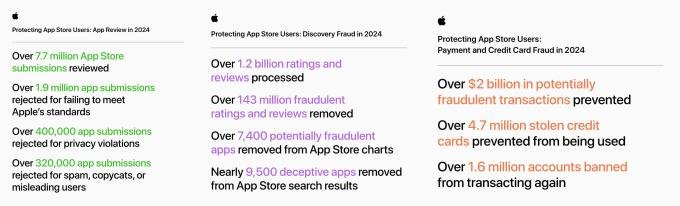
Ahead of its annual Worldwide Developers Conference (WWDC 2025), Apple has disclosed that it prevented over $2 billion in fraudulent transactions throughout 2024. This latest data brings the total value of thwarted illicit activity on the App Store to more than $9 billion over the past five years, underscoring the massive scale of security operations required to maintain the platform across 175 global regions.
The Hidden Cost of Going Solo
The timing of these metrics is strategic. Following a high-profile legal battle with Epic Games, Apple is now mandated to allow U.S. developers to link to alternative payment systems. While industry giants like Spotify and Amazon may have the infrastructure to manage their own transactions, smaller developers face significant risks, including chargebacks, refunds, and sophisticated fraud schemes—liabilities that the App Store currently absorbs in exchange for its 15% to 30% commission.
Security Beyond Payments
Fraud prevention extends far beyond transaction monitoring. Apple’s report highlights a aggressive crackdown on bad actors attempting to exploit the ecosystem:
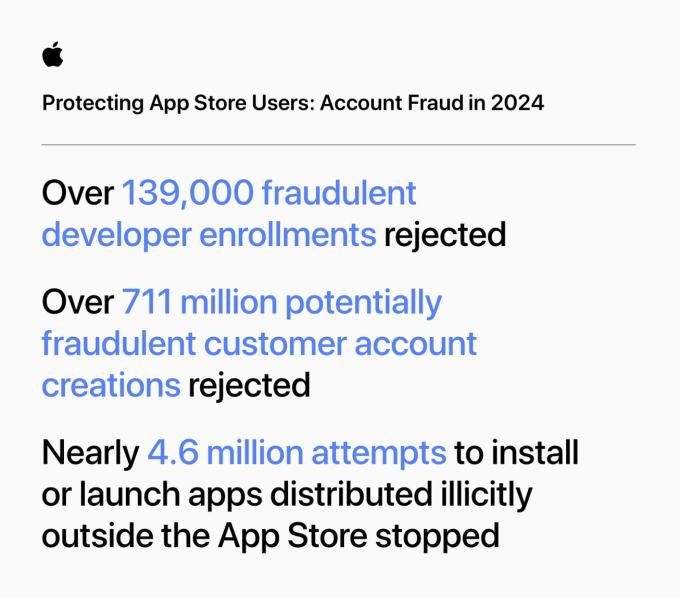
- Account Integrity: Over 146,000 developer accounts were terminated in 2024, with an additional 139,000 enrollments rejected.
- User Protection: More than 711 million customer account creations were blocked, and 129 million existing accounts were deactivated due to suspicious activity.
- App Vetting: Nearly 2 million risky app submissions were blocked from publication, alongside 10,000 illegitimate apps found on pirate storefronts containing malware or pirated content.
The Fragmentation Challenge
Under the EU’s Digital Markets Act, developers now have access to alternative marketplaces. However, Apple argues that these decentralized environments often facilitate piracy and the redistribution of software without developer consent. Apple reported stopping nearly 4.6 million attempts to install or launch apps outside of approved marketplaces last year.
For independent developers, the value proposition of the App Store remains tied to its “walled garden” approach. Early data from RevenueCat suggests that for many small businesses, the financial burden of managing payment infrastructure and mitigating fraud independently outweighs the commissions paid to Apple. By releasing these figures, the company is reinforcing its role as a security gatekeeper in an increasingly fragmented mobile landscape.