
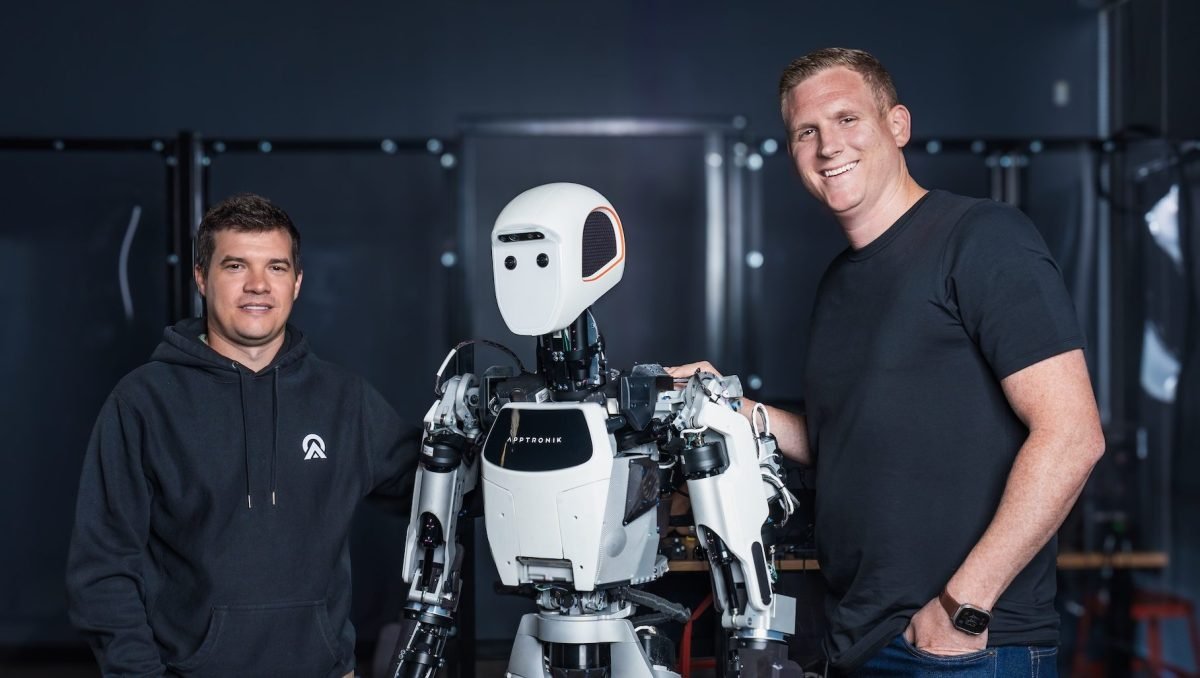
Apptronik, the University of Texas spinout specializing in humanoid robotics, secured a total of $935 million in its extended Series A funding round on Wednesday. The company, known for its strategic partnerships with Google DeepMind and Mercedes-Benz, has now reached a post-money valuation of approximately $5.3 billion.
Strategic Growth and Valuation Surge
The startup initially announced a $350 million Series A last year, which was later expanded to $415 million due to overwhelming investor demand. This latest infusion of $520 million comes from a mix of existing backers—including Google, Mercedes-Benz, and B Capital—and new institutional investors. According to PitchBook data, the company’s valuation has tripled since its initial $1.75 billion price tag at the start of the Series A, as investors paid higher premiums for shares in each subsequent extension.
Why the Series A Label Persists
While the capital raised rivals typical Series B or C rounds, Apptronik maintains its early-stage status. Sources close to the company indicate that leadership was not actively seeking a formal Series B, but rather responded to significant inbound interest. Given the extreme capital intensity required to develop bipedal robotics, the opportunity to secure $520 million at an increased valuation proved difficult to decline. This mirrors the trajectory of competitors like Figure AI, which has aggressively raised capital to fuel development in the sector.
Embodied AI and Industry Impact
The market enthusiasm surrounding Apptronik is largely driven by its focus on “embodied AI.” Unlike traditional robots that follow rigid, pre-programmed instructions, Apptronik’s machines are designed to perceive their surroundings and reason through tasks. Through its partnership with Google DeepMind, as well as collaborations with GXO and Mercedes-Benz, the company is targeting high-utility applications such as warehouse inventory management, trailer unloading, and heavy machinery operation.
From NASA Roots to Apollo
Although the company is currently categorized as an early-stage startup, its technical foundation is deeply rooted in long-term research. The team’s expertise traces back to 2013, predating the company’s formal founding, when members of the Human Centered Robotics Lab at the University of Texas at Austin participated in the NASA-DARPA Robotics Challenge working on the Valkyrie platform. This legacy continues today, with the company maintaining a collaborative relationship with NASA as it scales the production of its flagship humanoid robot, Apollo.