
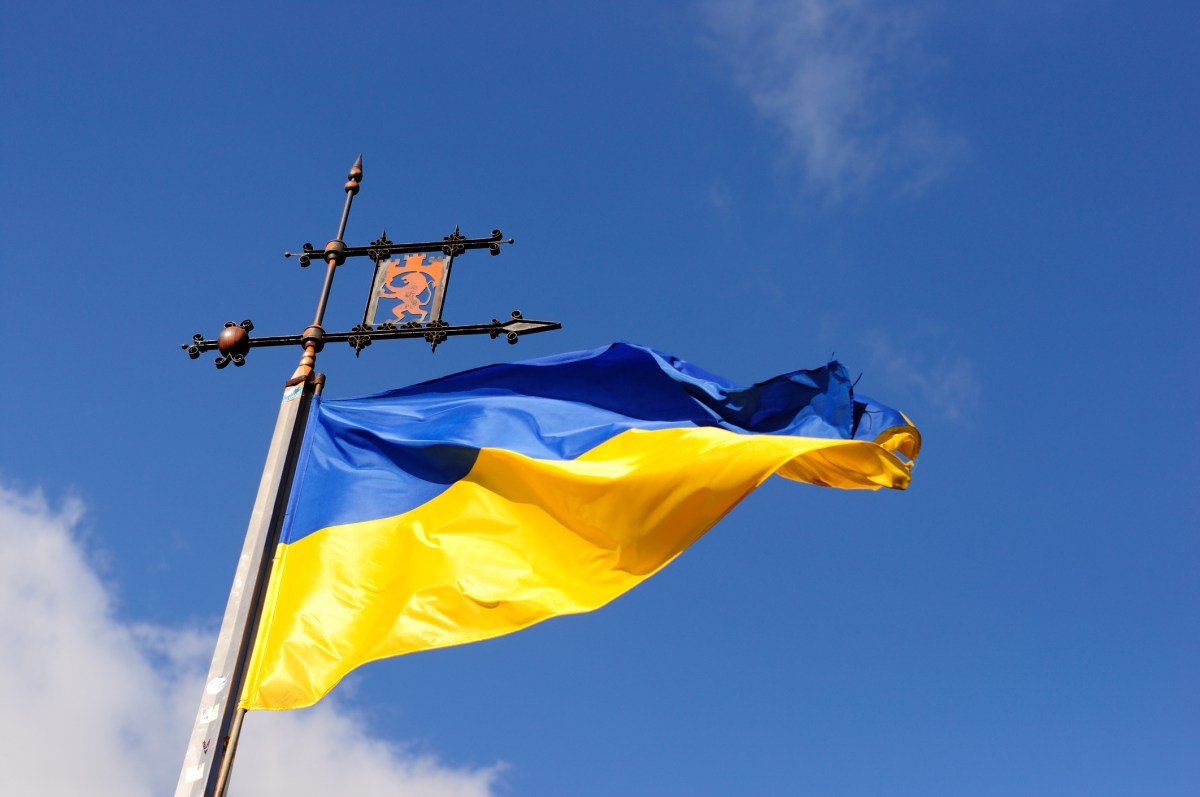
Three years since the start of Russia’s invasion, Ukraine has emerged as the global epicenter for defense technology innovation. While the nation defends its sovereignty on the front lines, it has simultaneously cultivated a robust ecosystem of dual-use and defense tech startups, signaling a massive shift in how Europe must approach its own regional security.
A Wake-Up Call for European Defense
Europe faces its most significant security threat in decades. A report by VC firm Lakestar highlights that while Russia could potentially rebuild its offensive capabilities within two to eight years, European NATO members remain under-prepared. Defense spending has dropped by 30% since the 1990s, and current industrial production is failing to meet basic stock requirements. Furthermore, European R&D investment lags significantly, sitting at just one-tenth of U.S. expenditure.
Klaus Hommels of Lakestar emphasizes that sovereignty is non-negotiable. “If you don’t equip, if you don’t invest, you won’t have that sovereignty,” Hommels noted at the DLD conference. The tide is turning, however: 2024 saw $1 billion in venture capital poured into European defense tech—a fivefold increase since 2018. New specialized vehicles, such as the €1 billion Nato Innovation Fund and Estonia’s €100 million SmartCap fund, are actively fueling this growth.
Ukraine: The Battlefield Laboratory
To secure its future, Europe must look directly at Ukraine, where the next generation of warfare is being actively defined. Through initiatives like BRAVE1 and events like IT Arena, Ukraine has become a magnet for Western capital and a leader in AI-enabled drone technology.
Below are key Ukrainian dual-use and defense tech startups currently shaping the future of the industry:
Technary
Dual use: Specialized in intercepting low-flying drones invisible to standard radar. Their system empowers civilians to report aerial threats directly to the Ukrainian military.
Dropla
Dual use: A Ukrainian-Danish venture utilizing multi-modal sensor UAVs and unmanned ground vehicles (UGVs) for high-efficiency landmine detection.
SOC Prime
Dual use: An AI-driven threat detection ecosystem featuring a massive dataset of 1 million detection rules, aimed at protecting corporate infrastructure.
Swarmer
Dual use: Solving the manpower bottleneck in drone operations. Their AI enables a single operator to manage entire swarms, with over 32,000 combat missions recorded since August 2023.
Kraken
Dual use: A hybrid USV/UUV drone designed for long-range underwater monitoring and defense in GPS-denied environments.
Skyeton
Dual use: Their Raybird platform provides long-range laser designation and loitering munitions, currently operational on the front lines.
Ailand Systems
Dual use: Leverages agricultural drone technology to accelerate and de-risk landmine detection operations.
Anima
Dual use: Addressing PTSD and concussion-related mental health challenges through objective, data-driven assessment tools.
Aspichi
Dual use: Developing VR applications focused on education and mental health practices to treat PTSD.
FuelWell
Dual use: A plug-in device for internal-combustion engines that reduces fuel consumption by 20% and drastically lowers CO2 and soot emissions.
Laser Guard Systems
Dual use: An autonomous platform using AI and thermal vision to detect and neutralize aerial and ground intrusions, currently protecting critical infrastructure like the Kyiv Hydroelectric Station.
HIMERA
Dual use: Provides secure, affordable tactical communication systems featuring AES-256 encryption and frequency-hopping, widely used in military training centers.
Strategy Force Solution
Defense tech: Their “Mafka AI” enables fully autonomous, GPS-independent drone missions that simulate human-pilot decision-making.
Terminal Autonomy
Defense: Secured the largest NATO contract for loitering munitions; their lethal AI-enabled drones are now being procured by Germany.
Buntar Aerospace
Defense: Focuses on UAV survivability and AI-driven coordination, featuring the Buntar Copilot for “carousel” operation models.
NORDA Dynamics
Defense: Develops autonomy modules for mass-market UAVs, increasing mission efficiency from 30% to 80%.
Clarity
Defense: Uses AI trained on real-world battlefield reconnaissance data to analyze and visualize complex combat scenarios.
OpenMinds
Defense: Counters authoritarian influence operations and propaganda using proprietary machine learning models to detect threats in media and behavioral data.
TELETACTICA
Defense: Specializes in resilient, high-reliability video and data transmission modems designed to function under heavy electronic warfare jamming.
ARMOR
Defense: Software-integrated artillery targeting that allows for neutralization of targets in one to three shots, reducing ammunition consumption by over 90%.
Farsight Vision
Defense: Converts raw drone reconnaissance footage into real-time 3D models and maps, even in GNSS-denied environments.
Ark Robotics
Defense: Builds “Frontier,” a tactical autonomy platform for robotic fleets, already deployed in over 20 frontline units.
Vidar Systems
Defense: Uses acoustic triangulation and AI to rapidly detect and locate enemy artillery positions.
Biostream
Defense: Wearable health-tracking technology designed to monitor soldiers in real-time and alert medics to life-threatening conditions like hemorrhaging.
Sine.Engineering
Defense: Manufactures high-tech UAV modules, including satellite-free navigation systems designed to bypass electronic warfare interference.