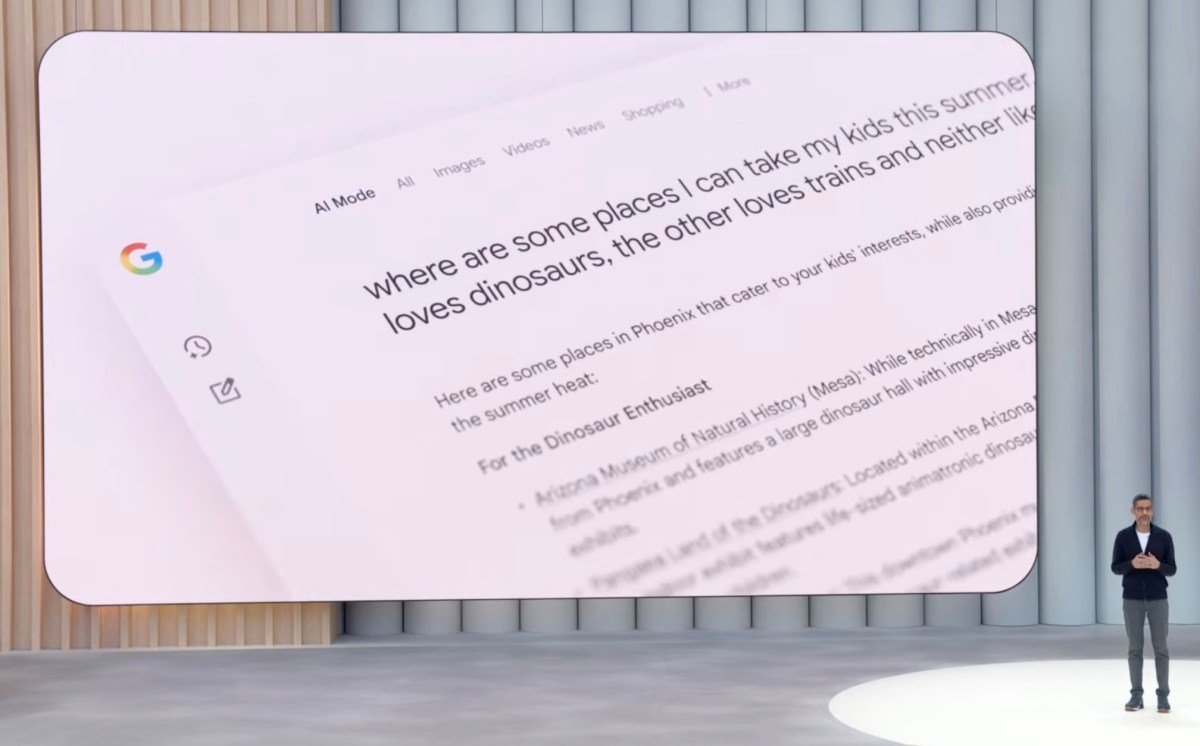
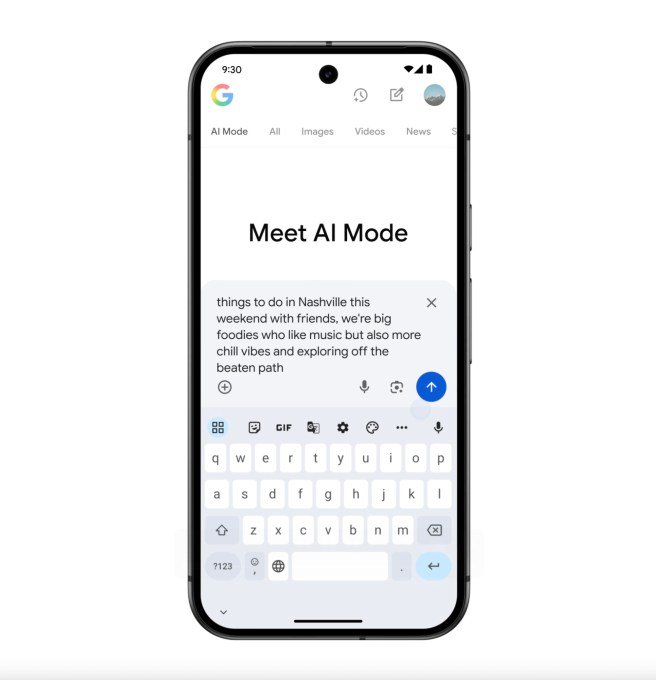
Google has officially announced the rollout of its experimental “AI Mode” to all users in the U.S. starting this week. Unveiled at the annual Google I/O 2025 developer conference, the feature enables users to execute complex, multi-part queries through an advanced AI interface, signaling a major shift in how the search engine processes information.
Scaling AI Overviews and Search Labs
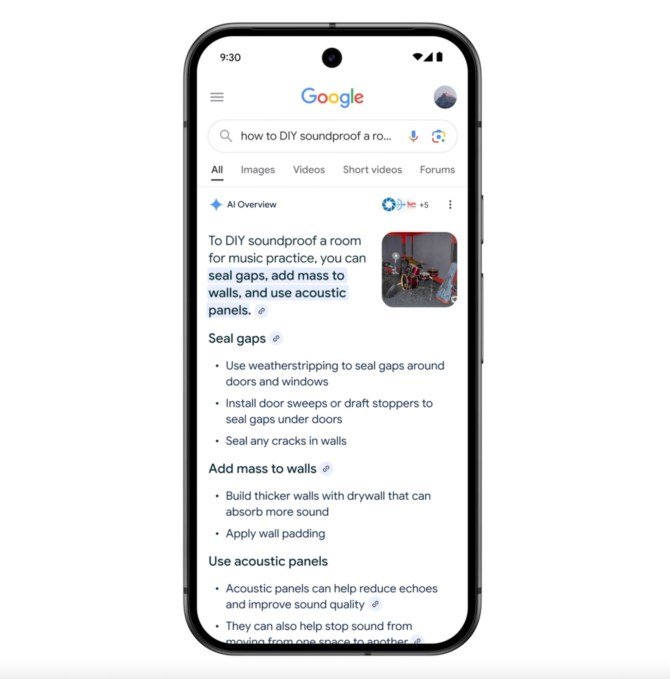
AI Mode builds directly upon Google’s existing “AI Overviews,” which provide AI-generated summaries at the top of search results. Despite past controversies regarding accuracy, Google reports that AI Overviews have achieved significant traction, reaching over 1.5 billion monthly users. Consequently, the feature is exiting its experimental phase, with plans to expand into more than 200 countries and territories in over 40 languages.
As competitors like Perplexity and OpenAI aggressively expand their own web search capabilities, AI Mode serves as Google’s strategic response to defend its market share by redefining the search experience.
Deep Search and Advanced Research
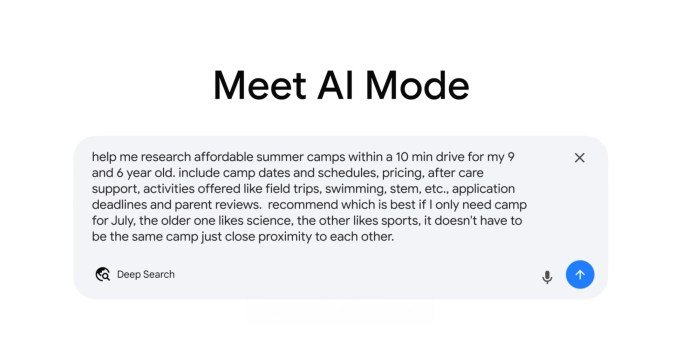
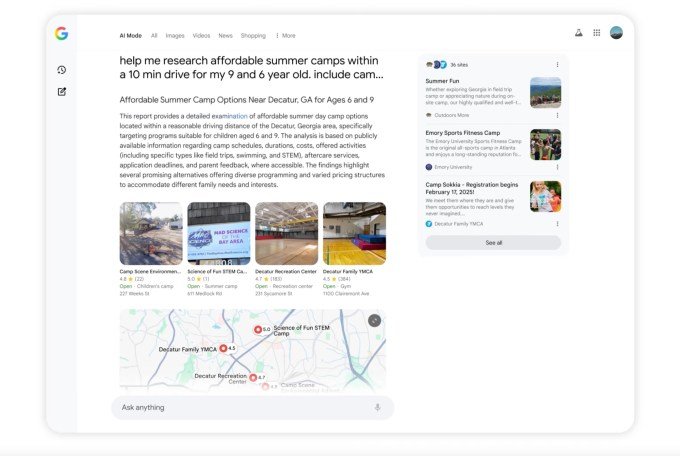
A core component of this update is “Deep Search.” While standard AI Mode breaks down a user’s question into subtopics, Deep Search operates at a much higher scale. It can execute dozens or even hundreds of queries to compile a comprehensive, cited report in minutes. This tool is designed to drastically reduce research time for complex tasks, such as comparison shopping for appliances or evaluating summer camps.
Shopping and Data Visualization
Google is integrating new shopping utilities into AI Mode, including a virtual “try it on” feature for apparel. This tool uses uploaded photos to simulate how clothing fits, accounting for 3D shapes, fabric types, and elasticity. Furthermore, a future shopping agent will eventually allow U.S. users to automate purchases once items hit specific price points.
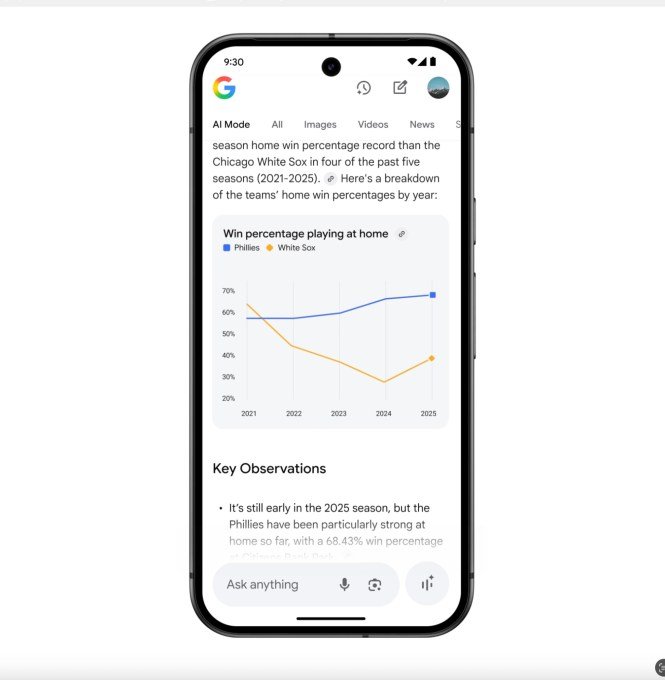
For data-heavy queries, such as sports statistics or financial trends, AI Mode will soon provide on-the-fly visualizations. By searching across multiple sources, the AI will synthesize data and render charts to make complex information immediately digestible.
Project Mariner and Real-Time Interaction
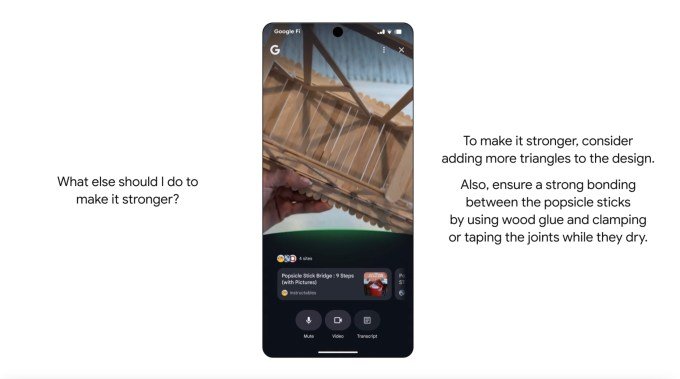
The update also leverages “Project Mariner,” an agent capable of interacting with the web to perform tasks like finding the best prices for concert tickets or local services. Additionally, “Search Live”—launching later this summer—will allow for real-time visual search via the phone’s camera. Users can engage in a multimodal, back-and-forth conversation with the AI using both audio and video, mirroring the capabilities seen in Google’s Project Astra.
Personalized Context and Privacy
Google is shifting toward a highly personalized search environment. By opting to connect Google Apps—starting with Gmail—the search engine can cross-reference personal data, such as travel confirmation emails, to provide tailored recommendations for local events and activities. Google emphasizes that this integration is entirely optional and users maintain control over their data privacy, with the ability to disconnect apps at any time.