

Grammarly has launched a comprehensive design overhaul, introducing a document-based interface powered by technology from Coda, the productivity startup it acquired last year. This update integrates a robust AI assistant alongside specialized tools tailored for students and professionals, including automated grading, advanced proofreading, and citation management.
A New Block-Based Workspace
The interface shift introduces a “block-first” architecture, mirroring modern productivity platforms. Users can now seamlessly insert tables, columns, separators, lists, and headers. Additionally, rich text blocks allow for improved content organization, enabling users to highlight key information, insert tips, or add structural alerts.
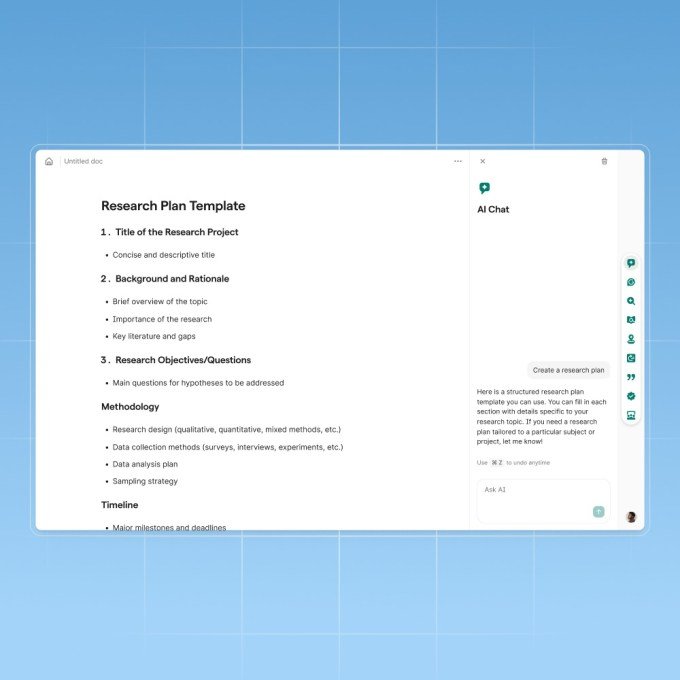
Central to this experience is a new sidebar housing the AI assistant. This feature serves as a command center, capable of summarizing complex documents, answering user queries, and offering contextual writing suggestions in real time.
Advanced AI Tools for Academic and Professional Use
Grammarly’s new suite of AI-powered utilities moves beyond simple grammar checking:
- Reader Reactions: Allows users to select a specific persona to receive tailored feedback on their writing style.
- Grader: Provides assessments based on instructor guidelines and public course materials.
- Citation Finder: Automatically locates and generates citations from public sources.
- Paraphraser: Adjusts the tone and complexity of text based on user preferences.
Controversial AI Detection and Strategic Vision
Beyond content creation, Grammarly has introduced agents designed to detect plagiarism and AI-generated content. Luke Behnke, VP of enterprise product, acknowledges that while AI detection remains a challenging field, the company has tuned its agents to achieve industry-leading accuracy.
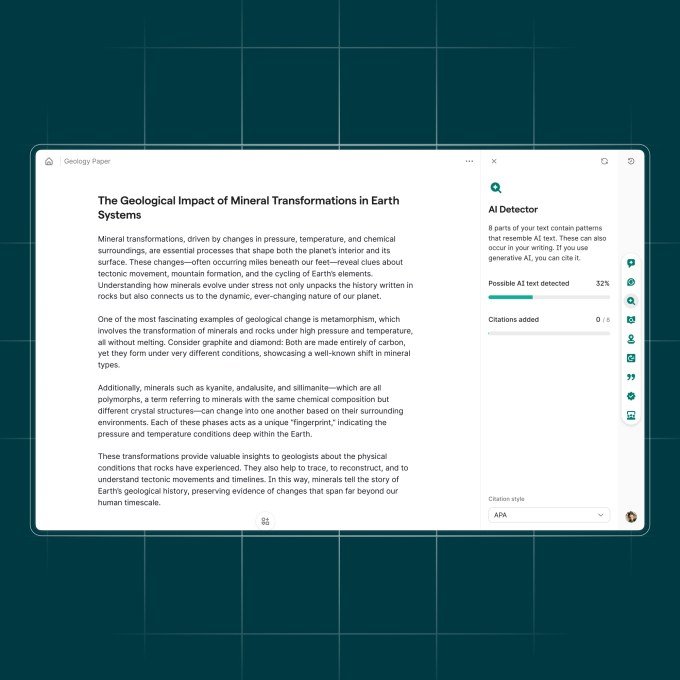
“The goal is not to provide an enforcement mechanism for teachers,” Behnke noted. “This tool is about providing a window for students to identify potential AI-generated text in their writing before they submit their work.”
The Future of Grammarly
By balancing AI assistance with AI detection, Grammarly asserts it has a “moral imperative” to prepare students for a workforce increasingly dominated by generative AI. This product evolution follows a period of aggressive expansion for the company, including the recent acquisition of email client Superhuman and a significant $1 billion funding round led by General Catalyst in May to accelerate its AI integration efforts.