
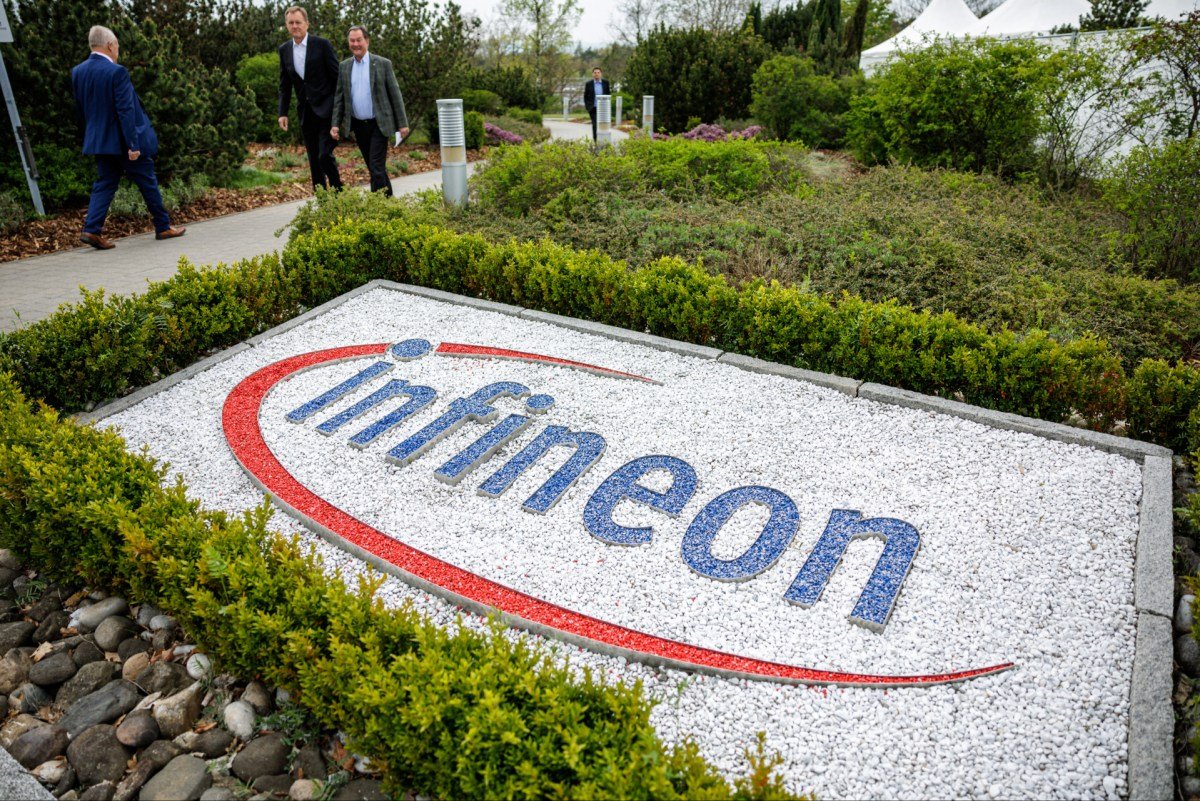
Germany’s Infineon Technologies has officially entered the Indian manufacturing landscape, signing a strategic partnership with CDIL Semiconductors this Thursday. The collaboration aims to produce critical power chips tailored for the rapidly evolving light electric vehicle (EV) market and renewable energy infrastructure.
Bridging India’s Semiconductor Gap
With a legacy spanning over 60 years, CDIL represents India’s push to modernize its domestic chip industry. Supported by significant government investment, the country is working to transition its legacy manufacturing capabilities into high-tech production capable of serving both a massive domestic market and global demand.
India currently faces a critical infrastructure bottleneck. While the nation aims to increase EV penetration from the current 7% to 8% to a target of 30%, the lack of localized battery storage and power management components remains a hurdle. Similarly, the goal to scale non-fossil energy generation from 100GW to 500GW by 2030 requires a robust supply of high-performance electronics.
Powering the Electrification Trend
Under the agreement, Infineon will supply wafers to CDIL, which will handle packaging and assembly at its facility in Mohali, Punjab. Richard Kuncic, senior vice president at Infineon, noted that India is at the start of an “exponential curve” regarding electrification and the “batterification” of daily infrastructure.
The partnership will initially focus on producing MOSFETs—electronic switches essential for managing electricity in devices ranging from mobile phones to electric cars. CDIL plans to evolve this production to include IGBTs (insulated-gate bipolar transistors), which are vital for regulating high-voltage power in EVs and solar energy systems.
Advanced Materials and Scaling Capabilities
Rather than relying solely on traditional silicon, the production line will utilize advanced materials like silicon carbide and gallium nitride. These materials are prized for their superior heat resistance and higher power density. CDIL has already invested four years into silicon carbide development, even exporting the material to international markets including China.
Currently, CDIL’s packaging plant maintains an annual capacity of 600 million power semiconductor units. While both companies view this as sufficient for the immediate future, CDIL has confirmed it is prepared to scale operations as domestic demand intensifies.
While Infineon has no immediate plans to build its own wafer manufacturing site in India, the company signaled that this is merely the first of several strategic local collaborations. As Kuncic emphasized, Infineon is prioritizing a methodical, step-by-step approach to building its footprint within India’s growing semiconductor ecosystem.