
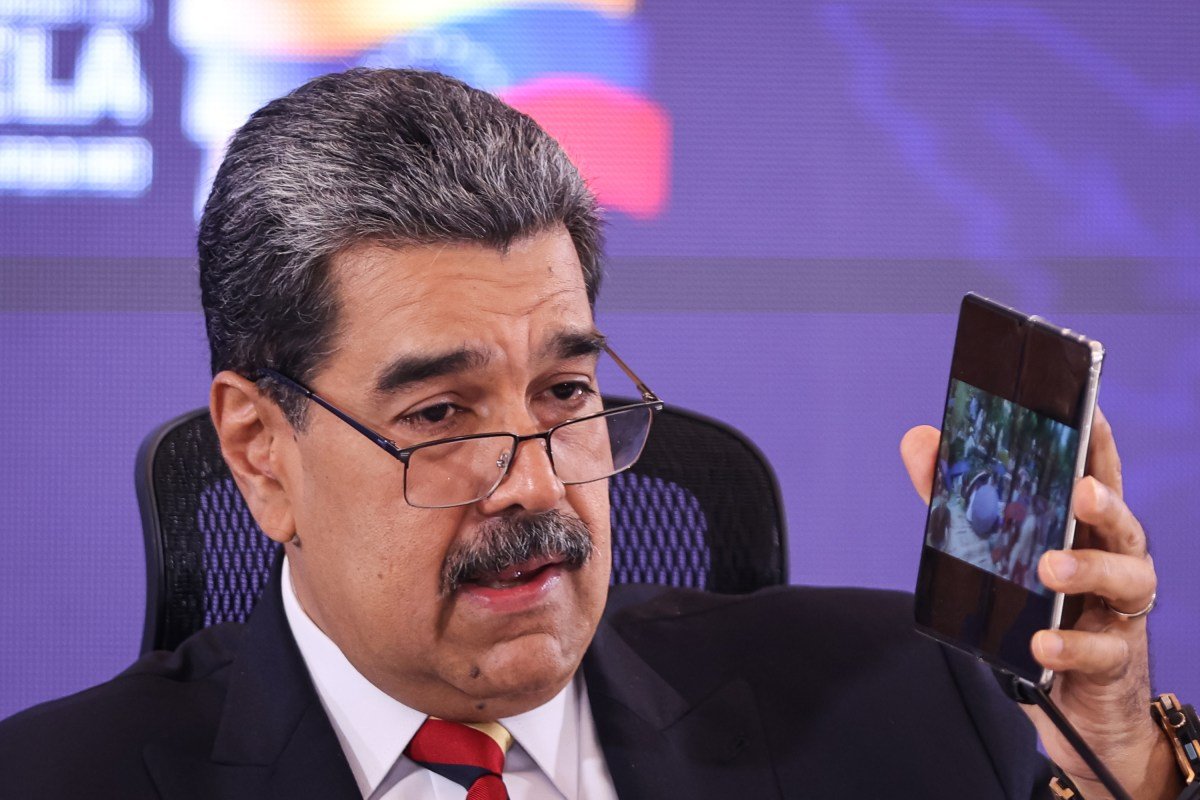
Venezuelan President Nicolás Maduro made a provocative claim during a press conference this Monday, asserting that his Huawei smartphone is immune to American surveillance. Displaying a device gifted to him by Chinese President Xi Jinping, Maduro touted it as “the best phone in the world,” boldly stating that neither U.S. spy planes nor satellites possess the capability to compromise it.
The device in question appears to be a Mate X6, the foldable flagship launched by Huawei in 2024. While the Venezuelan leader expressed absolute confidence in the hardware, cybersecurity experts maintain a starkly different perspective on the reality of digital security.
The Reality of HarmonyOS Vulnerabilities
Cybersecurity researchers argue that no device is impenetrable, particularly when facing elite government-backed hacking operations. A U.S.-based vulnerability analyst, speaking on condition of anonymity, noted that Huawei’s strategy of developing both its own hardware and its proprietary operating system, HarmonyOS, may actually increase its attack surface.
“There’s bound to be many more mistakes in their brand-new code than in iOS and Android at this time,” the researcher stated. Like all modern software, HarmonyOS is far from flawless. Huawei’s own security records confirm that the Mate X6 requires consistent security patches to address ongoing threats. In the last month alone, Huawei patched 60 HarmonyOS bugs, including 13 classified as high-severity vulnerabilities.
A History of Targeted Espionage
The skepticism surrounding Maduro’s claim is rooted in a well-documented history of U.S. intelligence agencies targeting Huawei technology. Leaked documents from Edward Snowden in 2014 revealed that the NSA successfully breached Huawei’s servers in China, even gaining deep access to the company’s Shenzhen headquarters to monitor executive communications.
Internal NSA documents, as reported by The New York Times, explicitly highlighted the agency’s focus on exploiting Huawei products to “gain access to networks of interest” globally. Given this strategic priority, it is highly probable that U.S. Cyber Command and other intelligence entities continue to dedicate significant resources to identifying vulnerabilities within the company’s ecosystem.
While Huawei acknowledges that its devices are susceptible to malware—even providing dedicated support resources for compromised users—the company did not provide a comment regarding Maduro’s specific claims. Earlier this year, the Chinese government accused the NSA of launching advanced cyberattacks against critical infrastructure, underscoring the ongoing digital arms race between the two nations.
You can view the original press conference footage here.