
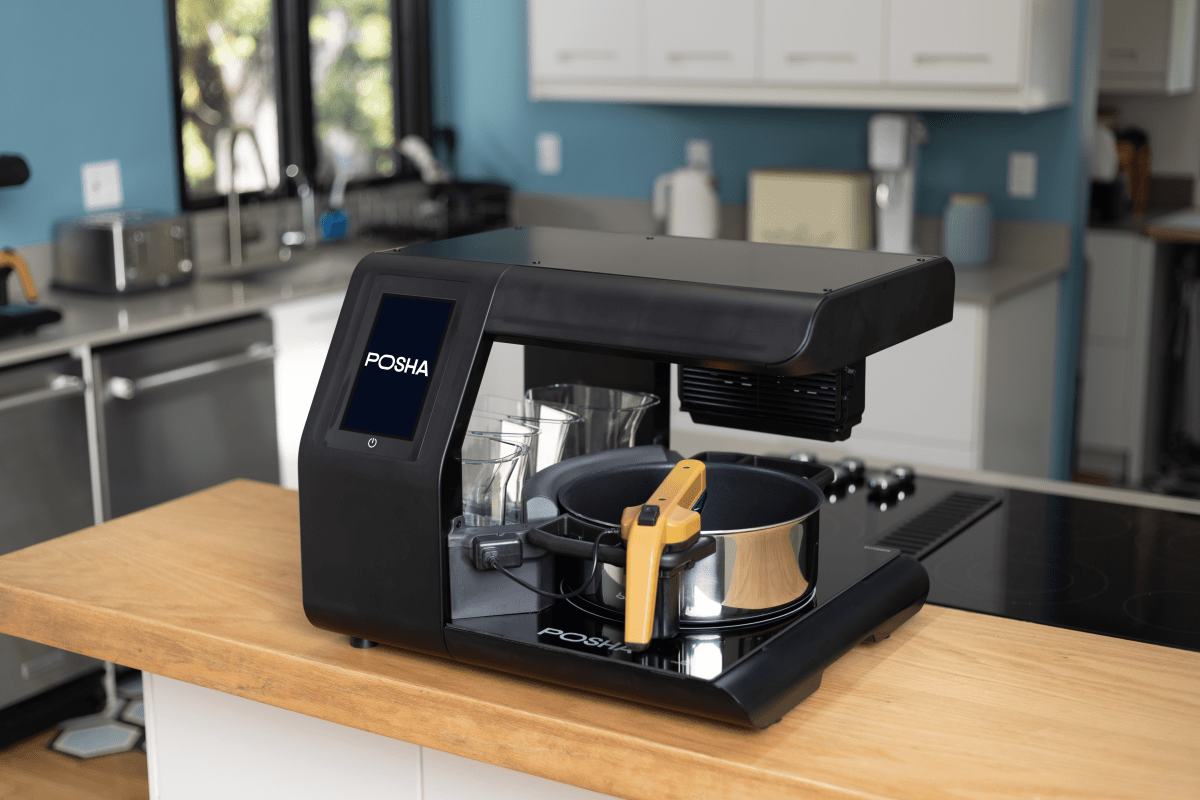
In 2017, Raghav Gupta sought to bridge the gap between the convenience of takeout and the quality of home-cooked meals. This ambition led to the creation of Posha, a startup developing intelligent countertop robots designed to automate daily cooking using advanced computer vision.
How Posha Transforms Kitchen Automation
Operating similarly to a high-end coffee machine, Posha simplifies the culinary process. Users select a recipe from a digital interface, add the necessary ingredients, and the device handles the cooking. The system is engineered to be highly customizable, allowing for ingredient substitutions and forgiving minor inaccuracies in measurements.
While the machine manages the cooking phase, users remain responsible for initial prep work, such as chopping ingredients. Gupta notes that the device is specifically engineered for individuals who already cook several times a week and want to reclaim their time. By automating the cooking and monitoring process, Posha claims to reduce daily kitchen labor by approximately 70%, cutting active time down to just 10 to 20 minutes.
From Robotic Arm to Countertop Essential
The product’s current form is the result of significant iteration. Originally conceived as a robotic arm, the company pivoted during its time in the Bosch startup accelerator. Feedback revealed that consumers preferred a stationary, easy-to-clean device over a complex robotic arm.
Gupta emphasizes that customer intimacy has been the brand’s primary growth engine. Rather than relying on standard support tickets, the team maintains direct communication with over 100 early adopters via WhatsApp, allowing for rapid product refinement based on real-world usage.
Scaling and Future Development
Posha recently secured $8 million in Series A funding, led by Accel, with participation from investors including Xeed Ventures, Waterbridge Ventures, and Flipkart co-founder Binny Bansal. The company intends to utilize this capital to expand its recipe library and integrate generative AI, which will allow users to suggest custom dishes that the system can automatically convert into cooking instructions.
Since its launch in January 2025, the $1,750 device has sold out its initial production batch, with preorders currently open for the next wave. Gupta maintains a long-term vision for the technology, comparing the robot’s trajectory to the evolution of the refrigerator and dishwasher—devices that transitioned from luxury countertop novelties to essential, built-in kitchen fixtures.