
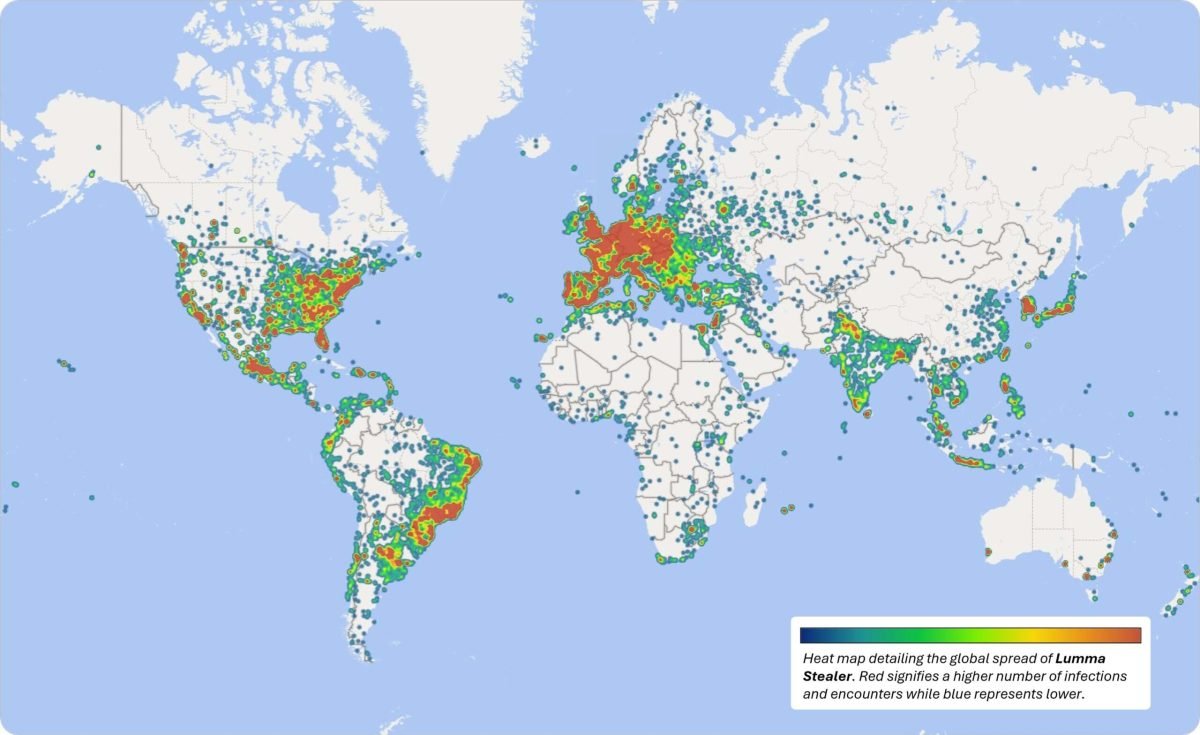
Microsoft, in collaboration with global law enforcement, has successfully executed a court-authorized takedown of the Lumma information-stealer operation. The malware, which had compromised over 394,000 Windows systems worldwide, primarily targeted users across Brazil, Europe, and the United States, according to a formal announcement.
Strategic Infrastructure Seizure
To dismantle the criminal network, Microsoft initiated civil litigation to secure a federal court order authorizing the seizure of 2,300 domains. These domains functioned as the backbone of the malware’s command-and-control (C2) infrastructure. Complementing this effort, the U.S. Department of Justice seized five additional domains critical to the operation’s functionality, effectively severing the attackers’ ability to communicate with infected machines.
How Lumma Infiltrates Systems
Lumma primarily spreads through illicit channels, often masquerading as legitimate software in pirated applications or unauthorized game downloads found across the web. Once a system is compromised, the malware acts as a silent harvester, exfiltrating highly sensitive data, including:
- User login credentials and passwords
- Credit card information
- Cryptocurrency wallet data
Beyond simple data theft, Lumma functions as a persistent backdoor. It provides cybercriminals with the access necessary to deploy secondary threats, including devastating ransomware payloads.
The Growing Threat of Info-Stealers
The scale of the Lumma operation highlights the increasing prevalence of information-stealing malware in modern cybercrime. These tools are frequently identified as the initial entry point for large-scale data breaches. High-profile attacks against major technology firms, such as Snowflake and PowerSchool, have been directly linked to the activities of such info-stealers, underscoring the critical need for robust endpoint security and user vigilance when downloading third-party software.