
Following a controversial Super Bowl commercial, Ring founder and CEO Jamie Siminoff is facing intense scrutiny over the company’s direction. The ad, which debuted the “Search Party” AI feature for locating lost pets, sparked a national backlash, forcing Siminoff to defend the company’s vision of home surveillance amid growing public anxiety.
The Privacy Paradox: Convenience vs. Surveillance
The “Search Party” feature allows users to request footage from neighbors to track lost animals. Siminoff argues that the system is strictly opt-in and maintains that ignoring a request is equivalent to choosing not to participate. “It is no different than finding a dog in your backyard, looking at the collar and deciding whether or not to call the number,” he stated.
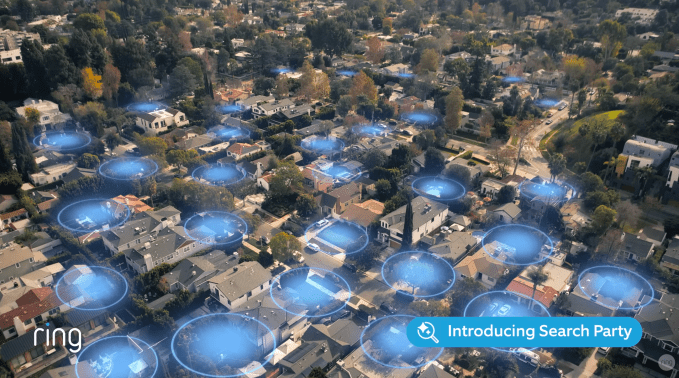
However, critics point to the visual language of the Super Bowl campaign—which featured a map of pulsing blue circles across a neighborhood—as a catalyst for the firestorm. Siminoff conceded that the imagery was perhaps ill-advised, admitting, “I would change that. It wasn’t our job to try to poke anyone to try and get some response.”
The Impact of High-Profile Security Cases
The debate intensified following the disappearance of Nancy Guthrie, the mother of a prominent TV anchor. Footage from a competitor’s camera captured a masked individual at the residence, fueling national discourse on surveillance. Siminoff argued that more cameras could have helped solve the case, noting that Ring’s network identified a suspicious vehicle miles away. For many, this rhetoric reinforces fears that the company is leveraging real-world tragedies to push for mass adoption of home monitoring.
Integration with Law Enforcement
Beyond “Search Party,” Ring continues to expand its “Community Requests” program, which allows law enforcement to solicit footage from users. The program is bolstered by a partnership with Axon, the manufacturer of police body cameras and the operator of Evidence.com. While Ring recently severed ties with Flock Safety—a provider of AI-powered license plate readers—Siminoff cited “workload” rather than privacy concerns regarding data sharing with federal agencies like U.S. Customs and Border Protection.
The Encryption Dilemma
Siminoff emphasizes end-to-end encryption as a primary safeguard, noting that it prevents even Ring employees from accessing user footage. Yet, a significant technical hurdle remains: official support documentation confirms that enabling this encryption disables flagship features, including AI video search, person detection, and “Familiar Faces.”
This creates an inherent conflict for users: they must choose between advanced AI functionality that processes data in the cloud or true privacy from the provider. Regarding facial recognition, Siminoff drew parallels to TSA checkpoints, suggesting the public has already normalized the technology. While he stated that Amazon does not currently access this data, he left the door open for future, opt-in commercial applications.
Future Expansion and Industry Scope
Ring is moving beyond the residential front door, targeting enterprise security with “elite” camera lines and trailers. Siminoff remains open to further technological integration, including future drone technology and potential license plate detection systems, stating it is “very hard to say we’re never going to do something in the future.”
As the company scales to over 100 million cameras, the core question remains: can the “opt-in” framework truly protect users in an era of expanding federal surveillance, or is the infrastructure being built inevitably destined to outgrow the benign intentions of its founder?