
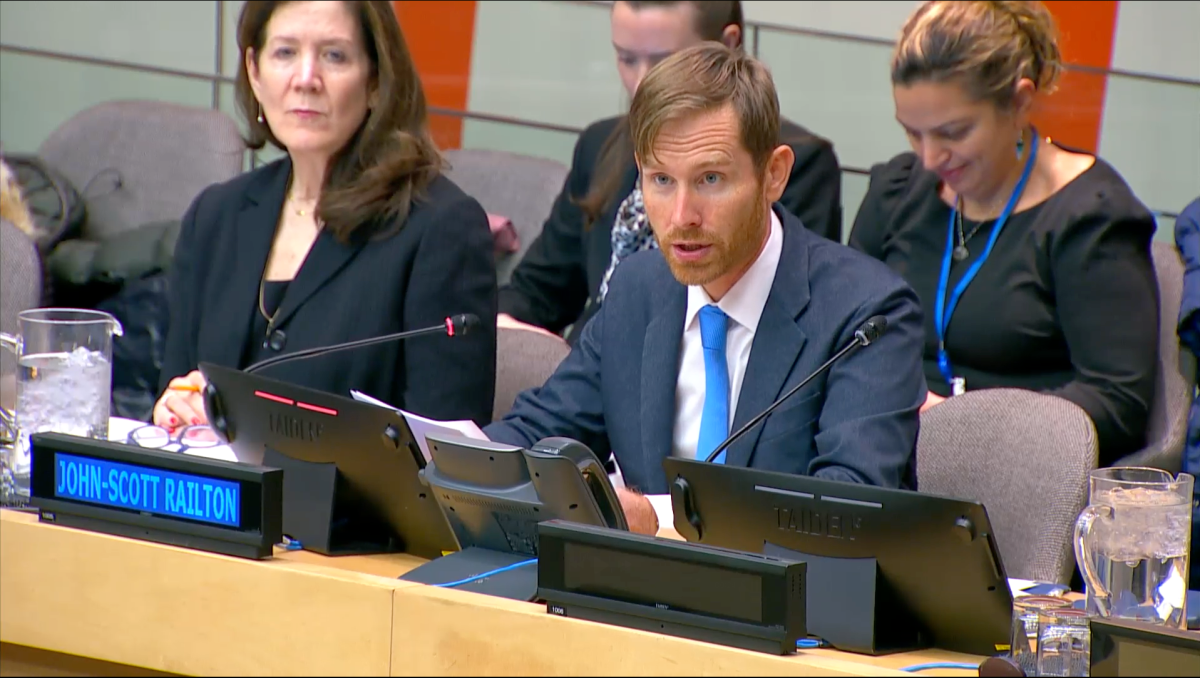
For the first time in history, the United Nations Security Council convened this Tuesday to address the escalating threats posed by commercial spyware. The meeting, initiated by the United States and 15 other nations, sought to evaluate how the proliferation and misuse of mercenary software impact international peace and global security.
A Call for Global Regulation
While the session remained informal without immediate legislative proposals, a strong consensus emerged among key participants. France, South Korea, and the United Kingdom joined the U.S. in advocating for stricter government controls to curb the abuse of invasive digital surveillance tools. The United Nations Security Council meeting highlighted a growing urgency to regulate a market that often operates in the shadows.
The Hidden Ecosystem of Surveillance
John Scott-Railton, a senior researcher at The Citizen Lab, provided expert testimony identifying a “secretive global ecosystem” of brokers, developers, and boutique firms. According to Scott-Railton, this industry poses a direct threat to human rights and international stability. He specifically labeled Europe as an “epicenter of spyware abuses,” pointing to recent reports identifying Barcelona as a rising hub for these controversial companies.
National Perspectives and Controversies
The discussion saw significant interventions from countries previously embroiled in spyware scandals. Representatives from Poland and Greece shared insights into their attempts to manage the technology:
- Poland: Emphasized new legislative efforts to increase judicial oversight of intelligence agencies, while acknowledging that spyware retains some legitimate uses.
- Greece: Highlighted the country’s 2022 intelligence bill, which explicitly bans the sale of spyware software.
However, the meeting was not without friction. Russia and China dismissed the concerns, shifting the focus toward the actions of the United States. Russia cited historical NSA surveillance programs, while China argued that the Council was “putting the cart before the horse.” China’s representative explicitly referenced the Stuxnet malware, claiming that state-sponsored cyber weapons are significantly more dangerous than commercial offerings.
U.S. Stance and Ongoing Sanctions
The Biden administration has maintained an aggressive posture against the commercial spyware sector. Recent actions include sanctioning major players like NSO Group and Candiru, as well as Greece-based Intellexa. Furthermore, the U.S. has implemented travel bans targeting individuals associated with the development and sale of such tools, creating significant pressure on the industry’s workforce.