
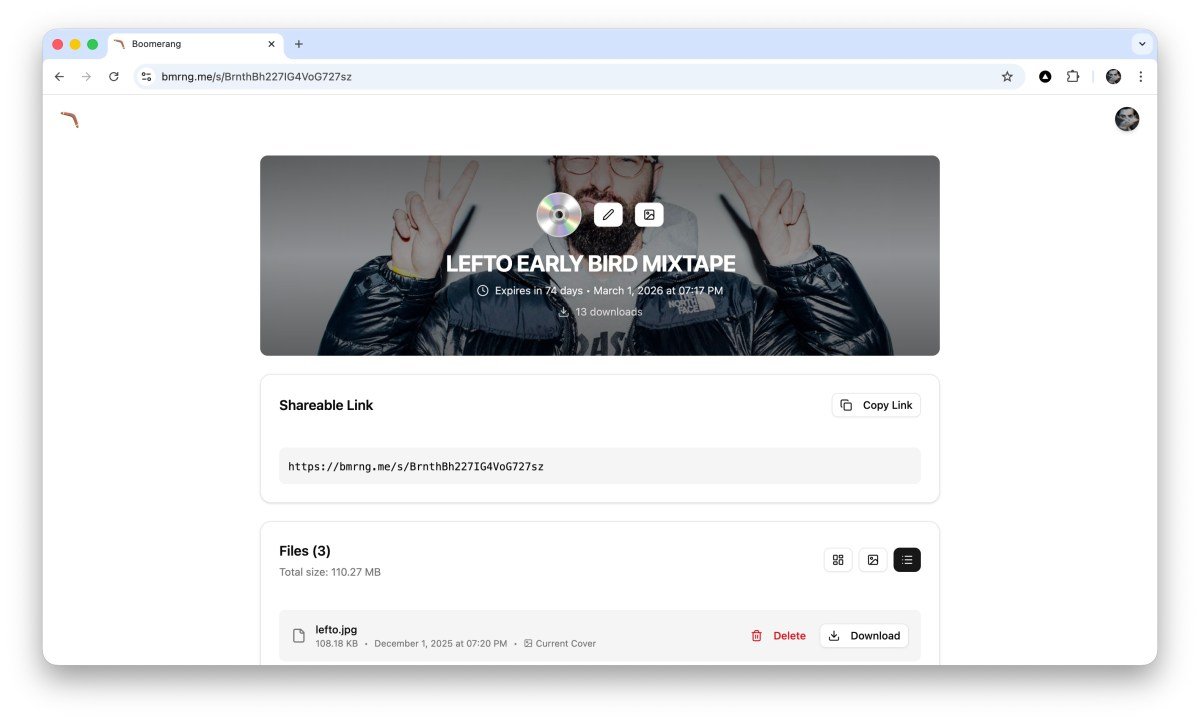
Nalden, co-founder of the global file-sharing giant WeTransfer, has officially launched a new platform named Boomerang. The move comes as a direct response to his public criticism of the recent strategic shifts at WeTransfer following its acquisition by the Milan-based firm Bending Spoons last year.
Since his departure from WeTransfer in 2019, Nalden has watched the platform undergo significant restructuring, including a 75% reduction in staff and controversial pivots toward using user content for AI training—a decision the company was later forced to backtrack on following intense public backlash.
A Return to Simplicity
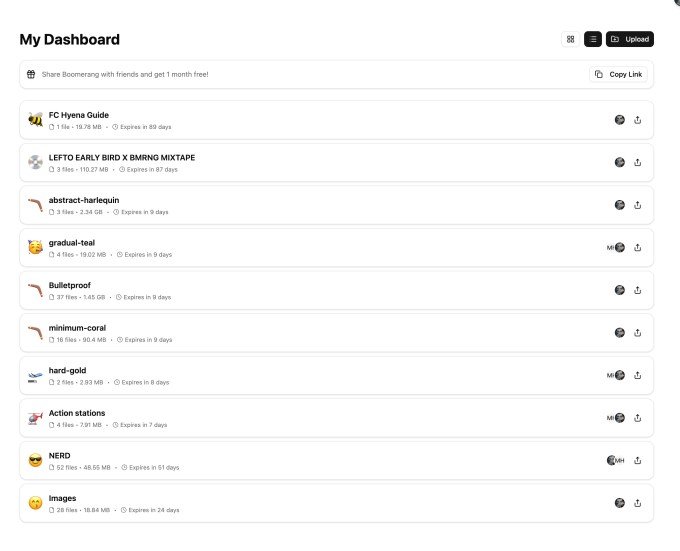
Nalden argues that modern tech companies have unnecessarily complicated the simple act of file sharing. His new venture, Boomerang, aims to strip away the bloat and prioritize user experience above all else. The core promise is speed and accessibility: users can transfer files without the friction of signing up or verifying emails.
“I just want to offer a tool that works for users. It’s like buying a hammer. You possibly don’t want to buy a fancy hammer, but a hammer that just works,” Nalden stated regarding his design philosophy.
Tiered Functionality
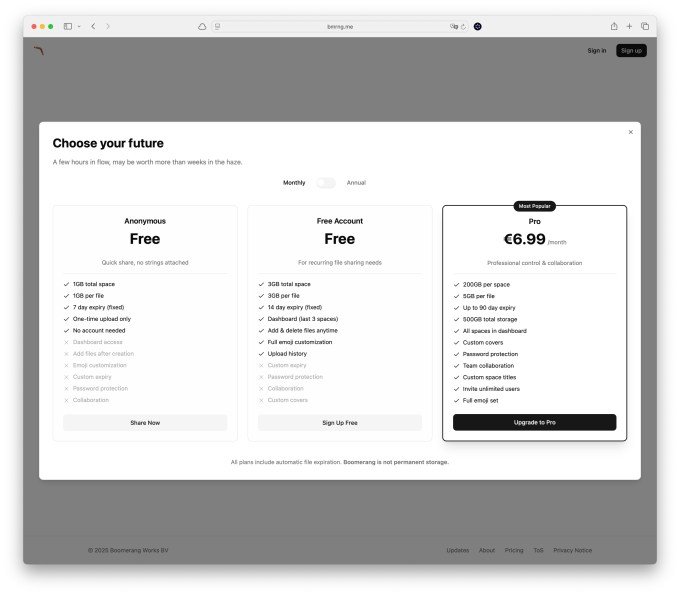
Boomerang offers a tiered service model designed to accommodate both casual and professional needs:
- Free Tier (No login): Includes 1GB of total storage and a 1GB file size limit with a seven-day expiration.
- Free Tier (Registered): Expands capacity to 3GB of storage and file limits, adds upload history, file management, and custom emojis for sharing pages.
- Premium Tier (€6.99/month): Provides 500GB total storage, 200GB per folder, 5GB file size limits, password protection, extended 90-day expiration, and custom folder covers.
Privacy and Future Roadmap
In contrast to the current industry trend of aggressive data harvesting and AI feature integration, Nalden is taking a minimalist approach. Boomerang will not feature advertisements, and the platform is designed to collect the absolute minimum amount of user information required to function.
While Nalden acknowledges using AI internally to streamline the development of the tool, he has confirmed that he will not be adding AI features to the user-facing interface. Currently available via the web, the service is expected to expand with a dedicated Mac application in the near future.