
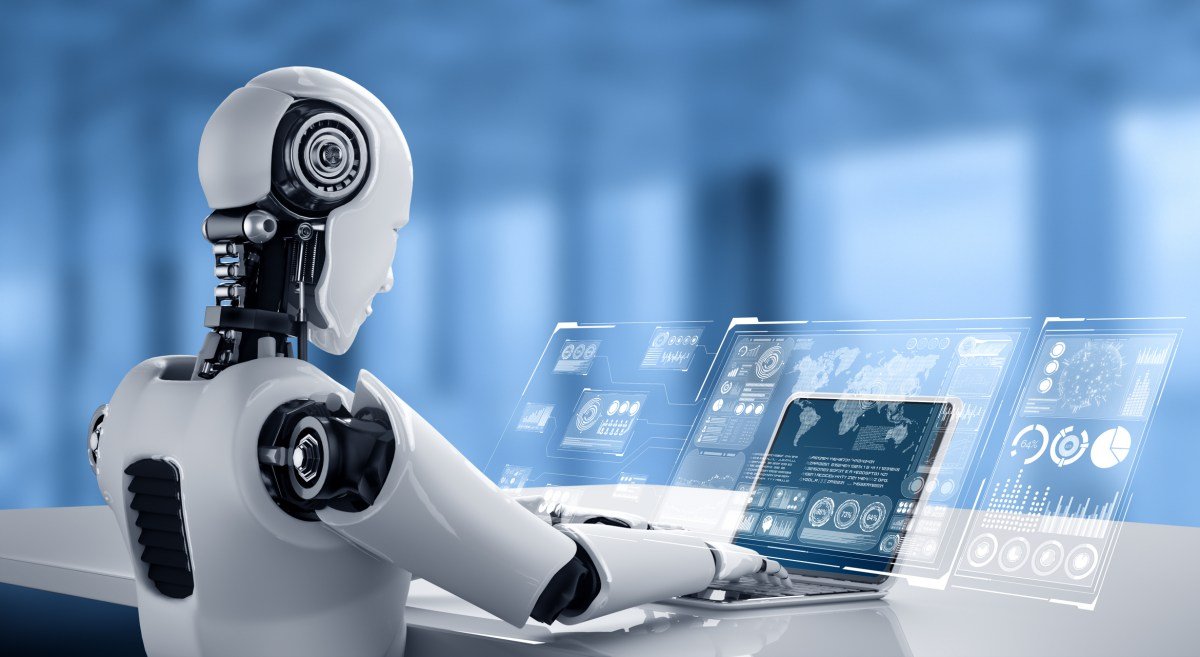
China is rapidly accelerating its humanoid robotics industry, leveraging a unique combination of government policy, industrial strategy, and an unmatched speed-to-scale advantage. While the sector faces significant technical hurdles, China’s ability to compress the R&D cycle—from prototype to real-world deployment—is positioning the nation as a formidable leader in the global market.
The Software-Hardware Gap
Despite significant advancements in mechanical dexterity, the industry currently faces a stark imbalance: hardware is advancing faster than software. Humanoid makers are struggling to develop foundation models capable of predicting the “next physical state” in unpredictable environments, a task far more complex than the text prediction used in Large Language Models (LLMs).
The primary barrier is data scarcity. Unlike LLMs, humanoid robotics cannot simply scrape the internet for training data. While synthetic data generated in simulation environments is helpful, real-world data collection remains the critical bottleneck. Consequently, full autonomy remains elusive, and current models still grapple with reliability issues, as evidenced by recent mechanical failures during high-profile robot marathons.
Strategic Deployment in Controlled Environments
Due to these data limitations and safety concerns, industry experts anticipate that humanoid adoption will first emerge in highly controlled workplaces. Industrial manufacturing, warehouse logistics, and retail represent the most viable early markets. These sectors offer repetitive tasks, predictable processes, and long operational hours—ideal conditions for robots to generate measurable value while minimizing the risks of high-profile accidents that could trigger public backlash.
Global Competition: Japan and South Korea
The race for humanoid supremacy extends beyond China. Japan is leveraging its deep-rooted robotics ecosystem and semiconductor expertise to target mass production by 2027. Unlike other regions, Japan is uniquely focused on integrating humanoids into eldercare, driven by labor shortages and a cultural perception of robots as collaborative partners rather than threats.
Meanwhile, Hyundai Motor’s Boston Dynamics is positioning its latest Atlas model for factory integration by 2028. The company has announced ambitious plans to manufacture up to 30,000 units annually in the U.S. as part of its AI-centric manufacturing strategy.
The China Advantage: Speed and Scale
Despite international competition, China maintains a distinct advantage in its ability to iterate. The country’s ecosystem integrates R&D, supply chain logistics, and customer deployment into a tight, highly efficient loop. This allows Chinese firms to learn from real-world operations and refine their technology at a pace that remains difficult for global competitors to match.
As the industry matures, increased regulation is expected to address safety concerns. However, the convergence of private capital and state-backed industrial strategy ensures that China will remain at the forefront of the effort to bring humanoid robots from the lab to the factory floor.