
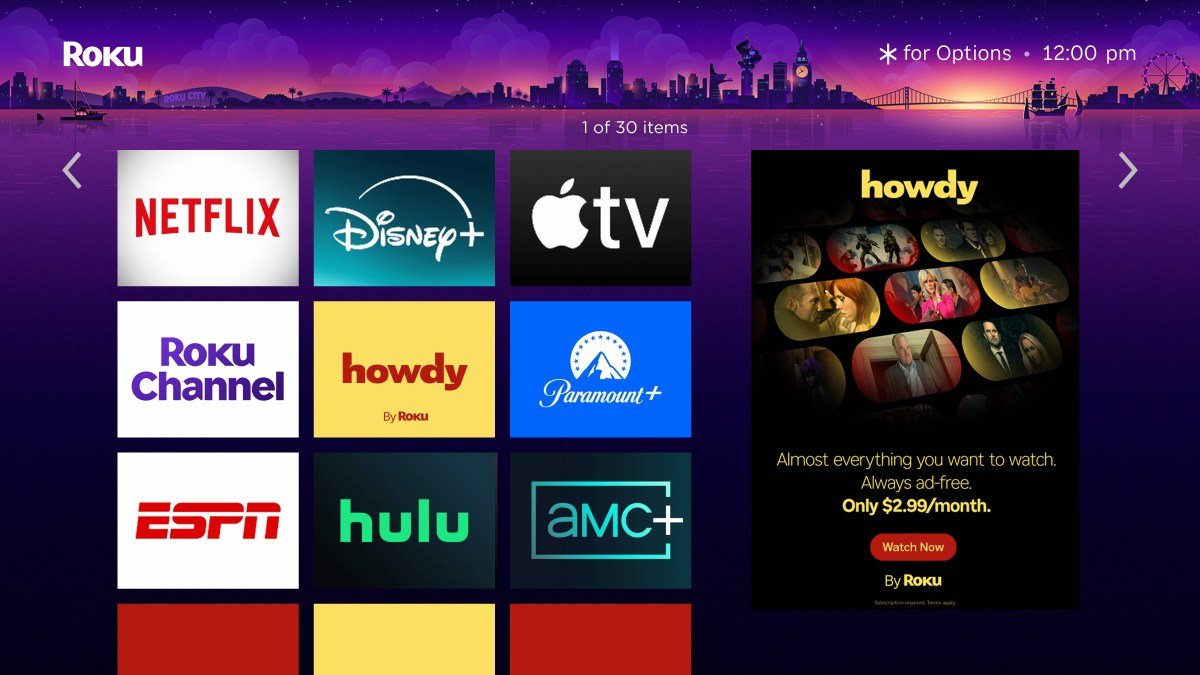
Roku has officially entered the low-cost subscription market with the launch of Howdy. This new ad-free streaming service is priced at $2.99 per month, offering a curated library of nearly 10,000 hours of content sourced from major partners, including Warner Bros. Discovery, Lionsgate, and FilmRise, alongside exclusive Roku Original titles.
A Strategic Content Mix
The platform aims to capture viewers looking for a streamlined experience without the interruption of commercials. Subscribers will gain access to a diverse range of genres, including medical dramas, ’90s comedies, and rom-coms. Featured titles at launch include:
- “Mad Max: Fury Road”
- “The Blind Side”
- “Weeds”
- “Kids in the Hall”
Complementing the Ecosystem
Roku founder and CEO Anthony Wood emphasized that the service is intended to work alongside, rather than replace, premium streaming subscriptions. “Howdy is ad-free and designed to complement, not compete with, premium services,” Wood stated in a recent press release.
This expansion follows Roku’s aggressive growth strategy, which included the $185 million acquisition of Frndly TV just two months ago. Frndly TV provides the infrastructure for live TV, on-demand content, and cloud-based DVR functionality, bolstering Roku’s broader streaming portfolio.
Market Positioning and Financial Growth
Howdy will operate alongside The Roku Channel, the company’s existing free, ad-supported (FAST) platform. Current data indicates that The Roku Channel remains the most popular FAST service, consistently outperforming competitors like Pluto TV and Tubi, with over 125 million daily users.
Driving Scale Through Reach
A primary growth lever for Howdy is Roku’s massive existing user base. As of early 2025, the company confirmed it has surpassed 90 million streaming households. This vast organic reach positions the company to convert existing hardware users into subscription customers efficiently.
The launch arrives on the heels of strong second-quarter financial results. Roku reported a 15% revenue increase, with total streaming hours on the platform reaching 35.4 billion—an increase of 5.2 billion hours compared to the previous year.