

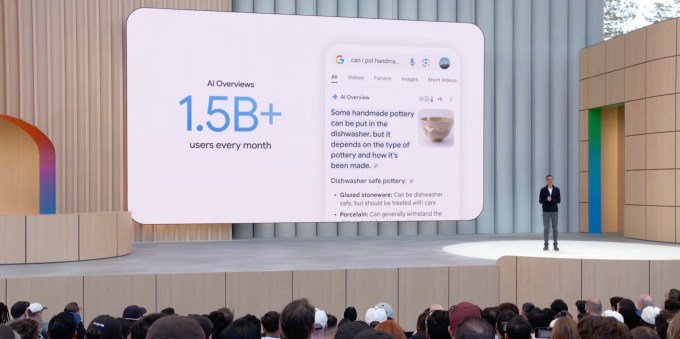
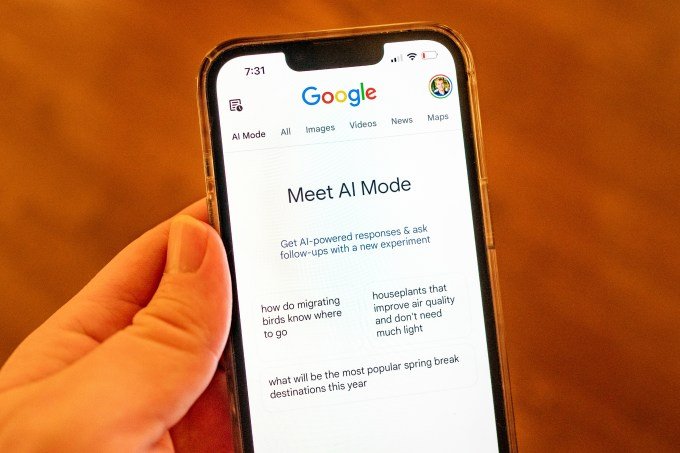
Google officially pushed back on Wednesday against mounting industry concerns that its AI-driven search features are decimating website traffic. Despite numerous third-party reports suggesting a sharp decline in organic reach, the search giant insists that aggregate click volume remains stable year-over-year, claiming instead that the quality of those clicks has improved.
Google’s Stance vs. Industry Data
In a recent blog post, Liz Reid, Google’s VP and Head of Search, dismissed external findings as being based on “flawed methodologies” or isolated data points. She argues that traffic shifts are merely a reflection of changing user behavior rather than a direct consequence of AI Overviews or chatbot integrations.
While Google maintains that total traffic is stable, it acknowledges that user interest is migrating toward specific formats. “People are increasingly seeking out and clicking on sites with forums, videos, podcasts, and posts where they can hear authentic voices and first-hand perspectives,” Reid stated. This admission suggests that while the total volume of clicks might be consistent, the distribution is shifting toward content that feels more human-centric.
The “Zero-Click” Reality
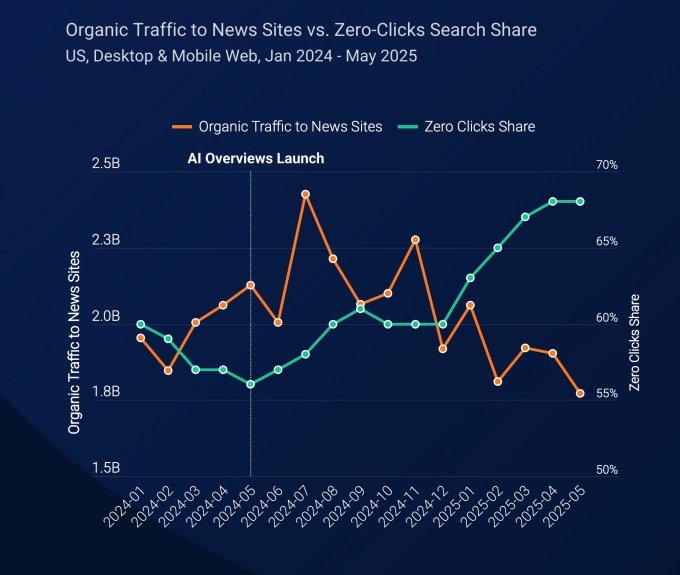
Despite Google’s optimistic outlook, data from industry analysts tells a different story. Research from Similarweb highlights a concerning trend for publishers: the percentage of news searches resulting in zero clicks has surged significantly. Specifically, zero-click searches climbed from 56% at the May 2024 launch of AI Overviews to 69% by May 2025.
Is Search Dying or Just Evolving?
The tension between Google’s narrative and publisher reality is not entirely new. As early as 2022, senior Google leadership noted that younger demographics were increasingly bypassing traditional search engines, opting instead for platforms like TikTok and Instagram for discovery. Similarly, Amazon has long been the primary destination for product research, while Reddit has become the go-to for authentic, community-driven insights.
Google’s recent pivot—emphasizing “click quality” over total volume—suggests a strategic shift in how they want publishers to measure success. The company defines a “quality click” as an interaction where the user engages with the content rather than immediately returning to the search page. However, with the rise of zero-click results, many publishers remain skeptical that these “higher quality” engagements can offset the massive loss in total referral traffic.