
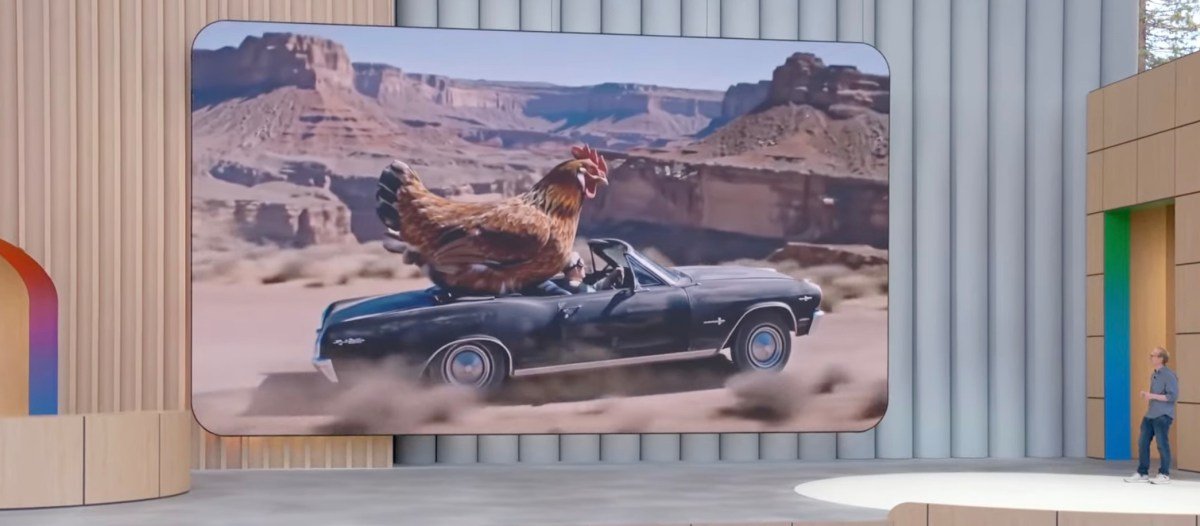
Google officially launched Veo 3 during the Google I/O 2025 developer conference, marking a significant leap in generative media. Unlike its predecessors, this advanced AI model is capable of generating synchronized audio, including sound effects, ambient background noise, and even realistic dialogue, alongside video clips.
The model is available starting today within Google’s Gemini chatbot interface for users subscribed to the $249.99-per-month AI Ultra plan. Whether prompted by text or images, Veo 3 aims to end what Demis Hassabis, CEO of Google DeepMind, describes as the “silent era of video generation.”
Breaking the Sound Barrier in AI Video
The generative video market has become increasingly crowded, with competitors like Luma, Runway, Pika, and OpenAI flooding the space. However, Google is positioning Veo 3 as a standout by focusing on pixel-level synchronization.
While various video, sound, and music tools already exist, Veo 3 claims the unique ability to analyze raw video pixels and automatically align audio outputs to match the visual content.
Technology and Training Data
The capabilities of Veo 3 are rooted in DeepMind’s prior research into “video-to-audio” systems. By training the model on a vast library of video clips, dialogue transcripts, and corresponding soundscapes, Google has enabled a more cohesive creative output. While the company remains tight-lipped about specific training sources, the integration of YouTube—a Google-owned platform—remains a highly probable component of the model’s development.
To address growing concerns regarding misinformation and deepfakes, Google is deploying its proprietary SynthID technology, which embeds invisible watermarks into every frame generated by the model.
Industry Impact and Future Updates
Despite the technological advancements, the rise of AI-generated media continues to face scrutiny from the creative sector. A 2024 study commissioned by the Animation Guild estimates that over 100,000 jobs in the U.S. film and animation industries could face disruption from AI by 2026.
Beyond the launch of Veo 3, Google is also upgrading Veo 2. New features include:
- Enhanced character and scene consistency via image prompting.
- Advanced camera movement controls, including rotations, dollies, and zooms.
- Object manipulation tools for adding, erasing, or reframing clips.
These upgraded Veo 2 features are scheduled to arrive on the Vertex AI API platform in the coming weeks, providing developers with more granular control over AI-assisted cinematography.