
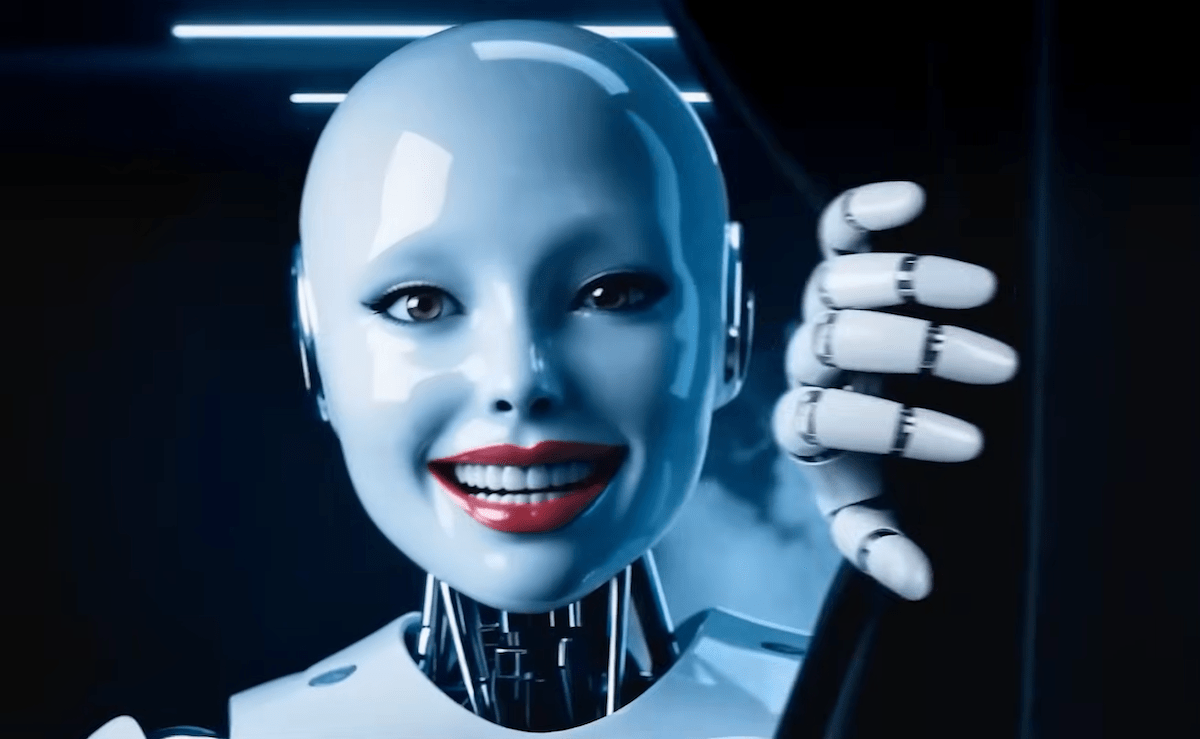
Artificial Intelligence took center stage at the 2026 Super Bowl, evolving from a novelty into a primary narrative. Brands leveraged AI not only as a subject for their multimillion-dollar commercials but as the core engine behind the production of the spots themselves. From robotic dance numbers to high-stakes tech industry feuds, the “Big Game” solidified AI as the year’s most prominent marketing protagonist.
Svedka: The AI-Generated Pioneer
Svedka made headlines with what the brand claims is the first “primarily” AI-generated national Super Bowl commercial. Titled “Shake Your Bots Off,” the 30-second spot features the brand’s mascot, Fembot, alongside a new companion, Brobot, navigating a human party. According to The Wall Street Journal, the reconstruction of the characters and the training of the AI to mimic complex facial expressions and movement took roughly four months.
The brand partnered with Silverside AI—the same firm behind Coca-Cola’s previous AI campaigns—to execute the vision. While the creative direction remained human-led, the heavy reliance on generative tools has reignited industry debates regarding the future of creative labor.
Anthropic’s Calculated Jab at OpenAI
Anthropic shifted the tone from spectacle to strategy, using its Super Bowl debut to attack competitors. The ad explicitly targeted OpenAI’s integration of advertising into ChatGPT, with the tagline: “Ads are coming to AI. But not to Claude.” The spot mocked the prospect of AI assistants becoming vehicles for consumer product hype.
The move triggered a rare public clash, with OpenAI’s Sam Altman labeling the ad “clearly dishonest” on social media. The rivalry quickly became the “nerdy” equivalent of a rap feud, capturing significant attention online.
Meta and Amazon: Wearables and Smart Homes
Meta continued its focus on AI-integrated eyewear, highlighting Oakley-branded glasses designed for extreme sports. Featuring appearances by IShowSpeed and Spike Lee, the ad demonstrated hands-free content creation—such as filming dunks in slow motion—solidifying the company’s push into wearable AI hardware.
Meanwhile, Amazon took a satirical approach to the “AI takeover” narrative. Starring Chris Hemsworth, the ad comically depicted the actor accusing “Alexa+” of plotting against him, from closing garage doors to shutting pool covers. The spot served as the official public launch for Alexa+ in the U.S. market.
Utility and Creativity: Ring, Google, and Beyond
Other brands focused on the practical applications of AI:
- Ring: Showcased its “Search Party” feature, an AI-driven community network designed to locate lost pets. The feature is now available to users even without a security camera subscription.
- Google: Demonstrated its new “Nano Banana Pro” image-generation model, showing how users can transform home design concepts into reality using simple text prompts.
- Ramp: Used “The Office” star Brian Baumgartner to illustrate how its AI-powered spend management platform allows users to “multiply” their productivity—complete with a nod to his character’s famous chili-spilling mishap.
- Rippling: Marked its Super Bowl debut with comedian Tim Robinson, using an “onboarding an alien monster” scenario to highlight the complexities of HR automation.
- Hims & Hers: Addressed healthcare disparities, subtly poking fun at ultra-wealthy longevity trends while promoting its AI-driven “MedMatch” treatment tool.
- Wix: Promoted its AI-powered “Harmony” platform, positioning website creation as an intuitive, conversational process. This contrasted with competitor Squarespace, which leaned into a cinematic, high-production aesthetic starring Emma Stone.