
Nearly four years after its debut, Apple’s Lockdown Mode maintains a perfect security record. The tech giant confirmed that it has yet to record a single instance of a device being successfully compromised by mercenary spyware while this protective feature was active.
“We are not aware of any successful mercenary spyware attacks against a Lockdown Mode-enabled Apple device,” Apple spokesperson Sarah O’Rourke stated.
The Shield Against Advanced Cyber Threats
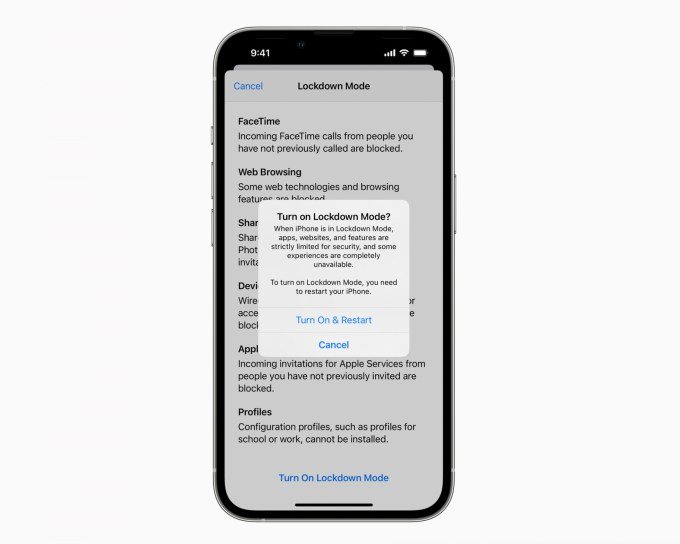
Introduced in 2022, Lockdown Mode serves as an opt-in security layer designed specifically to combat sophisticated threats from government-backed spyware entities, such as the NSO Group, Intellexa, and Paragon Solutions. By severely restricting common exploitation vectors on iPhones and other Apple hardware, the mode acts as a high-level barrier for at-risk users.
The effectiveness of this feature is backed by both internal data and external observation. Researchers from Amnesty International and the University of Toronto’s Citizen Lab have extensively documented spyware campaigns globally, yet none have identified a bypass of the system. In several instances, investigators witnessed the mode actively intercepting and blocking infection attempts from known spyware variants like Pegasus and Predator.
Shrinking the Attack Surface
Apple’s proactive stance on security includes notifying users in over 150 countries who may have been targeted by state-sponsored cyberattacks. While the company does not disclose specific figures, the frequency of these alerts underscores the persistent threat landscape.
Security experts emphasize that Lockdown Mode is a game-changer for high-risk individuals. Patrick Wardle, a renowned Apple cybersecurity expert, describes it as one of the most aggressive hardening features ever deployed for consumers. “It kills entire delivery mechanisms and exploit classes,” Wardle explained. By restricting WebKit features and blocking most message attachments, the mode drastically minimizes the remotely reachable attack surface, particularly for dangerous zero-click exploit chains.
Why Security Researchers Recommend It
Evidence suggests that even sophisticated spyware developers often avoid targeting devices with this protection enabled, likely to evade detection or because the cost of developing a successful bypass is prohibitively high. Google security researchers previously noted that certain exploit kits simply “bail out” when they detect that Lockdown Mode is active.
While the possibility of an undetected bypass remains a theoretical risk, the current track record positions Lockdown Mode as a critical tool. For users concerned about digital surveillance, the trade-off—which includes minor inconveniences like restricted browser features or manual link handling—is widely considered an essential step for robust personal security.