

A critical security breach has struck LiteLLM, a widely used open-source project that facilitates developer access to hundreds of AI models. Malicious code was discovered within the project’s dependencies this week, raising alarms across the developer community due to the tool’s massive reach—estimated at up to 3.4 million downloads daily.
The incident was identified and disclosed by Callum McMahon, a research scientist at FutureSearch. The malware operated by compromising a software dependency, allowing it to harvest log-in credentials from any environment it touched. These stolen credentials then served as a gateway to further infiltrate additional open-source packages and accounts.
The Discovery of “Vibe-Coded” Malware
The breach came to light after the malware caused McMahon’s machine to crash, a technical failure that prompted an immediate investigation. Both McMahon and prominent AI researcher Andrej Karpathy characterized the malicious code as “vibe coded”—a term suggesting the software was constructed with a lack of technical rigor or oversight, leading to its own premature detection.
The developers of LiteLLM, a Y Combinator graduate project, have been working to remediate the vulnerability. According to reports, the malicious injection was identified and neutralized within hours of its discovery.
A Controversial Intersection with Delve
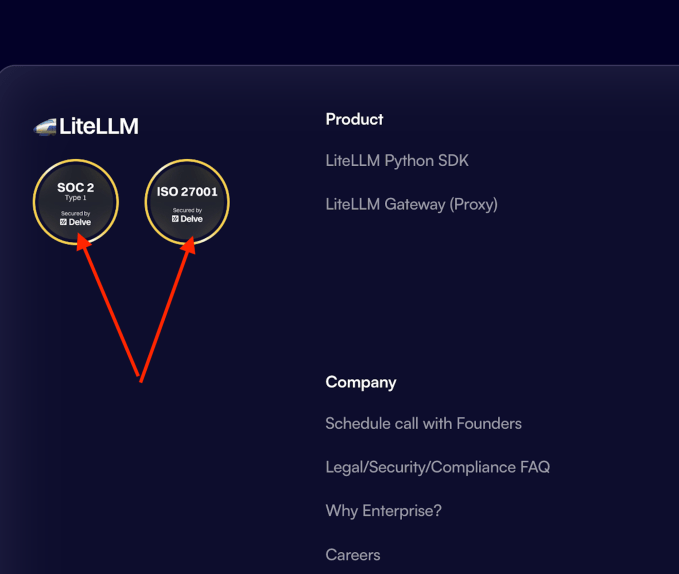
The incident has intensified scrutiny on LiteLLM’s security posture, specifically its reliance on Delve for security compliance. LiteLLM has publicly marketed its SOC2 and ISO 27001 certifications, both of which were facilitated by the AI-powered compliance startup.
Delve itself is currently embroiled in controversy, facing allegations that it misled customers by generating falsified data and utilizing auditors that provide “rubber-stamp” approvals. While Delve has denied these claims, the intersection of a major supply-chain attack and a questioned compliance partner has drawn sharp criticism from industry experts, including engineer Gergely Orosz, who noted the irony of the situation on social media.
The Road to Recovery
While security certifications like SOC2 are designed to enforce policies that mitigate such risks, they are not a panacea against supply-chain attacks. The incident serves as a stark reminder of the vulnerabilities inherent in modern open-source dependency chains.
LiteLLM CEO Krrish Dholakia has remained focused on the immediate aftermath of the breach. “Our current priority is the active investigation alongside Mandiant,” Dholakia stated. “We are committed to sharing the technical lessons learned with the developer community once our forensic review is complete.”