
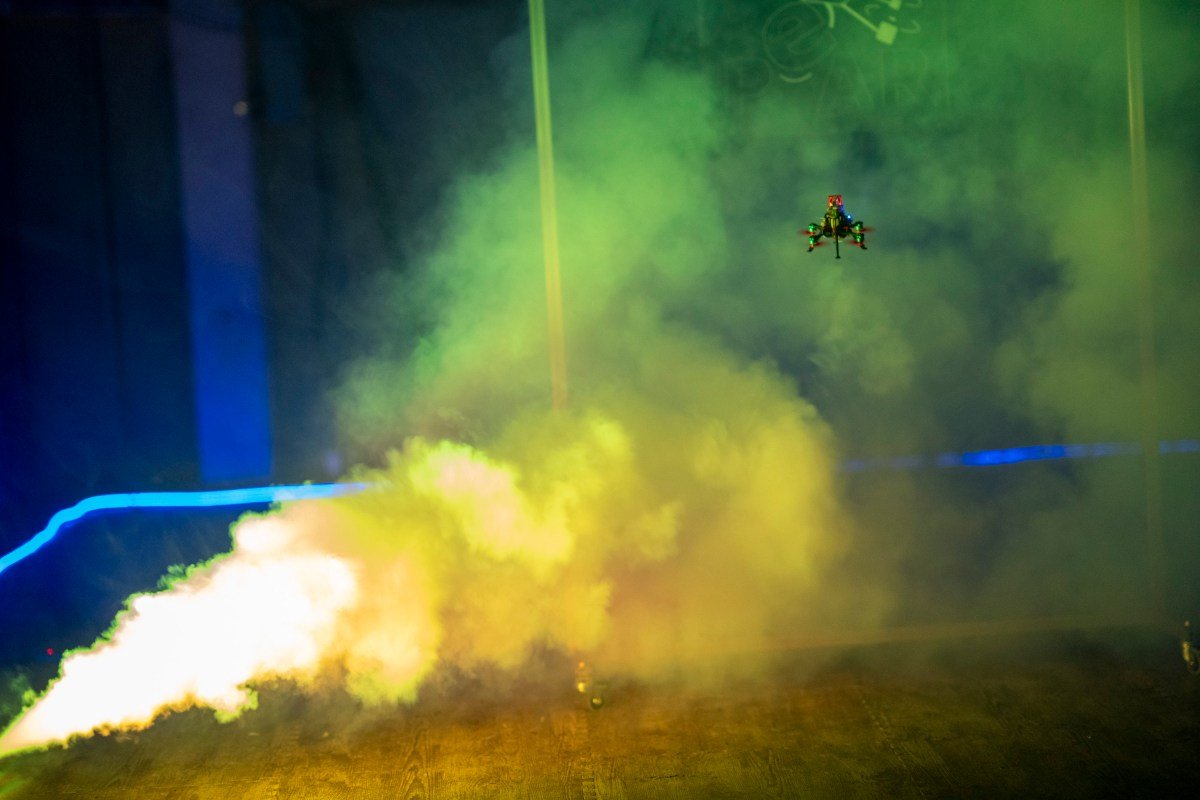
Researchers at Worcester Polytechnic Institute (WPI), led by Professor Nitin J. Sanket, have engineered palm-sized drones designed to revolutionize search and rescue missions. By mimicking the biological echolocation of bats, these autonomous robots can navigate hazardous environments—such as smoke-filled rooms or rough terrain—where human responders face extreme risks.
Engineering Biology for High-Stakes Missions
Search and rescue operations are traditionally labor-intensive and dangerous, often requiring teams to navigate disaster zones on foot. Sanket argues that drones provide a superior alternative, offering the agility and speed necessary to cover vast areas rapidly without endangering human life.
The core innovation lies in the drones’ sensory system. To maintain a compact form factor while ensuring navigation capabilities, the team integrated ultrasound sensors—similar to those found in automated faucets—to detect obstacles within a two-meter radius. To manage the data, the robots utilize AI-powered software capable of filtering out ambient noise from the ultrasound signals.
Overcoming the Noise Barrier
The development process faced a significant technical hurdle: the noise generated by the drones’ own propellers interfered with the delicate ultrasound sensors, effectively blinding the robots. To solve this, the researchers looked to the natural world.
“Bats have special tissues in their nose, ears, and mouth that adaptively change in thickness and density to modulate sound,” Sanket explained. Inspired by this, the team designed a 3D-printed structure placed in front of the robot. This component functions exactly like a bat’s anatomy, modifying the shape of the sound waves to isolate obstacle detection from mechanical interference.
From Biological Inspiration to Practical Tech
Sanket’s journey into bio-inspired robotics began during his PhD, where he was challenged to build the smallest functional robot possible. This led to a shift in perspective, moving away from complex, heavy computing toward the efficient, streamlined navigation found in insects and birds.
“We had to reimagine what a drone would be by looking at biology, because nature does this far better than we can today,” Sanket noted. While his early research included a prototype for a robotic beehive intended for pollination, he pivoted toward search and rescue as a more immediate, high-impact application for biology-based robotics.
Next Steps: Speed and Efficiency
With the navigation system successfully prototyped, the team is now focused on optimizing flight speed. The project highlights a broader philosophy in robotics: shifting focus from purely engineering-led solutions to scientific mimicry of natural systems. By embracing the capabilities of smaller, efficient creatures, researchers believe they can build machines that perform feats of navigation currently impossible for traditional drone technology.