
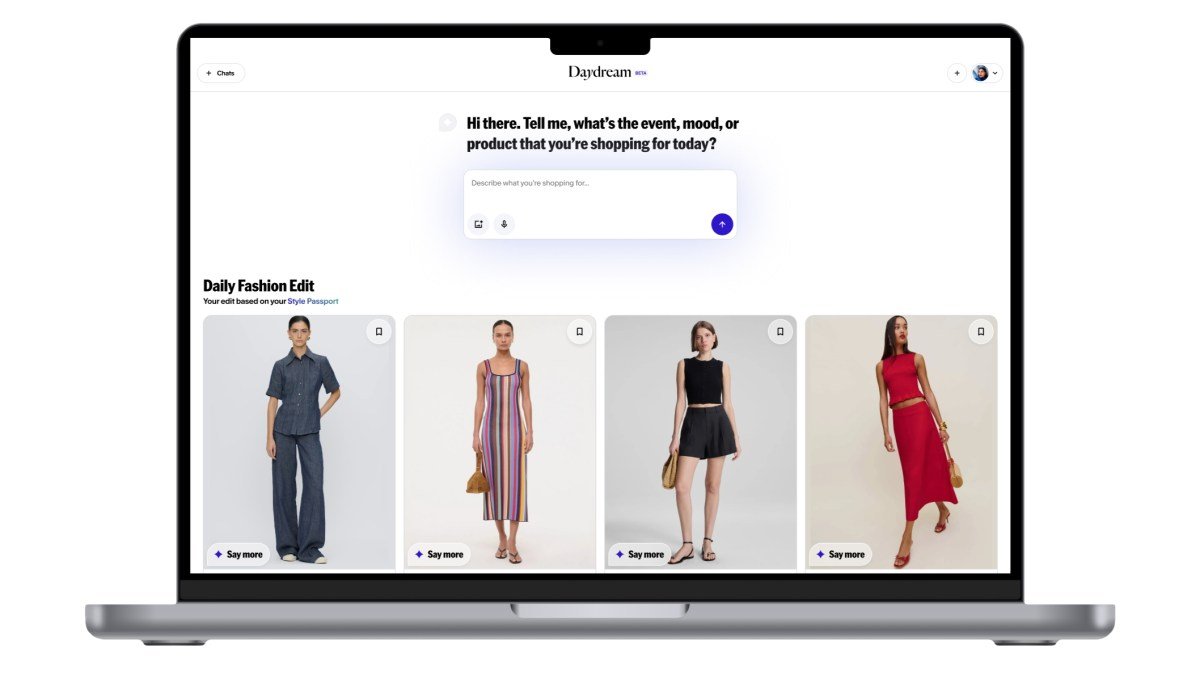
Following a $50 million seed funding round, e-commerce startup Daydream, led by industry veteran Julie Bornstein, has officially launched its AI-powered shopping chatbot into public beta. The platform aims to redefine how consumers discover fashion by moving beyond traditional, keyword-based search methods.
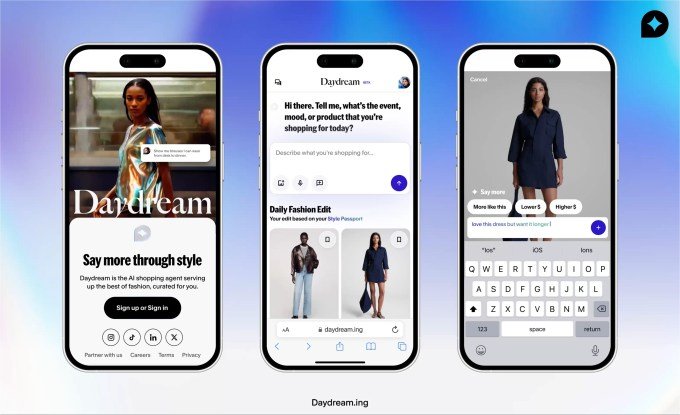
How the AI Shopping Experience Works
The chatbot functions as a personalized digital stylist. Upon signing up, users provide details such as their name, birthdate, preferred price ranges, and favorite brands. This data informs a “style passport,” which generates tailored recommendations and daily inspiration for clothing and accessories.
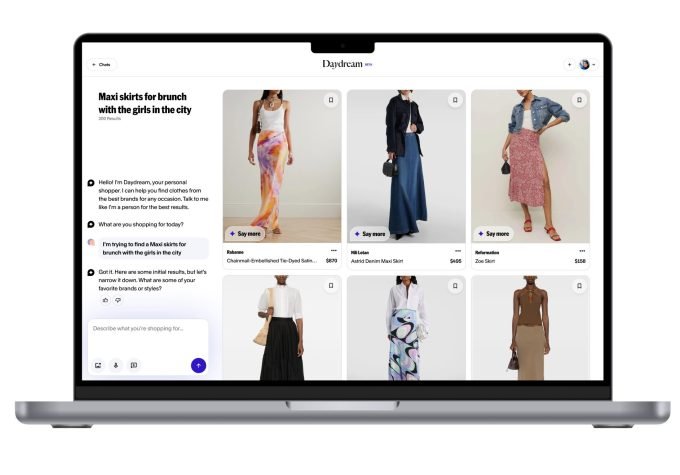
The interface supports natural language queries—such as “I want a dress to wear to a wedding in Paris this summer”—as well as image uploads. Users can refine their results by interacting directly with the chatbot. If a specific item is near-perfect but requires a slight adjustment in style or color, a “Say More” button allows for granular search modifications.
Advanced Search Technology
Unlike standard e-commerce platforms that rely on rudimentary tag matching, Daydream leverages visual recognition and advanced AI to parse complex requests. CTO Maria Belousova emphasizes that the system is built to understand stylistic nuances, including silhouettes, embellishments, and social context, such as the appropriateness of a garment for a specific event.
Monetization and Future Roadmap
Currently, the platform hosts over 8,000 brands, with new merchants added at no cost. Because Daydream does not feature an integrated checkout system, users are redirected to the merchant’s website to complete purchases, with Daydream earning a commission on each sale.
Looking ahead, the company plans to introduce several new capabilities, including:
- Negative Feedback Loops: Allowing users to explicitly filter out unwanted attributes (e.g., “no four-inch heels”).
- Personalized Matching: Suggesting items that complement pieces the user already owns.
- Social Integration: Enabling users to share collections with friends for collaborative shopping.
- Collection Remixing: Using AI to adapt other users’ curated collections to fit individual preferences.
As the sector evolves, Daydream faces competition from emerging startups like Deft and Cherry, as well as major tech players like Amazon and Google, all of whom are racing to integrate multimodal AI search into the consumer shopping journey.