
Reliance Jio and Bharti Airtel, India’s two dominant telecommunications operators, have officially launched a wave of tariff hikes across their networks. Starting July 3, subscribers in the world’s second-largest wireless market will face price increases of approximately 20% on various plans, marking a strategic shift toward industry-wide monetization.
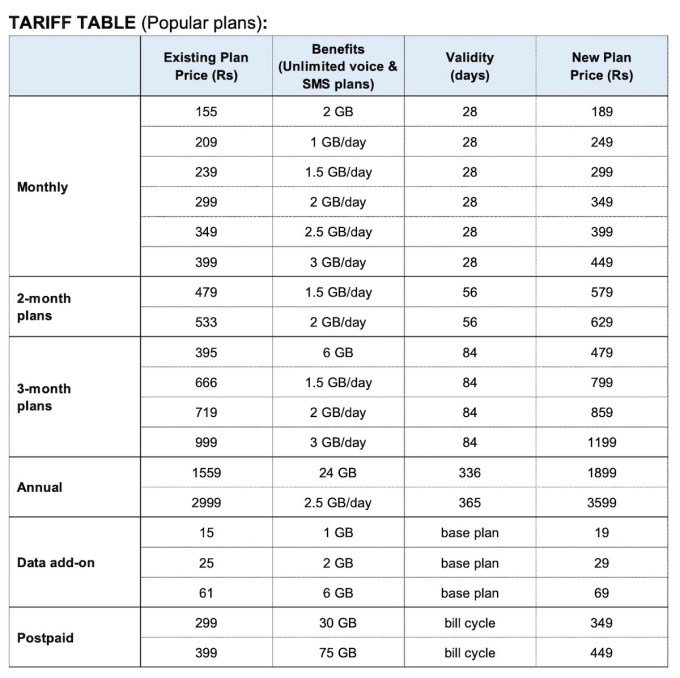
New Pricing and Service Adjustments
Jio’s new pricing model impacts a broad spectrum of services. The entry-level plan, previously priced at Rs 155 for 2GB of data and unlimited calls, will climb to Rs 189. Similarly, the popular plan featuring 1GB of daily data will increase from Rs 209 to Rs 249. The revisions extend to two-month, three-month, annual, postpaid, and data add-on packages.
Bharti Airtel followed suit, confirming hikes of 10% to 20% across its most popular offerings, effective July 3. The company has long advocated for an Average Revenue Per User (ARPU) of at least Rs 300 to ensure a sustainable business model. With current ARPU hovering around Rs 210, these adjustments are viewed as a necessary step toward financial health.
Strategic Goals: 5G and AI Investment
Akash Ambani, chairman of Reliance Jio, stated that the price adjustments are designed to foster industry innovation and support long-term growth. The capital generated is earmarked for heavy investments in 5G infrastructure and Artificial Intelligence technology.
Despite the increases, analysts note that Indian telecom services remain among the most affordable globally. To soften the blow, Jio announced that customers subscribed to plans offering 2GB of daily data or more will gain access to “unlimited 5G data,” incentivizing the transition to newer network standards.
Market Consolidation and Future Outlook
The Indian wireless market, dominated by Reliance, Bharti Airtel, Vodafone Idea, and BSNL-MTNL, is moving away from the aggressive price wars that defined the last decade. As of April, Jio controlled over 40% of the market, with Airtel holding 33.1%.
Industry experts suggest this move signals a transition from acquiring market share to prioritizing sustained profitability, especially after operators invested over $20 billion in 5G spectrum auctions. Goldman Sachs analysts expect further tariff hikes within the next two years, noting that the competitive environment remains stable.
Bank of America analysts suggest that consumer churn will likely be minimal, citing a “lack of alternatives” and the increasing essentiality of high-speed data in the daily lives of Indian users.