
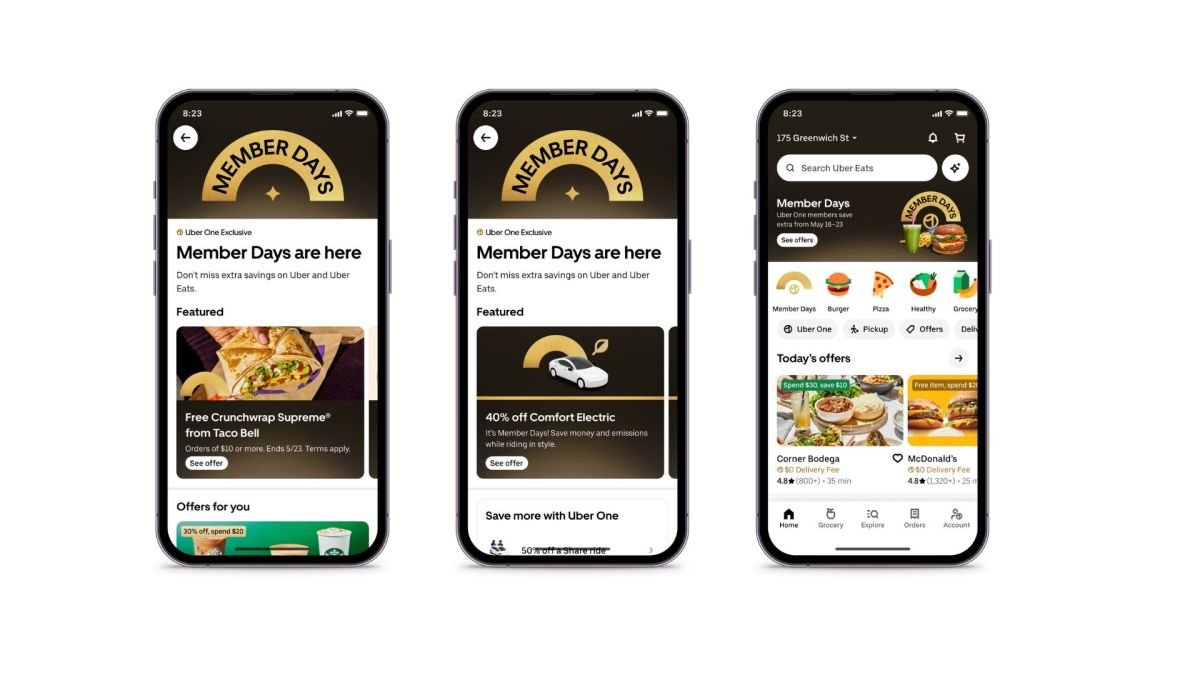
Uber is officially pivoting from a simple ride-hailing service to an all-encompassing “super app,” mirroring Amazon’s transformation into a closed-loop ecosystem. From May 16 to May 23, the company is launching its inaugural “Uber One Member Days,” a strategic event modeled after Amazon’s Prime Day, designed to lock users into its platform through exclusive deals and cross-service incentives.
Building a Daily-Use Lifestyle Platform
Three years ago, the “Amazonification” of Uber was a concept centered on cross-selling—pushing food delivery users to grocery, and grocery to alcohol and mobility. Today, that strategy has evolved. Uber is aggressively positioning itself as an aggregator of services, gatekeeping its most valuable offerings behind the Uber One subscription paywall to foster deep customer stickiness.
By launching Member Days, Uber is attempting to replicate the consumerist “hype” that drives Amazon Prime members to increase their spending. While Amazon’s Prime Day generated an estimated $14 billion in sales last year, Uber is banking on its global logistics network and gig-worker infrastructure to eventually reach a similar scale.
What Uber One Member Days Offers
The first-ever Member Days event features tens of thousands of discounts across Uber’s product lineup and retail partnerships. Key highlights include:
- Ride Discounts: 20% off Uber Black, 30% off Uber Reserve, and 40% off Uber Comfort.
- Strategic Partnerships: 3,000 Delta Skymiles for linked accounts with 10 trips, Oura ring discounts, and $20 off Ticketmaster purchases with a $3 grocery spend.
- Food Perks: Free items from major chains, including McDonald’s, Chipotle, and Dunkin’.
The Economics of the Super App
Sachin Kansal, Uber’s Chief Product Officer, describes the event as a dual-purpose strategy: delighting existing members while serving as an aggressive acquisition tool for non-members. Currently, Uber boasts approximately 30 million subscribers.
The financial incentive for this shift is clear. During the company’s recent first-quarter earnings call, CEO Dara Khosrowshahi noted that Uber One members are significantly more valuable than casual users. “They spend three times more than non-members,” Khosrowshahi stated, highlighting the high retention rates associated with the subscription model.
The Path Toward Ubiquity
Uber’s trajectory is increasingly mirroring Amazon’s history. Just as Amazon transitioned from a digital bookseller to an infrastructure powerhouse for e-commerce and cloud services, Uber is expanding beyond mobility. Recent partnerships, such as the collaboration with Home Depot, signal a broader intent to become a central utility in digital consumer culture.
By leveraging asset-light mobility rather than physical package delivery, Uber is betting that it can capture the same level of ubiquity that Amazon achieved, making the platform a mandatory component of the modern consumer’s daily life.