

A new, sweeping age verification law in Mississippi (HB 1126) is forcing a reckoning for decentralized social networks. Faced with the threat of massive fines—up to $10,000 per user—Bluesky has opted to block access to its platform within the state, triggering a fierce debate over whether decentralized protocols can truly withstand government interference.
The Compliance Crisis
The decision by Bluesky to exit the Mississippi market stems from a lack of resources to implement complex technical age-gate requirements. The platform, which operates with a lean team, warned that the law’s broad scope creates significant privacy risks. With the Supreme Court recently refusing to pause the legislation, companies must now choose between costly compliance or total withdrawal.
Decentralization: A Shield or a Target?
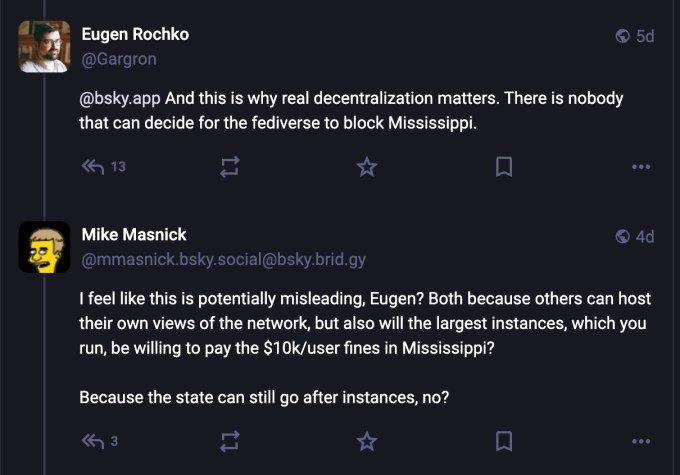
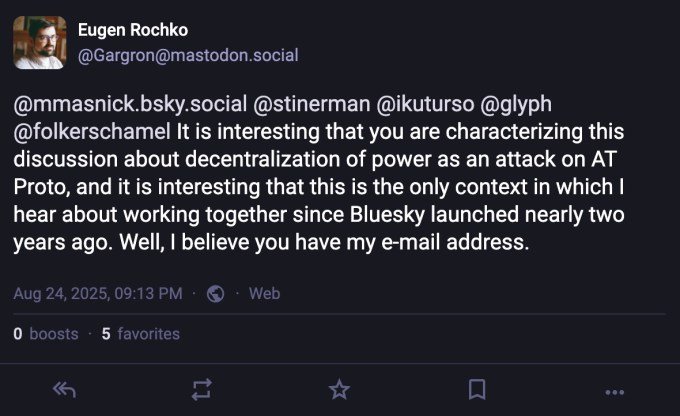
The move ignited a public clash between industry leaders. Mastodon founder Eugen Rochko argued that the situation proves the necessity of true decentralization, asserting that no single entity has the power to unilaterally block an entire state from the “fediverse.”
This claim drew sharp criticism from Bluesky board member Mike Masnick, who labeled the assertion misleading. Masnick noted that Mississippi’s law is written broadly enough to target individual “instances” or servers, meaning that even decentralized hosts could face legal repercussions if they fail to police their users.
Technical Architecture and Policy
The tension highlights fundamental differences in infrastructure. While Mastodon relies on the ActivityPub protocol, Bluesky utilizes the AT Protocol, which emphasizes account portability. Currently, most Bluesky users rely on the company’s own servers, though the network is slowly diversifying with independent relays and Personal Data Servers (PDS), such as the community-run Blacksky.
Workarounds and Future Risks
Mississippi residents are already bypassing the block using VPNs and third-party clients like Graysky, Skeets, and Deer.social. Some users have even turned to sideloading specific versions of the app to circumvent regional restrictions. However, these solutions remain precarious; as legislators refine their focus, smaller developers may find themselves in the legal crosshairs.
With similar legislation pending in Arizona, Wyoming, South Dakota, and Virginia, the broader internet is bracing for a fragmented landscape. Ultimately, these aggressive state mandates threaten to entrench the dominance of major, centralized platforms—which have the capital to absorb compliance costs—while stifling the smaller, open-source alternatives that form the backbone of a decentralized web.