

WhatsApp officially introduced “Writing Help” on Wednesday, a new AI-powered feature designed to assist users in proofreading, rephrasing, and adjusting the tone of their messages. Meta, the parent company of the messaging platform, announced the rollout, which aims to provide real-time editorial support directly within the app.
Privacy-First AI Integration
A primary concern with AI tools is data security, but WhatsApp is addressing this through its “Private Processing” technology. This architecture ensures that the AI generates suggestions without allowing Meta or WhatsApp to read the original message or the resulting rewrites. Consequently, the end-to-end encrypted nature of the platform remains intact, ensuring that personal conversations stay private even when utilizing AI assistance.
Customizing Your Message Tone
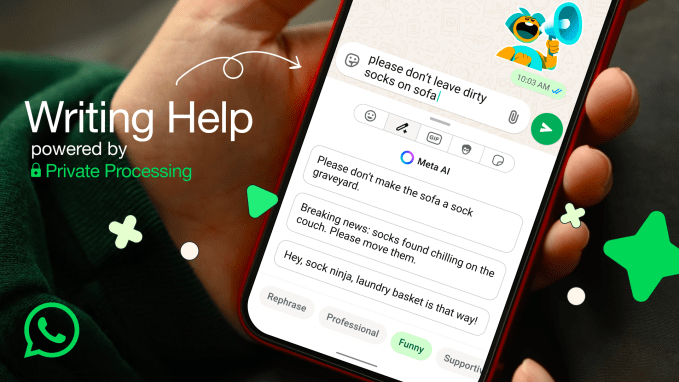
The “Writing Help” feature offers various style options, allowing users to modify their text to sound professional, funny, supportive, or simply rephrased for better clarity. To illustrate the tool’s capabilities, WhatsApp demonstrated how it could transform a mundane request like “Please don’t leave dirty socks on the sofa” into more creative variations:
- “Please don’t make the sofa a sock graveyard.”
- “Breaking news: Socks found chilling on the couch. Please move them.”
- “Hey, sock ninja, the laundry basket is that way!”
How to Access Writing Help
Users can access the tool by tapping the new pencil icon that appears while drafting a message. By integrating this functionality directly into the interface, WhatsApp aims to capture users who might otherwise switch to external generative AI platforms like ChatGPT to refine their communication.
Availability and Future Outlook
While the feature offers significant utility for professional or complex messaging, its role in casual, interpersonal communication remains a point of debate. Some users may find AI-generated suggestions less authentic for personal interactions with friends and family. Currently, “Writing Help” is rolling out in English across select countries, marking another step in Meta’s broader strategy to weave generative AI into its ecosystem of apps.