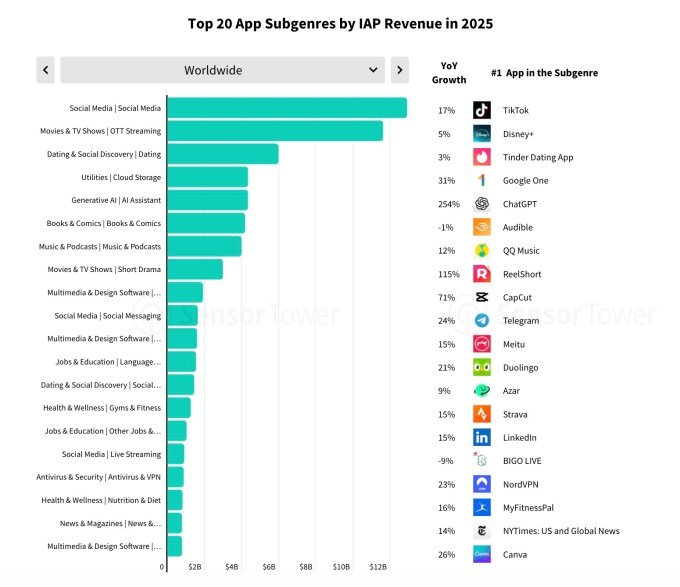
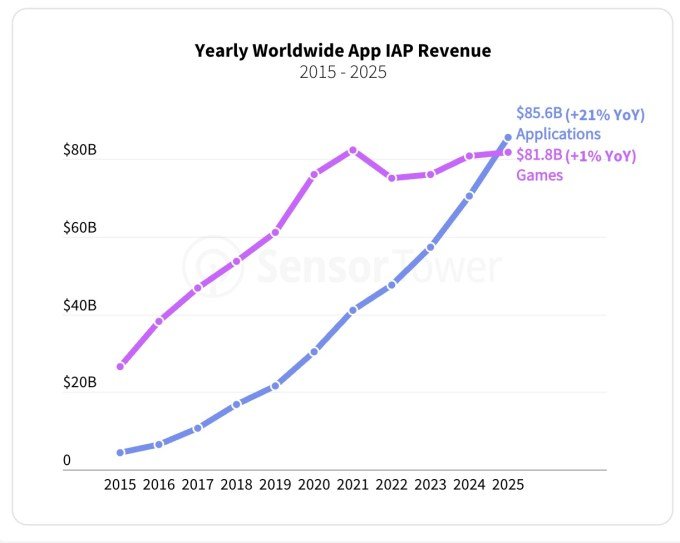
For the first time in history, global consumer spending on non-game mobile apps has surpassed spending on mobile games. According to the latest “State of Mobile” report by market intelligence firm Sensor Tower, the shift underscores a massive transformation in digital consumption habits throughout 2025.
The AI-Driven Economic Surge
Global consumers funneled approximately $85 billion into non-game applications in 2025, a 21% increase year-over-year. This expenditure is nearly 2.8 times higher than the figures recorded just five years ago. The primary engine behind this record-breaking growth is the rapid adoption of generative AI.
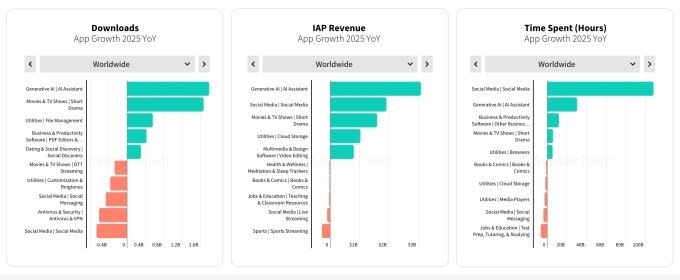
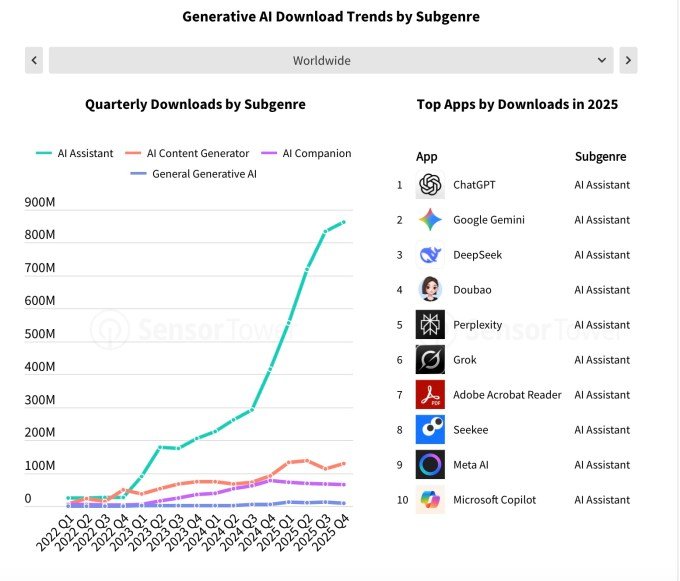
In-app purchase revenue within the AI category more than tripled, soaring past the $5 billion mark. Simultaneously, downloads for AI-powered applications doubled compared to the previous year, reaching 3.8 billion.
Dominance of AI Assistants
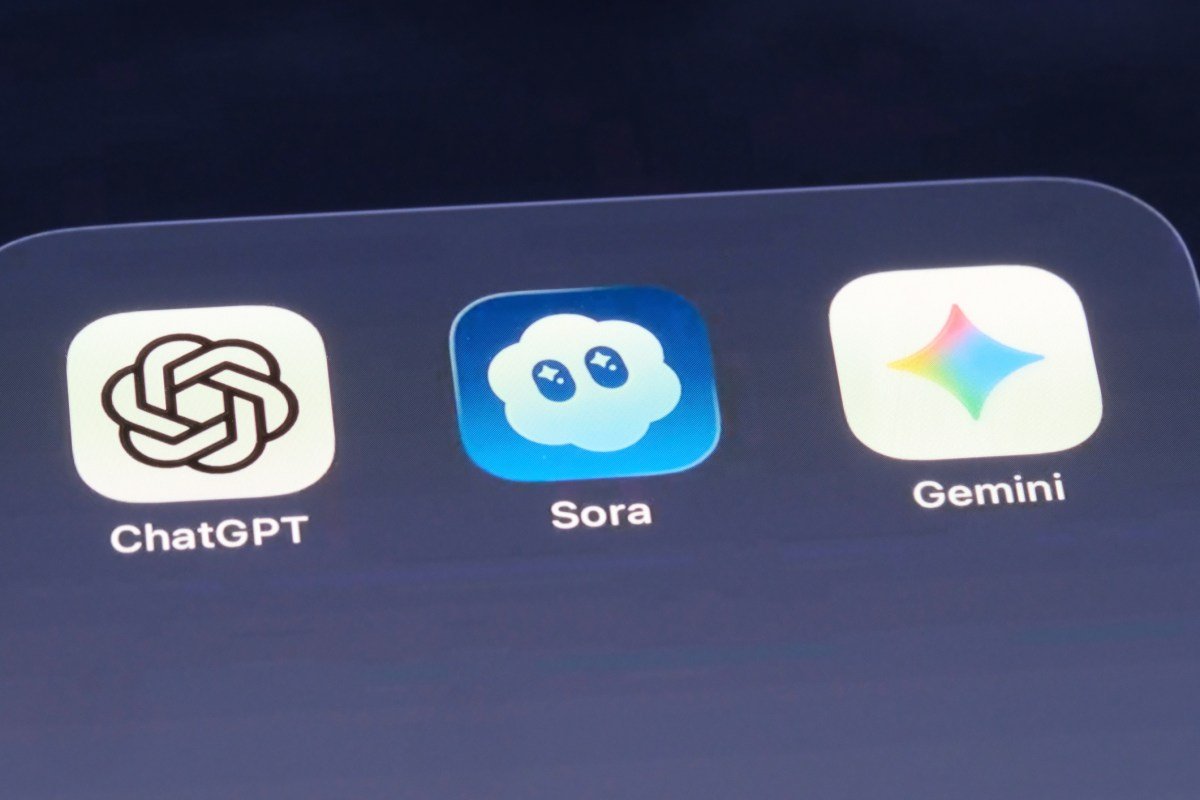
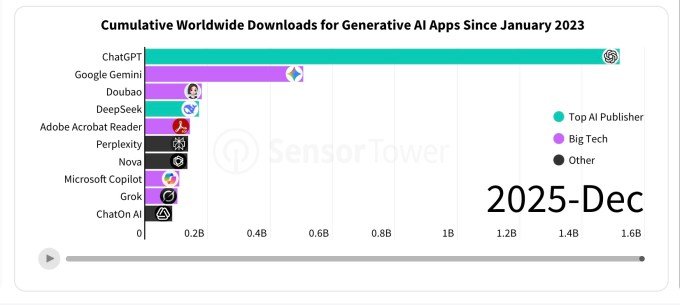
The consumer appetite for AI assistants has become a defining market force. The top 10 most downloaded apps in the AI sector were all assistants, with OpenAI’s ChatGPT, Google Gemini, and DeepSeek leading the charge. ChatGPT alone accounted for $3.4 billion in global in-app purchase revenue.
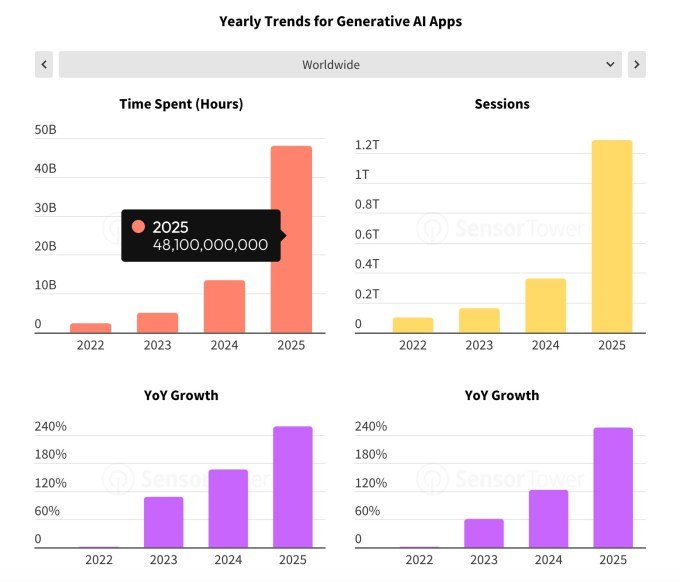
Engagement metrics reveal that users are not just downloading these apps—they are embedding them into their daily routines. In 2025, consumers spent 48 billion hours in generative AI apps, a 3.6x increase over 2024 and a 10x jump from 2023. Total session volume eclipsed 1 trillion, indicating that existing users are deepening their usage intensity faster than the market is acquiring new users.
Big Tech vs. Niche Competitors
The landscape is shifting as major technology companies intensify their competition. Google, Microsoft, and X have aggressively updated their assistants with advanced capabilities in content generation, coding assistance, and video/image processing, such as the GPT-4o model and Google’s Nano Banana.
This heavy investment from Big Tech has reshaped market share. While OpenAI and DeepSeek maintained nearly 50% of global downloads, Big Tech publishers increased their market presence from 14% to nearly 30%, effectively squeezing out early-market competitors like Nova and Chat Smith.
The Mobile-First AI Revolution
Mobile devices have become the primary gateway for AI services. By the end of 2025, the total audience for AI assistants in the U.S. exceeded 200 million, with 110 million users accessing these tools exclusively on mobile. This represents a massive shift from 2024, when only 13 million users were mobile-only.
Beyond standard assistants, the ecosystem is diversifying with apps like the music generator Suno, ByteDance’s Jimeng AI, and companion platforms such as Character.ai and Polybuzz. While AI is the current catalyst, other sectors remain robust contributors to the digital economy. Social media, for instance, continues to command significant attention, with users spending an average of 90 minutes daily on these platforms, totaling 2.5 trillion hours of engagement in 2025—a 5% year-over-year increase.