

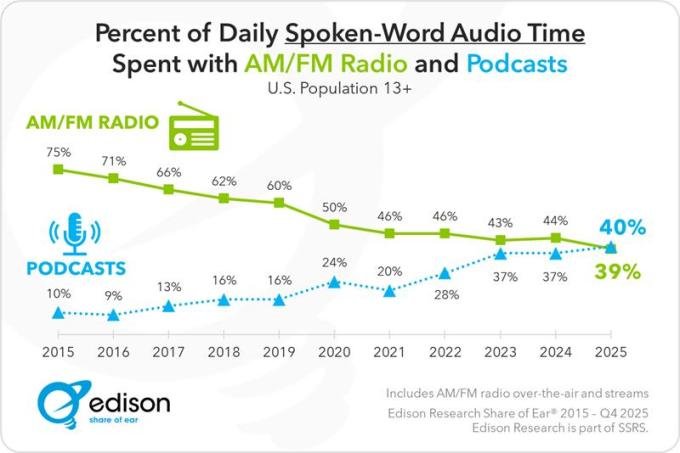
For the first time in history, podcasts have officially surpassed AM/FM talk radio as the dominant medium for spoken-word audio in the United States. According to the latest Edison Research Share of Ear survey, the trend marks a definitive turning point in how Americans consume information and entertainment.
A Decade of Steady Decline for Traditional Radio
Researchers have monitored this shift for over a decade, observing a consistent pattern: as time spent on podcast consumption climbed, engagement with spoken-word radio broadcasts steadily dwindled. This year, the crossover point finally arrived, with podcasts capturing 40% of listening time compared to 39% for traditional radio. While the transition may seem overdue, it highlights the remarkable resilience of legacy radio formats against the rise of on-demand digital content.
The Rise of Video Podcasting
A critical component of this growth is the increasing prevalence of video podcasts on platforms like YouTube and Spotify. Data confirms that video-integrated podcasts now command a significant share of the market. YouTube reports that in 2025, viewers consumed 700 million hours of podcast content monthly on living room devices, a massive jump from 400 million hours the previous year.
Industry players are taking note. Netflix, for instance, has begun securing partnerships with iHeartMedia and Barstool Sports to integrate podcast-style content into its streaming catalog, effectively modernizing the traditional daytime talk show format.
Consumer Habits: Audio vs. Video
Despite the rise of video, audio-first consumption remains a cornerstone of the industry. Findings from Triton Digital’s U.S. Podcast Report for 2025 indicate that 80% of adults over 18 engage with both audio and video formats. Only 13% of users rely exclusively on audio, while a mere 7% consume podcasts solely through video.
Genre Preferences Drive Engagement
Consumer behavior varies significantly by genre:
- Video-heavy genres: Music, sports, comedy, and news are increasingly consumed with visual components.
- Audio-centric genres: Science, history, art, fiction, and true crime remain firmly rooted in audio-only formats.
Edison Research further corroborates this shift, noting that 85% of weekly podcast listeners in the U.S. (aged 13 and older) now consume content featuring some form of video, a 7% increase since 2023. With an estimated 115 million weekly listeners nationwide, the data suggests that the vast majority of the audience treats video as a complementary feature rather than a replacement for the traditional listening experience.