

/uploads/2024/06/ezgif-4-3c4969c67b.gif?w=680″ alt=”Runway Gen-3″ class=”wp-image-2796335″/>
Enhanced Creative Control and Performance
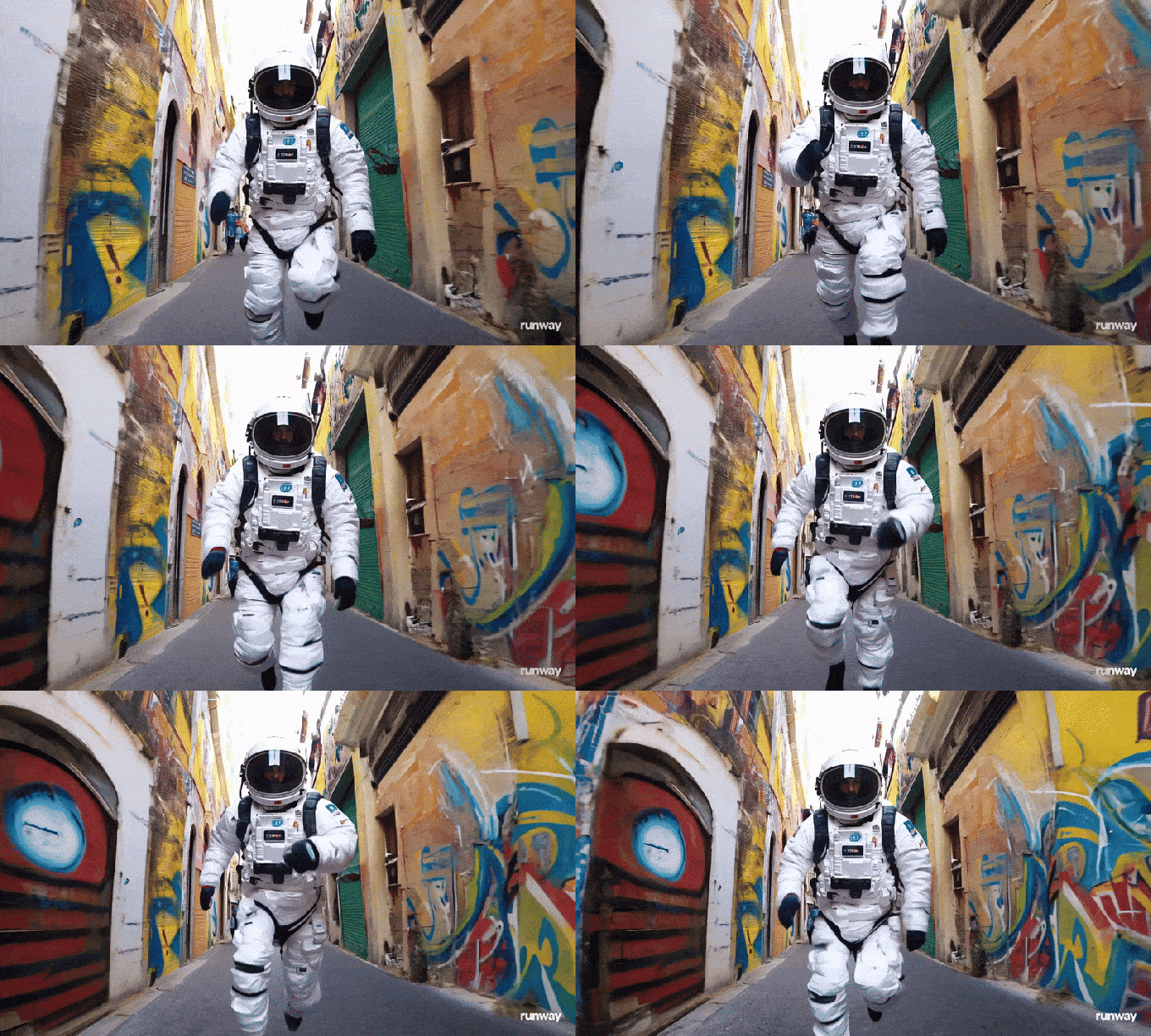
According to the company, Gen-3 Alpha is engineered to produce expressive human characters with fluid gestures and complex emotions. The model supports precise key-framing and cinematic terminology, allowing creators to exert greater influence over the final output. While current clips are limited to 10-second durations, Runway emphasizes that this is merely the first iteration of a next-generation model family built on upgraded infrastructure.
Speed remains a key competitive advantage. A 5-second video clip now generates in approximately 45 seconds, while a 10-second clip takes roughly 90 seconds—a noticeable acceleration over the previous Gen-2 model.
The Data Transparency Dilemma
As with most generative AI vendors, Runway has declined to disclose the specific datasets used to train Gen-3. This lack of transparency is increasingly common in the industry, as companies view their training data as a critical competitive asset and a potential lightning rod for copyright litigation. While Runway claims to have consulted with artists during development, specific details regarding these partnerships remain undisclosed.
Safety, Provenance, and Industry Standards
To address growing concerns over AI-generated misinformation and copyright infringement, Runway is implementing a new moderation system. This includes an automated filter for harmful content and an upcoming C2PA-compliant provenance system, designed to cryptographically verify that a video was created using Gen-3 technology.
Market Competition and Industry Disruption
The race for AI video dominance is intensifying. Competitors like Luma’s Dream Machine, Adobe’s upcoming stock-trained model, OpenAI’s Sora, and Google’s Veo are all vying for market share. These tools are already forcing Hollywood to confront a new reality.

The economic impact is already being felt. A 2024 study by the Animation Guild suggests that 75% of production companies adopting AI have already consolidated or reduced their workforce. With projections indicating that over 100,000 U.S. entertainment jobs could be disrupted by 2026, the industry faces an urgent need for labor protections to mitigate the potential decline in demand for human creative work.