

Former Apple design engineer Elena Wagenmans has secured $5 million in seed funding to launch Taya, a wearable pendant designed to record only the user’s voice. The startup, which aims to solve the privacy concerns plaguing ambient recording devices, closed the round led by MaC Venture Capital and Female Founders Fund, with additional backing from a16z Speedrun.
Privacy-First Wearable Technology
As AI-powered voice-to-text tools proliferate, devices like Pocket and Plaud have focused on transcribing meetings. However, these ambient recorders often spark controversy regarding the consent of bystanders. Taya differentiates itself by strictly capturing the wearer’s voice, masquerading as a piece of jewelry to blend into daily life.
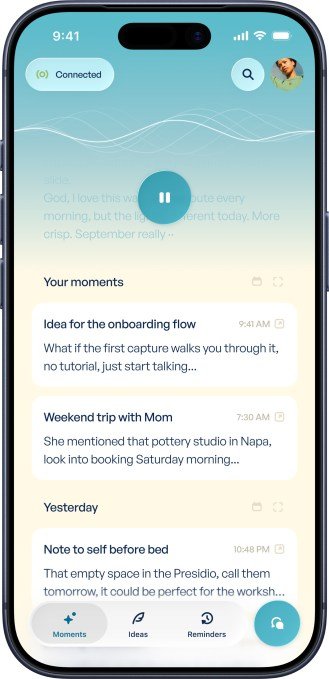
How the Taya Pendant Works
Priced at $89 for pre-orders, the device features a physical button to toggle recording, ensuring the microphone remains off by default. To maintain its “single-player” focus, the companion iOS app requires users to record a voice snippet during onboarding. This data is used to prioritize the owner’s voice and minimize background noise, with the company currently testing directional microphone technology to further enhance audio isolation.
Strategic Vision and Market Positioning
Wagenmans founded the company in 2024 with a vision to move away from the “ambient recorder” category. By positioning the pendant as a personal tool for self-reflection and productivity rather than a meeting assistant, Taya aims to appeal to users wary of social stigma and privacy risks.
“We want to capture your voice, not the room you’re in or the people around you,” Wagenmans explained. This sentiment is echoed by lead investor Adrian Fenty of MaC Venture Capital, who views the device as a tool for personal evolution and behavioral analysis rather than a standard note-taking gadget.
Based in San Francisco, the startup currently maintains a team of five full-time employees and is actively experimenting with new mechanisms to provide haptic or audio feedback, confirming that notes have been successfully saved to the cloud-based AI chat system.