
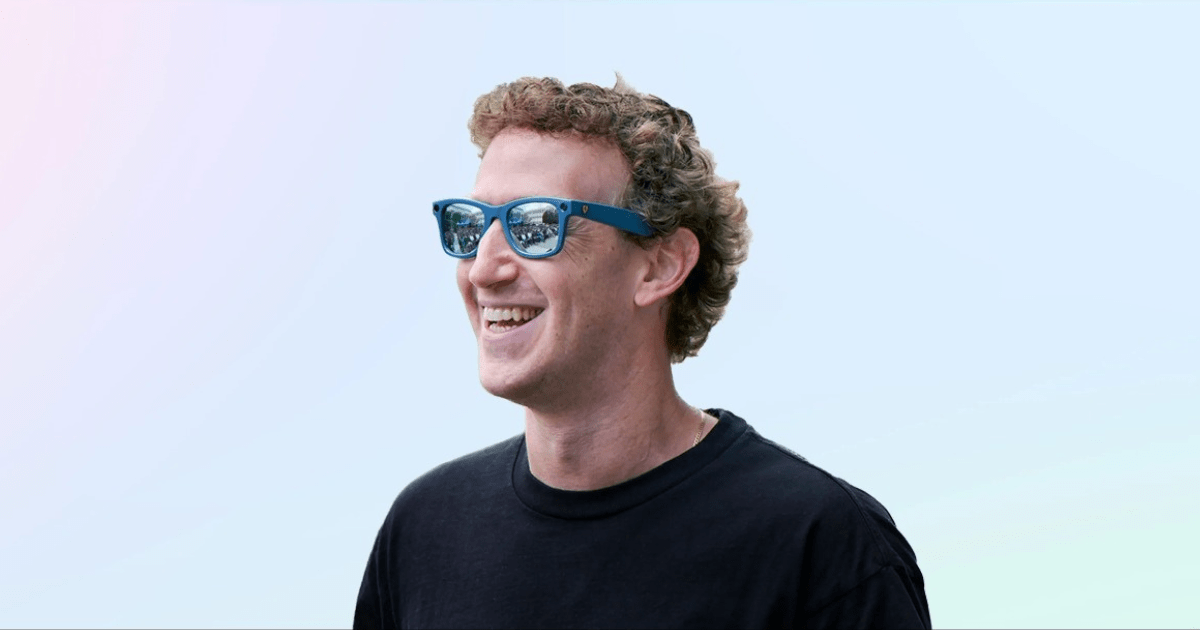
Meta CEO Mark Zuckerberg declared during the company’s second-quarter earnings call that individuals who do not adopt AI-integrated glasses will face a significant cognitive disadvantage in the near future. Positioning smart eyewear as the primary interface for artificial intelligence, Zuckerberg emphasized that these devices will fundamentally reshape how humans interact with the digital and physical worlds.
The Cognitive Edge of Smart Eyewear
Zuckerberg argues that glasses serve as the “ideal form factor” for AI because they provide the device with the user’s perspective. By allowing an AI to see what the user sees, hear ambient sounds, and engage in real-time conversation, the technology bridges the gap between human intent and digital execution.
The Meta CEO noted that while current models provide audio and camera capabilities, the integration of holographic displays—such as those seen in the next-gen Orion AR glasses—will unlock exponentially more value. Without such tools, he suggests, users will struggle to keep pace with the efficiency of those augmented by AI.
A Strategic Pivot for Reality Labs
Meta’s push into wearables is already yielding tangible results. Sales of the Ray-Ban Meta glasses have more than tripled year-over-year, according to manufacturing partner EssilorLuxottica. These devices currently allow users to capture media, listen to audio, and query Meta AI on their surroundings.
This success is critical for Meta, as the company seeks to justify the massive expenditure of its Reality Labs division. The unit reported an operating loss of $4.53 billion in the second quarter alone. With nearly $70 billion lost since 2020, Zuckerberg is positioning the division’s research as the bedrock of future consumer computing.
The Competitive Landscape of AI Hardware
While Meta is betting heavily on glasses, the broader tech industry is still experimenting with the optimal form factor for AI. OpenAI has entered the fray by acquiring Jony Ive’s startup, signaling an intent to build dedicated hardware. Meanwhile, other companies have attempted alternatives ranging from AI pins to wearable pendants, though many have struggled to gain mainstream traction.
Despite the competition, Zuckerberg remains steadfast in his vision. He believes that because eyewear is already a socially accepted accessory, it offers the most natural path to merging the Metaverse with daily life. “AI is going to accelerate that,” he concluded, reinforcing his belief that the digital and physical realms will eventually become inextricably linked through the lens of smart glasses.